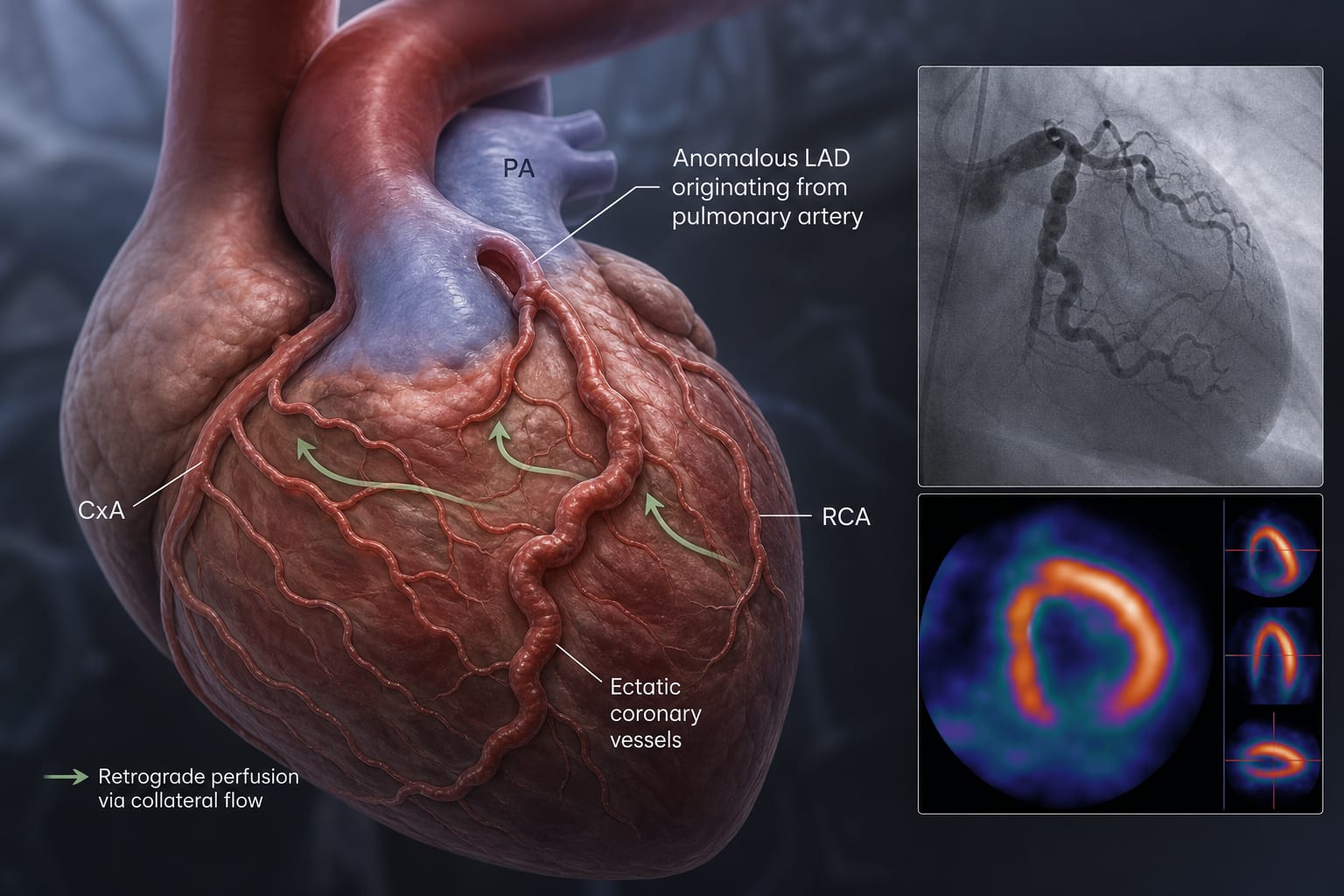
To address the pathophysiology, diagnosis, and management of angina with non-obstructive coronary arteries (ANOCA) and related conditions.
Approach:
Pathophysiology: Describes the heterogeneous functional and structural abnormalities in coronary circulation, including endothelial dysfunction and impaired vasodilation.
Diagnosis: Involves a stepwise assessment from non-invasive tests to invasive functional testing for endotype characterization.
Management: Integrates endotype-specific pharmacologic therapies and non-pharmacologic interventions for symptom control and risk reduction.
Key Findings:
Up to 70% of patients with anginal symptoms do not exhibit obstructive coronary disease, indicating a high prevalence of ANOCA.
The prognosis of ANOCA and INOCA is closely linked to early recognition and targeted therapies.
Distinct mechanistic endotypes exist within ANOCA and INOCA, necessitating tailored therapeutic interventions.
Interpretation:
Personalized, endotype-guided strategies are essential for optimizing treatment and preventing disease progression in patients with ANOCA and INOCA.
Limitations:
The underlying pathophysiologic mechanisms of ANOCA and INOCA are often underexplored.
Current management strategies may lack precision and individualized treatment.
Conclusion:
Endotype-driven approaches are crucial for effective management of patients with ANOCA and INOCA.