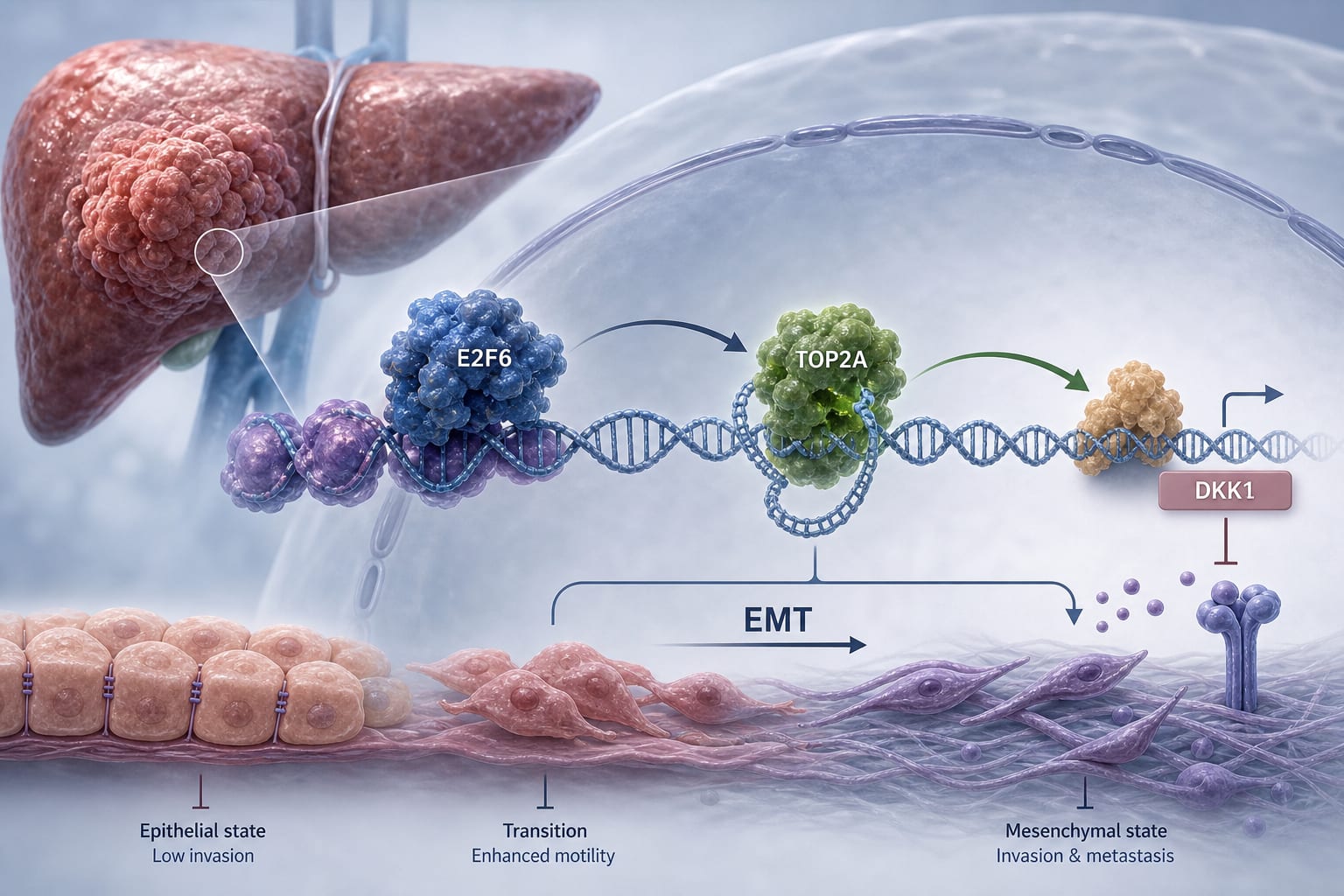
To investigate the role of TOP2A in hepatocellular carcinoma (HCC) and its regulatory mechanisms, particularly focusing on the E2F6-TOP2A-DKK1 axis.
Approach:
Bioinformatics Analysis: Integrated bioinformatics analyses were performed using TCGA, ICGC, and GEO datasets to assess TOP2A expression and its prognostic value.
Clinical Validation: TOP2A expression was validated in 120 clinical samples via immunohistochemistry.
Functional Assays: In vitro assays (CCK-8, Transwell, wound healing) and in vivo xenograft tumor models were conducted to evaluate phenotypic effects.
Mechanistic Exploration: Mechanisms were explored using ChIP-PCR, Western Blotting, and RT-qPCR.
Prognostic Model Development: Prognostic models were developed using multivariate regression and evaluated with calibration curves, ROC, and DCA.
Key Findings:
TOP2A was significantly upregulated in HCC tissues, with an AUC of 0.935 for diagnosis.
High TOP2A expression correlated with advanced stage and poor survival (p<0.05).
A prognostic model incorporating TOP2A, TNM stage, and tumor grade showed robust predictive accuracy for 1-, 3-, and 5-year survival (AUCs: 0.77, 0.85, 0.75).
Knockdown of TOP2A suppressed proliferation, migration, and invasion.
E2F6 transcriptionally activated TOP2A, which promoted EMT by upregulating DKK1 and activating β-catenin signaling.
High TOP2A expression predicted poor response to TACE, sorafenib, and immunotherapy.
The candidate targeted agent A-443654, alone or combined with anti-PD-L1, suppressed tumor growth in vivo.
Interpretation:
The study identifies the E2F6-TOP2A-DKK1 axis as a significant mechanism in HCC progression, with TOP2A serving as a potential diagnostic and prognostic biomarker.
Limitations:
The study primarily relies on bioinformatics and laboratory models, which may not fully replicate clinical scenarios.
Further clinical validation is needed to confirm the prognostic models and therapeutic strategies proposed.
Conclusion:
Targeting the E2F6-TOP2A-DKK1 pathway may offer a therapeutic strategy for HCC.
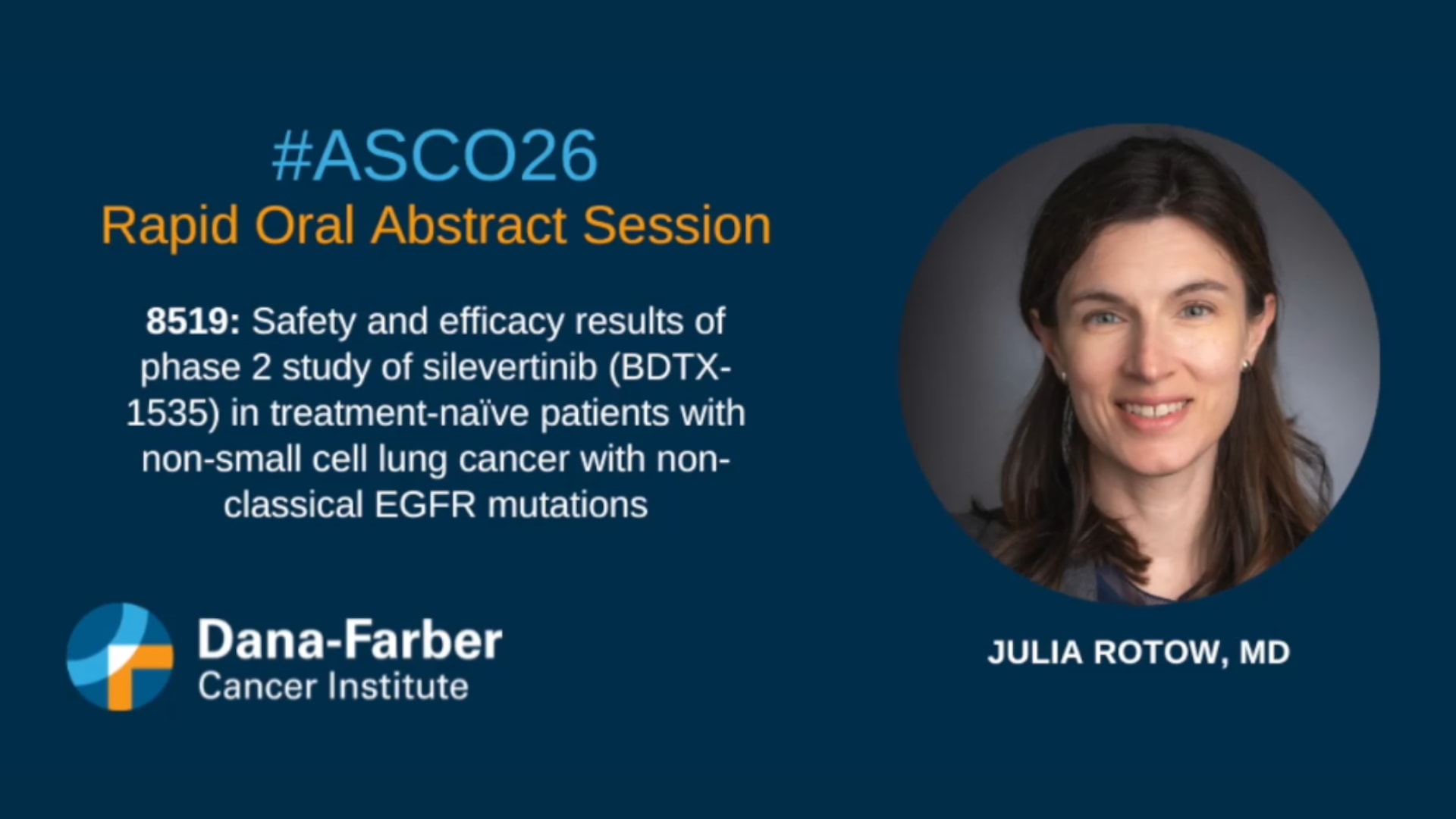
Dana-Farber Cancer Institute's Dr. Julia Rotow reported on a study looking at silevertinib, with data showing it may offer a new first-line option for hard-to-treat EGFR non-small cell lung cancer variants, with encouraging brain activity and manageable side effects.
Dana-Farber Cancer Institute's Dr. Sara Tolaney presented a subgroup analysis of the ASCENT-04 study based on biomarkers. Across all subgroups, patients who received sacituzumab govitecan plus pembro as first-line therapy had longer progression-free survival compared to standard therapy.