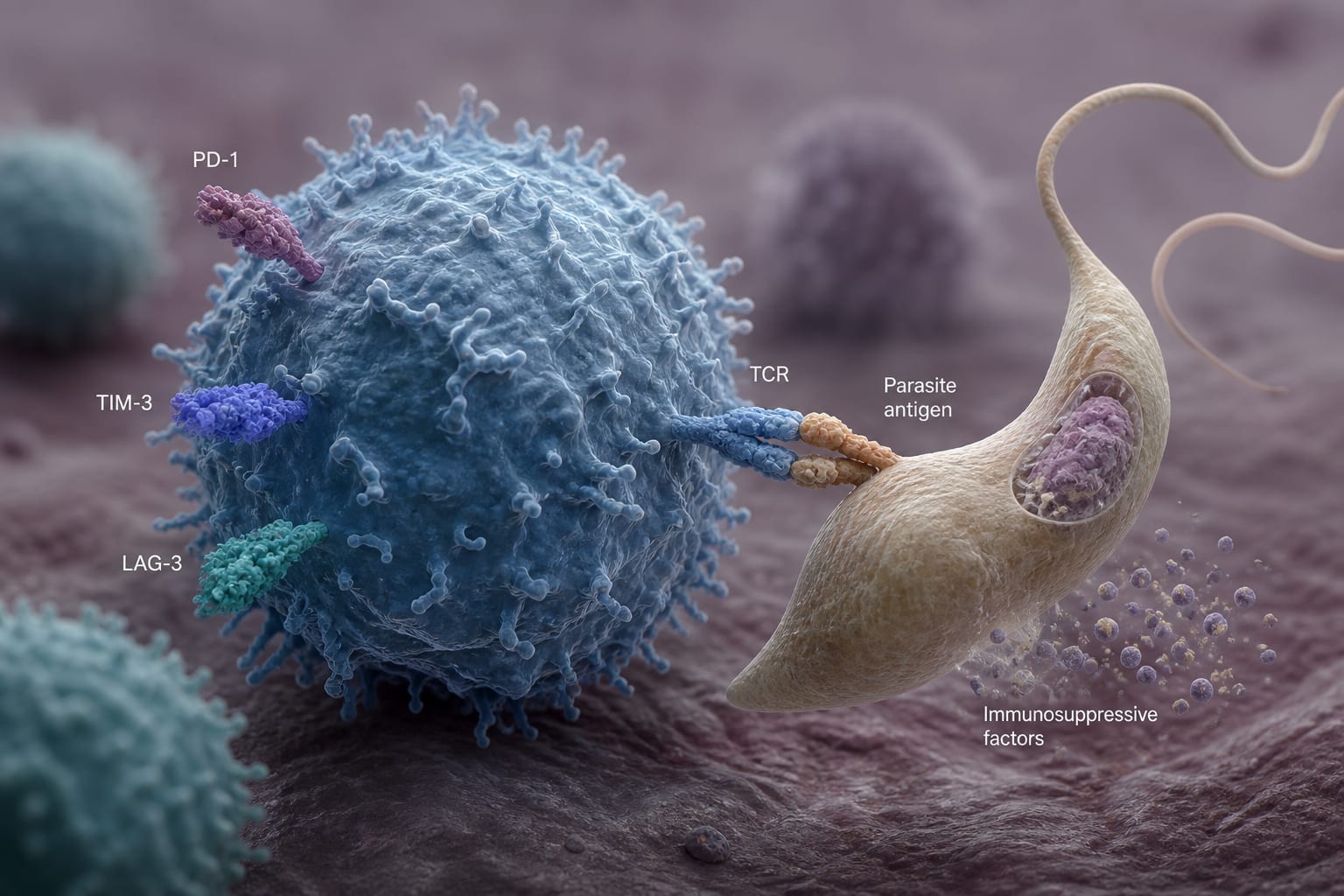
To summarize current knowledge of the mechanisms underlying T cell exhaustion in chronic parasitic infections and to identify unresolved questions for future research.
Approach:
Overview of T cell exhaustion: The article reviews the characteristics and mechanisms of T cell exhaustion, particularly in the context of chronic parasitic infections.
Comparison with chronic viral infections: It contrasts the exhaustion induced by parasitic infections with that seen in chronic viral infections, highlighting distinct features.
Key Findings:
T cell exhaustion is characterized by progressive functional impairment due to sustained antigenic stimulation.
Exhausted T cells exhibit increased expression of multiple inhibitory receptors and altered metabolic activity.
The functional decline of CD8+ T cells occurs in a hierarchical manner, with specific effector functions lost over time.
Persistent expression of inhibitory receptors in exhausted T cells may indicate a reversible condition.
Limitations:
The review identifies several important questions that remain unresolved in the field of T cell exhaustion and parasitic infections.