Long-term outcomes of definitive chemoradiotherapy with docetaxel, cisplatin, and 5-fluorouracil for postoperative locoregional recurrent esophageal cancer: a prospective phase II study - Summary - MDSpire
Advertisement
Long-term outcomes of definitive chemoradiotherapy with docetaxel, cisplatin, and 5-fluorouracil for postoperative locoregional recurrent esophageal cancer: a prospective phase II study
To evaluate the efficacy and safety of chemoradiotherapy combined with docetaxel, cisplatin, and 5-fluorouracil (DCF-RT) for postoperative locoregional recurrence of esophageal cancer.
Approach:
Study Design: Single-arm, prospective phase II trial involving 29 patients with postoperative locoregional recurrent esophageal cancer.
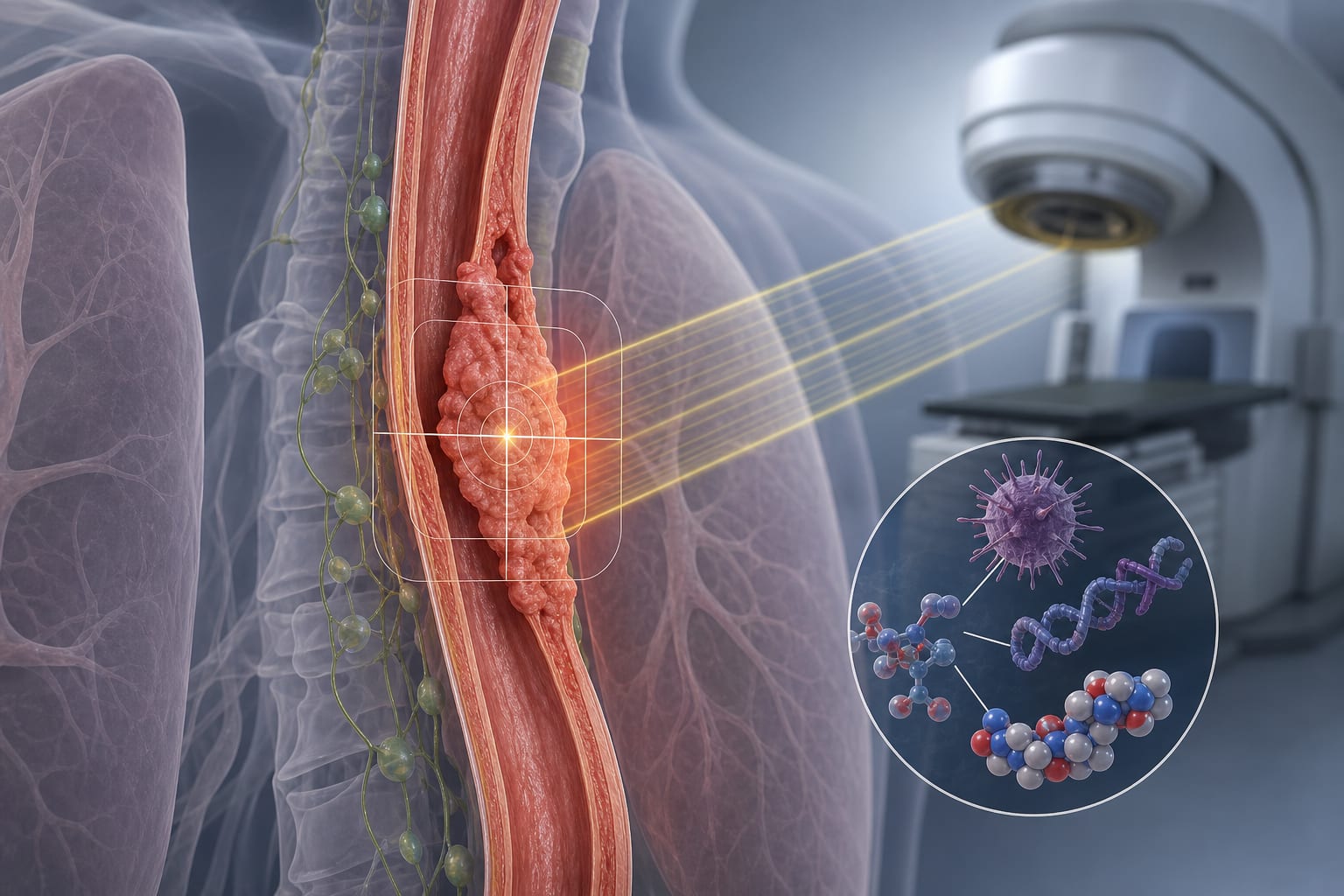
Treatment Protocol: Patients received 60 Gy radiotherapy in 30 fractions with concurrent DCF chemotherapy.
Key Findings:
Median progression-free survival (PFS) was 48.0 months, exceeding the historical control of 12 months.
3-year and 5-year PFS rates were 55.2% and 49.7%, respectively.
3-year and 5-year overall survival (OS) rates were 75.2% and 58.8%, respectively.
High treatment compliance with 89.7% completing the regimen without dose reduction.
Grade 4 hematologic toxicities occurred in 3 patients; one patient developed grade 3 heart failure.
Interpretation:
DCF-based chemoradiotherapy showed durable disease control and a favorable safety profile in patients with postoperative locoregional recurrent esophageal cancer.
Limitations:
Single-arm study design limits generalizability.
Small sample size may affect the robustness of findings.
Conclusion:
DCF-based chemoradiotherapy may represent a promising curative-intent salvage strategy for postoperative locoregional recurrent esophageal cancer, warranting further validation in randomized controlled trials.