Perioperative Outcomes of Robot-Assisted versus Video-Assisted Thoracoscopic Surgery for Non-Small Cell Lung Cancer: A Meta-Analysis Focusing on Real-World Clinical Studies in the Past 10 Years - Summary - MDSpire
Advertisement
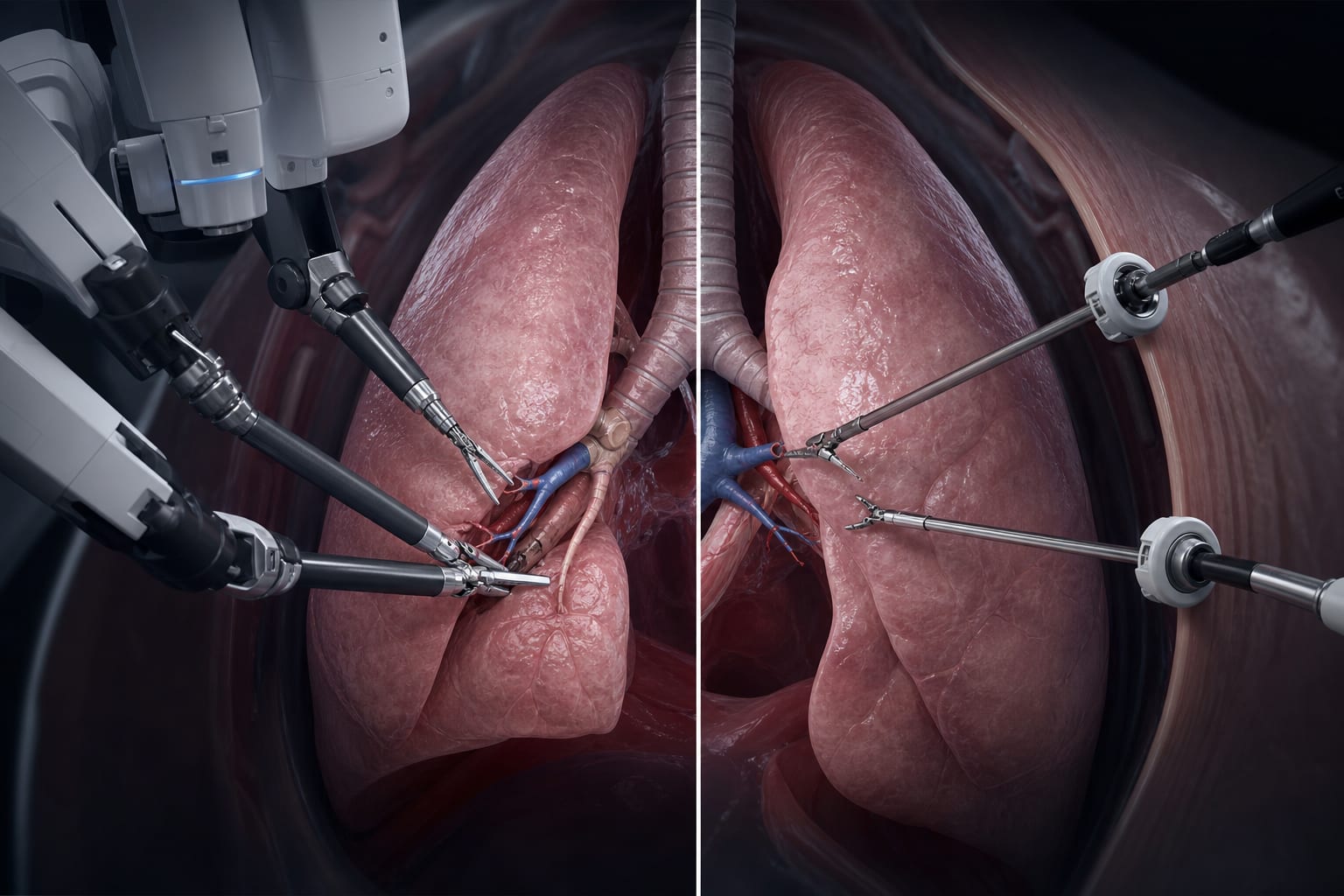
Perioperative Outcomes of Robot-Assisted versus Video-Assisted Thoracoscopic Surgery for Non-Small Cell Lung Cancer: A Meta-Analysis Focusing on Real-World Clinical Studies in the Past 10 Years
To compare perioperative outcomes of Robot-assisted thoracoscopic surgery (RATS) and Video-assisted thoracoscopic surgery (VATS) for non-small cell lung cancer (NSCLC) using real-world clinical studies.
Key Findings:
No significant differences in intraoperative blood loss, postoperative length of stay, or postoperative complication rates between RATS and VATS.
RATS was associated with a higher lymph node yield than VATS (weighted mean difference, +2.38).
In the lobectomy subgroup, operative time and postoperative length of stay were shorter with RATS.
Interpretation:
RATS and VATS achieve comparable perioperative safety and short-term outcomes in NSCLC, with RATS offering advantages in lymph node retrieval.
Limitations:
Exclusion of database analyses and clinical trials may limit generalizability.
Only studies published in English were included.
Conclusion:
RATS may be a reasonable option when nodal yield is prioritized, particularly for patients undergoing lobectomy.