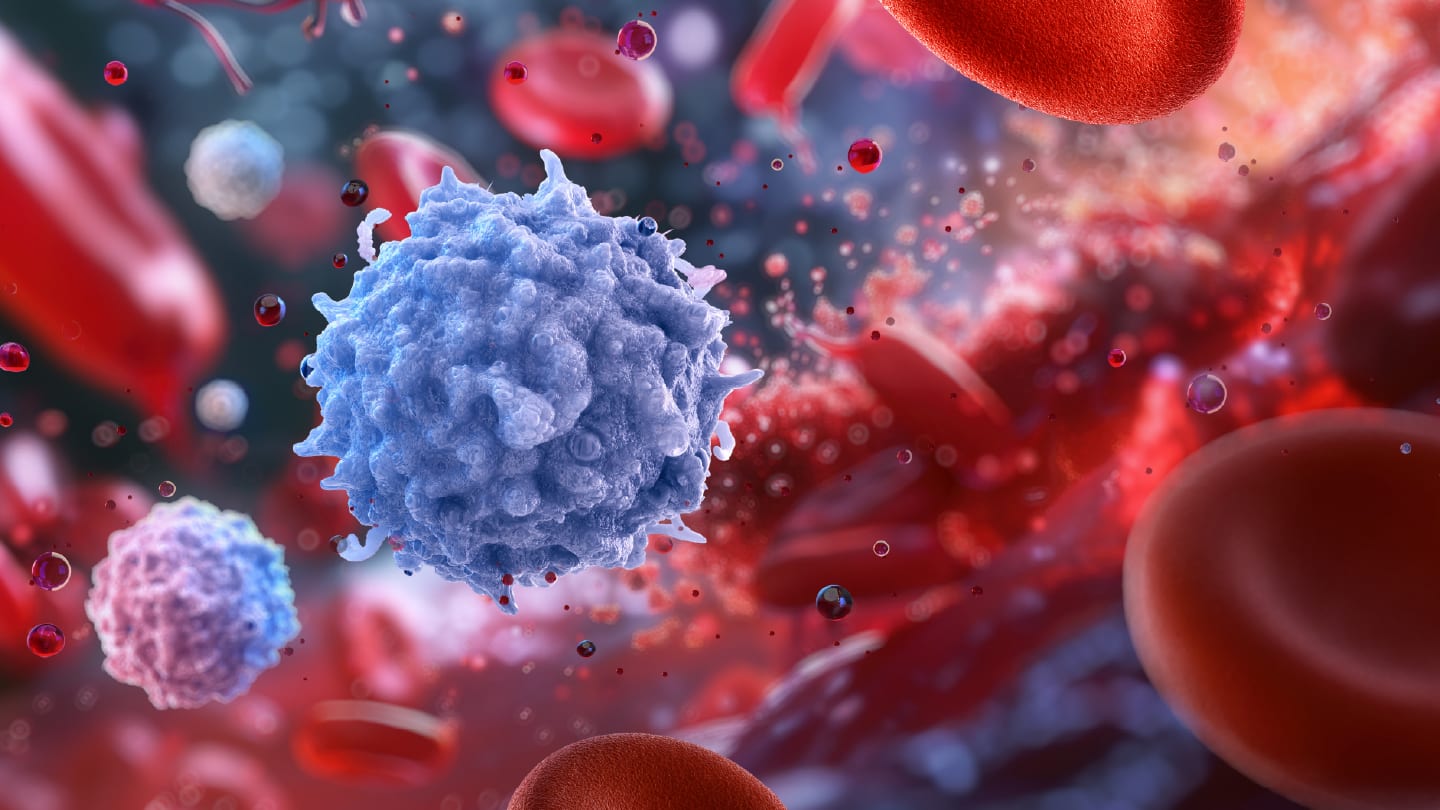
To develop lipid nanoparticles that deliver mRNA to natural killer (NK) cells in vivo and assess their effects in mouse models of cancer and autoimmune hepatitis.
Approach:
Targeted delivery: Researchers engineered lipid nanoparticles with antibody fragments that target NK-cell receptors, delivering mRNA encoding chimeric antigen receptors (CARs).
Mouse models: The team tested the platform in models of B-cell lymphoma, T-cell leukemia, melanoma, and autoimmune hepatitis.
Key Findings:
Nanoparticle delivery efficiency reached approximately 80% in mice. CAR expression peaked around 24 hours and was nearly undetectable by 72 hours.
In a humanized mouse model of B-cell lymphoma, five doses of CD19 CAR mRNA nanoparticles produced complete remission in all five treated animals, with efficacy comparable to externally manufactured CAR NK cells.
The platform also showed activity against T-cell leukemia and melanoma.
In autoimmune hepatitis mice, nanoparticles carrying a CD3-directed CAR and interleukin-15 reduced autoreactive T-cell populations, improved liver enzyme levels, and limited liver damage.
Repeated dosing was generally well tolerated in mice, but antibodies against the nanoparticle targeting fragments were detected.
Interpretation:
The study reports that mRNA nanoparticles can generate temporary CAR expression in NK cells inside mice and produce antitumor and autoimmune-disease effects in the tested models.
Limitations:
The reported results are from mouse models; the context provides no human efficacy or safety data.
CAR expression was short-lived, suggesting repeated dosing may be needed to sustain activity.
Antibodies against the targeting fragments were detected after repeated administration.
Conclusion:
The researchers describe an in vivo approach to generating CAR NK cells that may avoid the cell collection and laboratory modification required by conventional cell therapies.
Breast cancer screening has traditionally been organized around two principal variables: when mammography should begin and how frequently it should be performed.