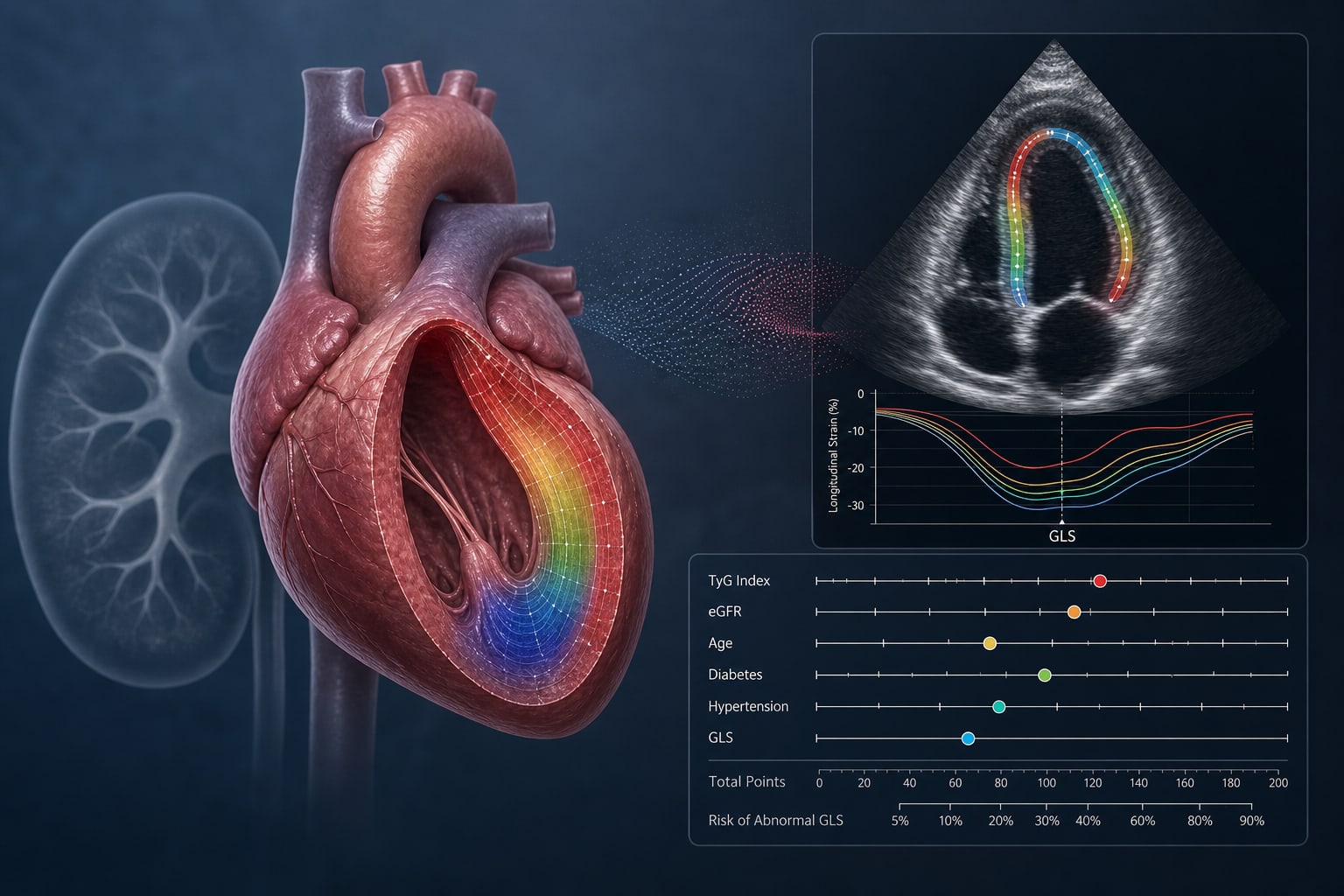
To develop a TyG index-based model to predict the risk of abnormal GLS in CKD patients, optimizing the selective use of speckle-tracking echocardiography (STE).
Approach:
Study Design: A prospective cross-sectional study enrolling CKD patients from the Fifth Affiliated Hospital of Sun Yat-sen University between July 2023 to July 2024.
Participants: 260 CKD patients were screened, with 212 included after exclusions based on specific criteria.
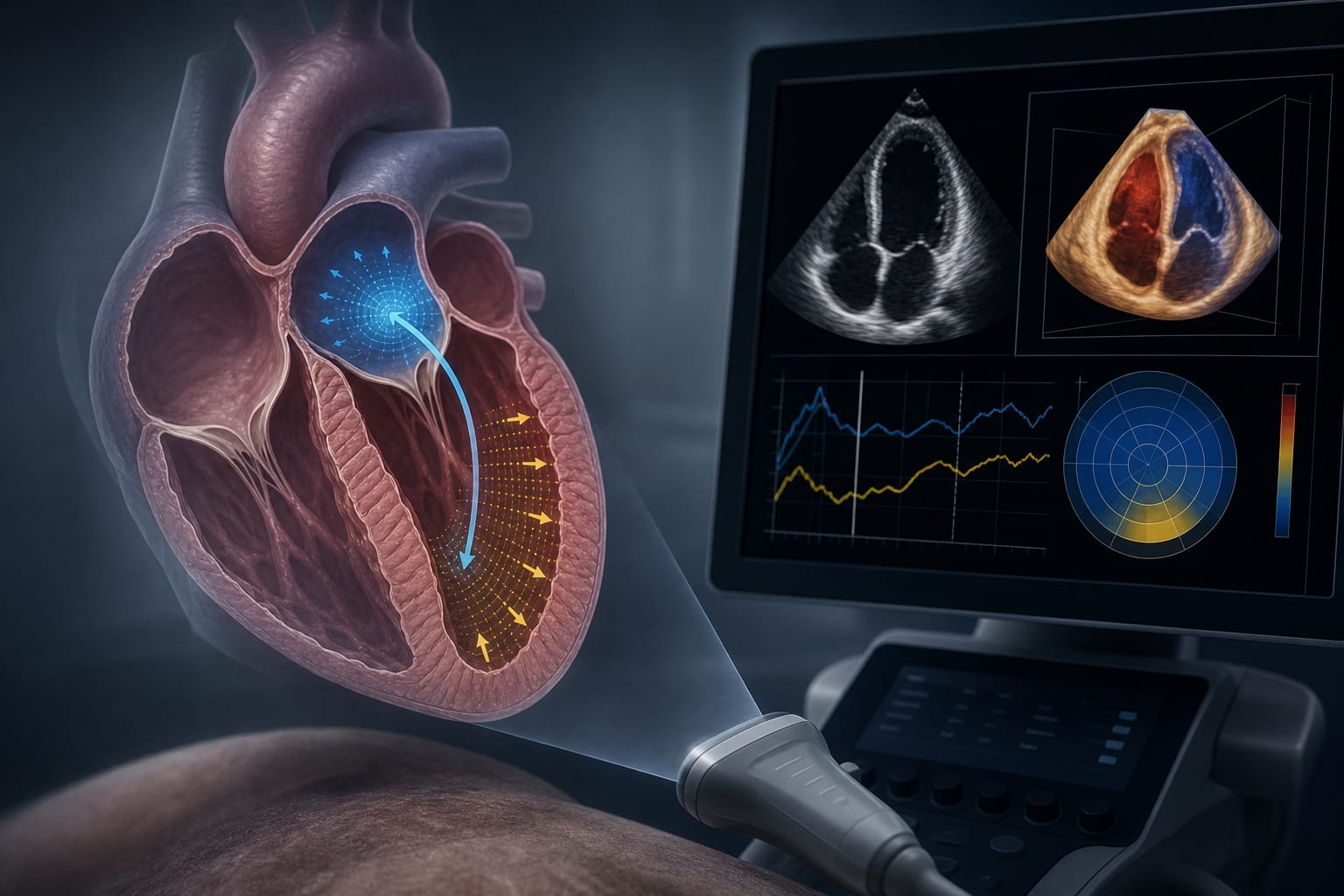
Data Collection: Clinical examination, biochemistry measurement, and transthoracic echocardiography were performed.
Statistical Analysis: Multivariable analysis identified independent predictors of reduced GLS, and a nomogram model was developed and validated.
Key Findings:
Male sex (OR = 2.77), diastolic blood pressure (OR = 1.07), high-density lipoprotein (OR = 0.36), and TyG index (OR = 4.55) were independent predictors of reduced GLS (< 20%).
The developed nomogram model demonstrated robust predictive performance with AUC values between 0.838 and 0.842.
Interpretation:
The developed nomogram model could effectively identify CKD patients at high risk for abnormal GLS, optimizing the use of STE.
Limitations:
The study was conducted at a single center, which may limit generalizability.
Exclusion criteria may have omitted patients with significant comorbidities affecting GLS.
Conclusion:
The nomogram model serves as an effective screening tool to optimize STE utilization in CKD patients, conserving medical resources.