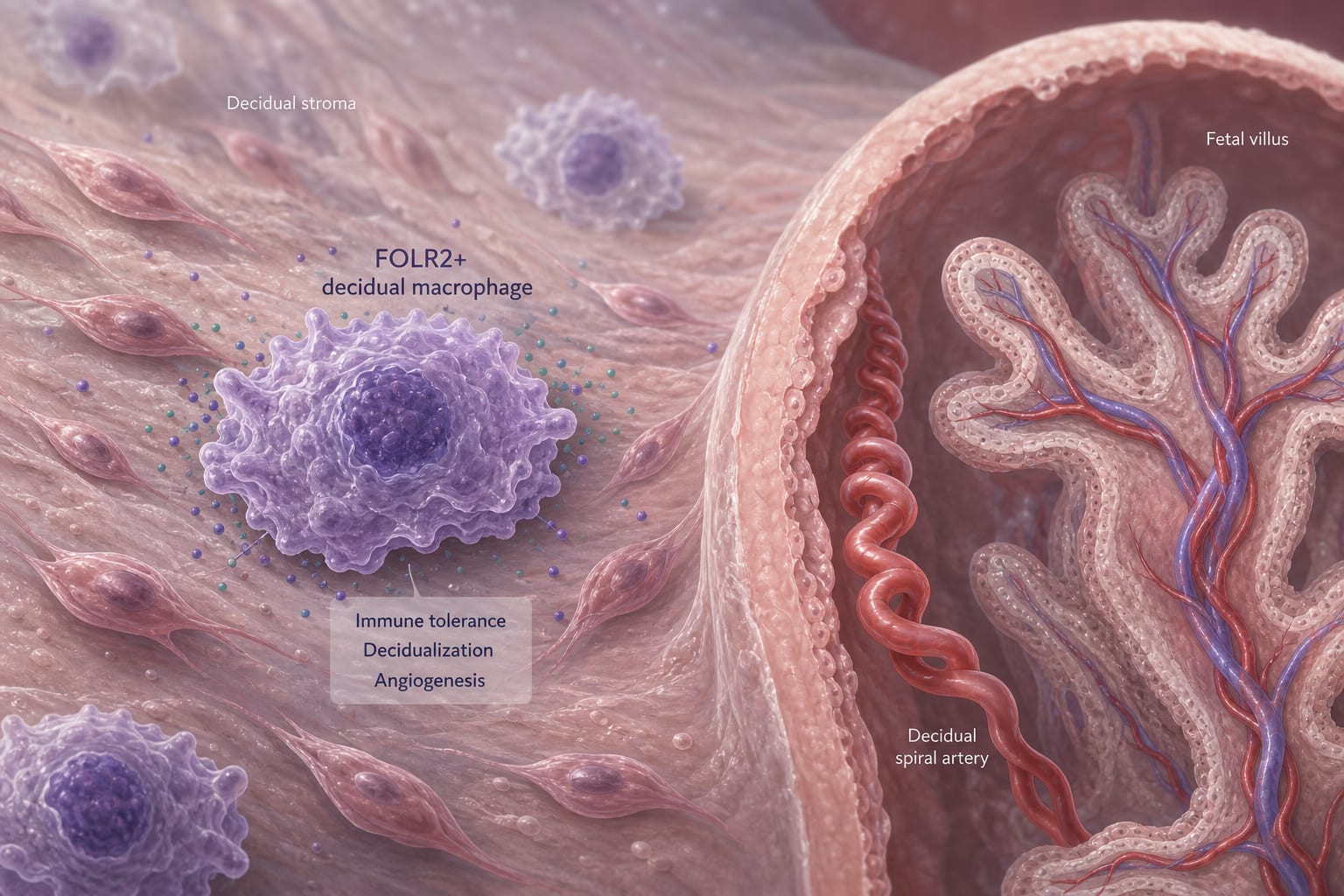
To investigate the role of FOLR2+ macrophages in the decidua and their impact on immune activation, decidualization, and angiogenesis in recurrent spontaneous abortion (RSA).
Approach:
Key Findings:
FOLR2+ macrophages in the decidua exhibit an M2-like immunoregulatory phenotype.
In RSA decidua, FOLR2 expression and the proportion of FOLR2+ macrophages are markedly reduced.
Reduction in FOLR2+ macrophages correlates with increased inflammatory signaling and impaired angiogenic interactions.
FOLR2 overexpression enhances immunoregulatory and pro-angiogenic properties.
FOLR2 silencing promotes inflammatory responses and impairs angiogenesis.
Interpretation:
The loss of FOLR2+ macrophages in RSA may contribute to immune dysregulation and defective decidualization.
Limitations:
The study primarily focuses on human decidua and may not fully represent other contexts of spontaneous abortion.
Further research is needed to explore the mechanisms underlying the observed changes in macrophage populations.
Conclusion:
FOLR2+ macrophages are crucial for maintaining immune tolerance and supporting decidualization at the maternal–fetal interface.