Assessing upper motor neuron dysfunction in ALS: from TMS-EEG and EMG neurophysiology to a combined tFUS-TMS translational framework - Summary - MDSpire
Advertisement
Assessing upper motor neuron dysfunction in ALS: from TMS-EEG and EMG neurophysiology to a combined tFUS-TMS translational framework
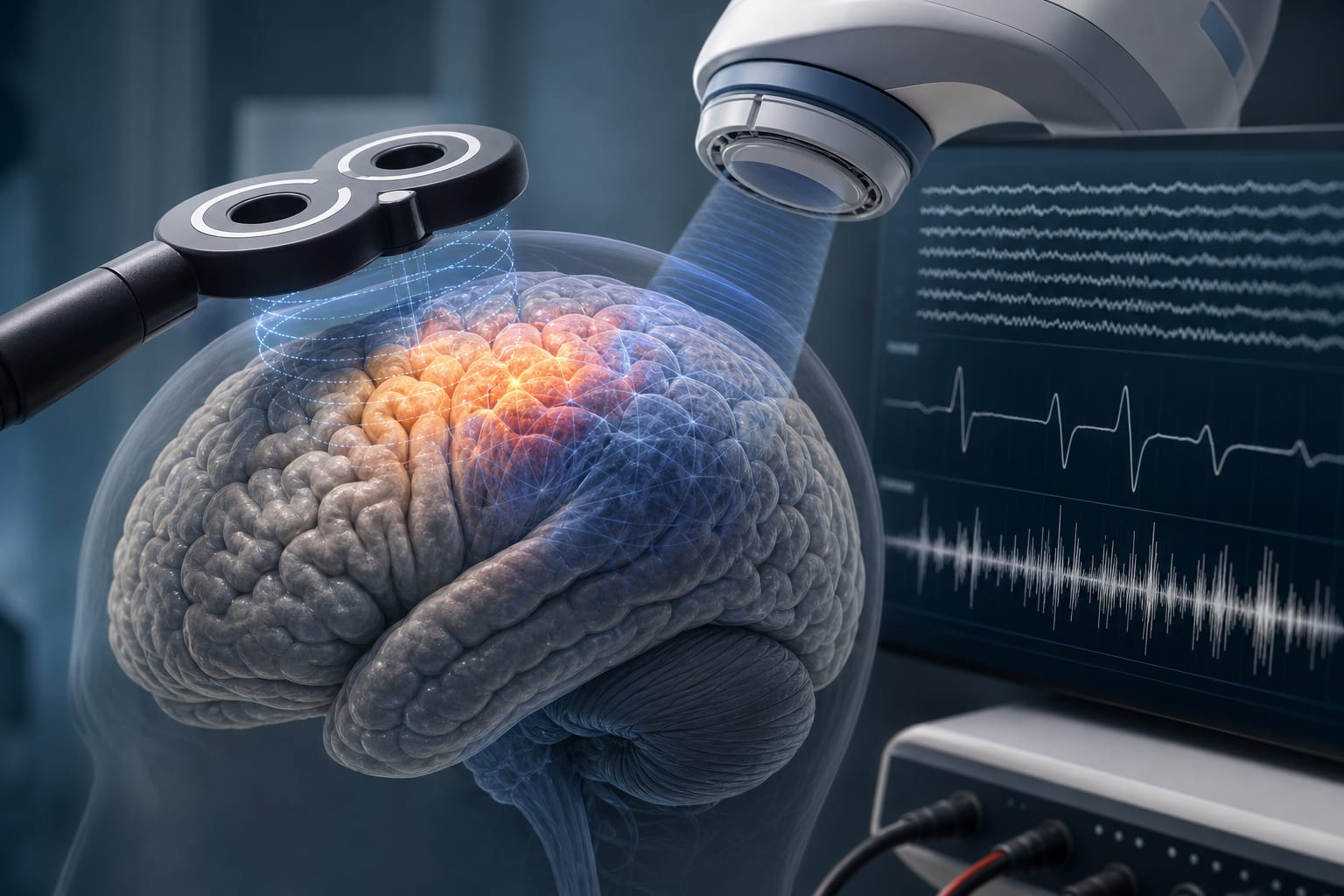
To synthesize findings on upper motor neuron (UMN) dysfunction in ALS and propose a novel experimental framework integrating transcranial focused ultrasound (tFUS) with transcranial magnetic stimulation (TMS) for further investigation.
Approach:
Key Findings:
Cortical hyperexcitability is an early mechanism in ALS, potentially driving lower motor neuron degeneration.
TMS-EMG and TMS-EEG studies indicate cortical disinhibition and excitatory-inhibitory imbalance in ALS.
Current biomarkers lack sensitivity to capture subtle disease progression, highlighting the need for quantitative measures.
Interpretation:
The integration of TMS and tFUS may enhance understanding of UMN dysfunction in ALS, leading to improved biomarkers and therapeutic strategies.
Limitations:
Clinical and biological heterogeneity in ALS complicates effective trial design.
No single biomarker has achieved universal clinical adoption.
Conclusion:
Noninvasive neurophysiology, particularly through TMS and tFUS, offers a framework for elucidating UMN dysfunction in ALS.