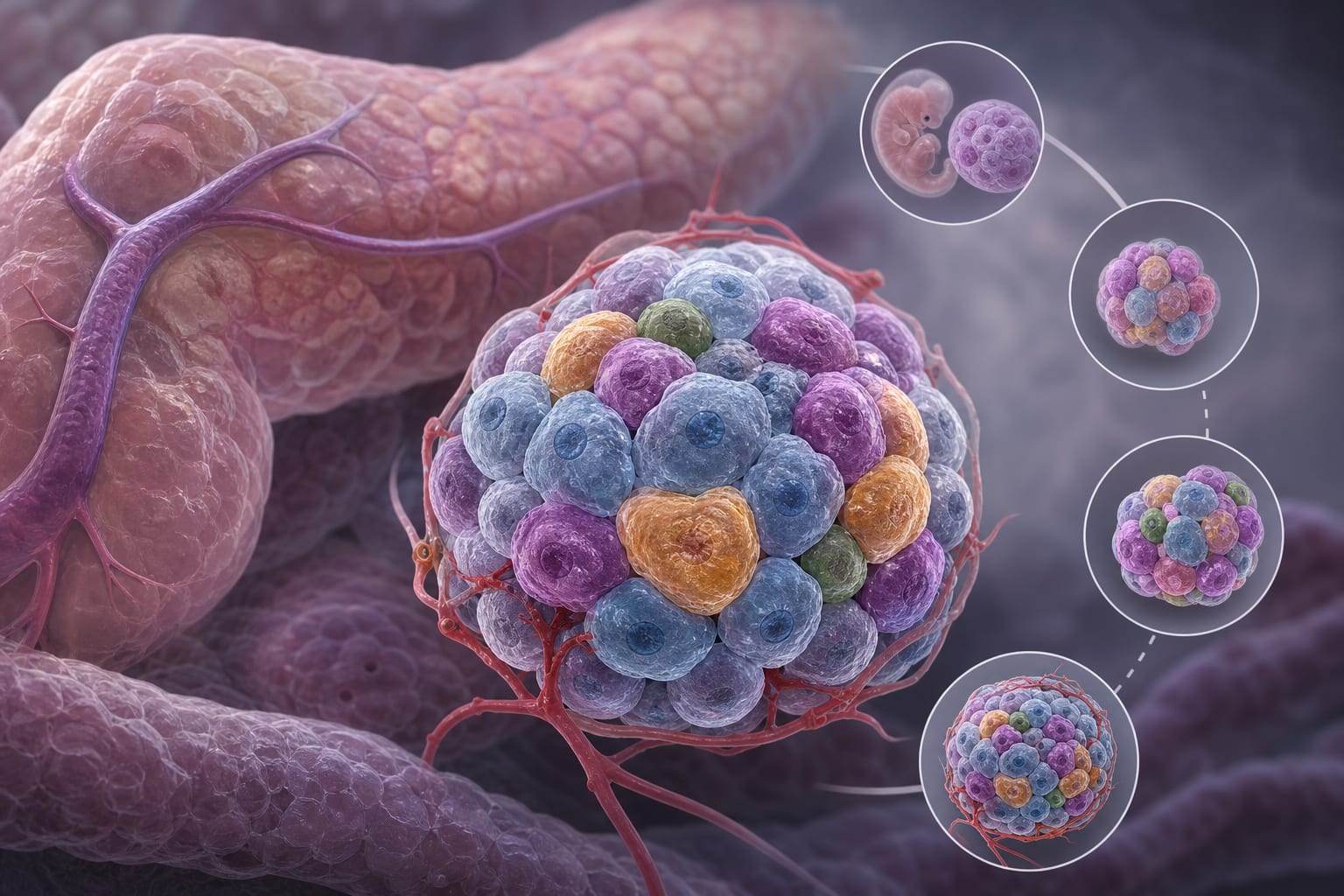
To explore the mechanisms of endocrine cell proliferation in the embryonic, neonatal, and adult pancreas.
Approach:
Endocrine Cell Proliferation: The editorial discusses the changes in endocrine cell proliferative capacity across the lifespan, emphasizing the extensive expansion during embryonic and neonatal development and the quiescence in adults.
Regulatory Mechanisms: It highlights the importance of identifying signals that enable or constrain endocrine cell proliferation at different life stages to develop regenerative strategies for diabetes.
Research Contributions: The editorial summarizes various studies that address developmental programming, epigenetic regulation, nutrient sensing, and microenvironmental control of endocrine cell growth.
Key Findings:
PDGFRα signaling is essential for maintaining β-cell proliferative competence.
Metabolic adaptation supports endocrine cell expansion under increased demand.
Epigenetic mechanisms play a crucial role in establishing endocrine cell identity and proliferative potential.
Adaptive growth responses are linked to diabetes pathogenesis, with implications for β-cell mass preservation.
Other endocrine cell populations, such as α-cells, also contribute to islet adaptation and regeneration.
Interpretation:
Limitations:
The editorial does not provide specific experimental data or detailed methodologies from the studies discussed.
It lacks a comprehensive overview of all endocrine cell types and their roles in islet function.
Conclusion:
Understanding the mechanisms of endocrine cell proliferation is crucial for developing regenerative therapies for diabetes.