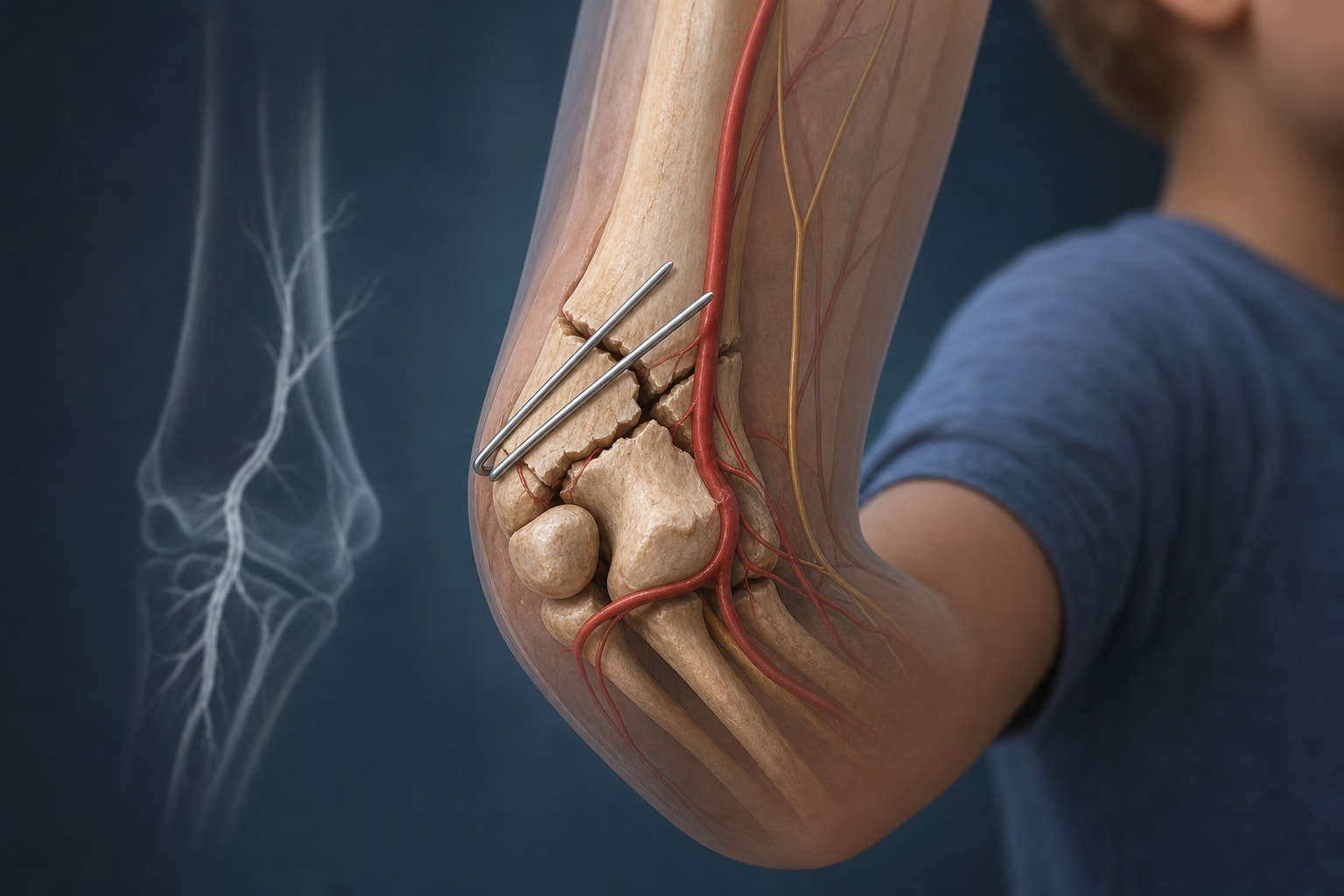
To describe clinical outcomes in children with Gartland type III supracondylar humeral fractures and vascular compromise, highlighting the significance of vascular status.
Key Findings:
Mean age of patients was 5.75 years with a follow-up of 6 months.
10 patients presented with ischemia requiring vascular exploration; 2 with pink pulseless hand were monitored.
50% of patients had angular deformities (3 varus, 3 valgus).
Only 50% achieved an excellent Flynn result.
Complications included anterior interosseous nerve neuropraxia (2 cases), brachial artery thrombosis (1 case), and compartment syndrome (1 case).
Interpretation:
Management should prioritize limb perfusion over pulse status, emphasizing the implications for treatment decisions.
Limitations:
Small sample size.
Short follow-up duration.
Descriptive findings requiring confirmation in larger studies, impacting generalizability.
Conclusion:
The study emphasizes the importance of assessing limb perfusion in managing Gartland type III fractures with vascular compromise and highlights the need for further research.