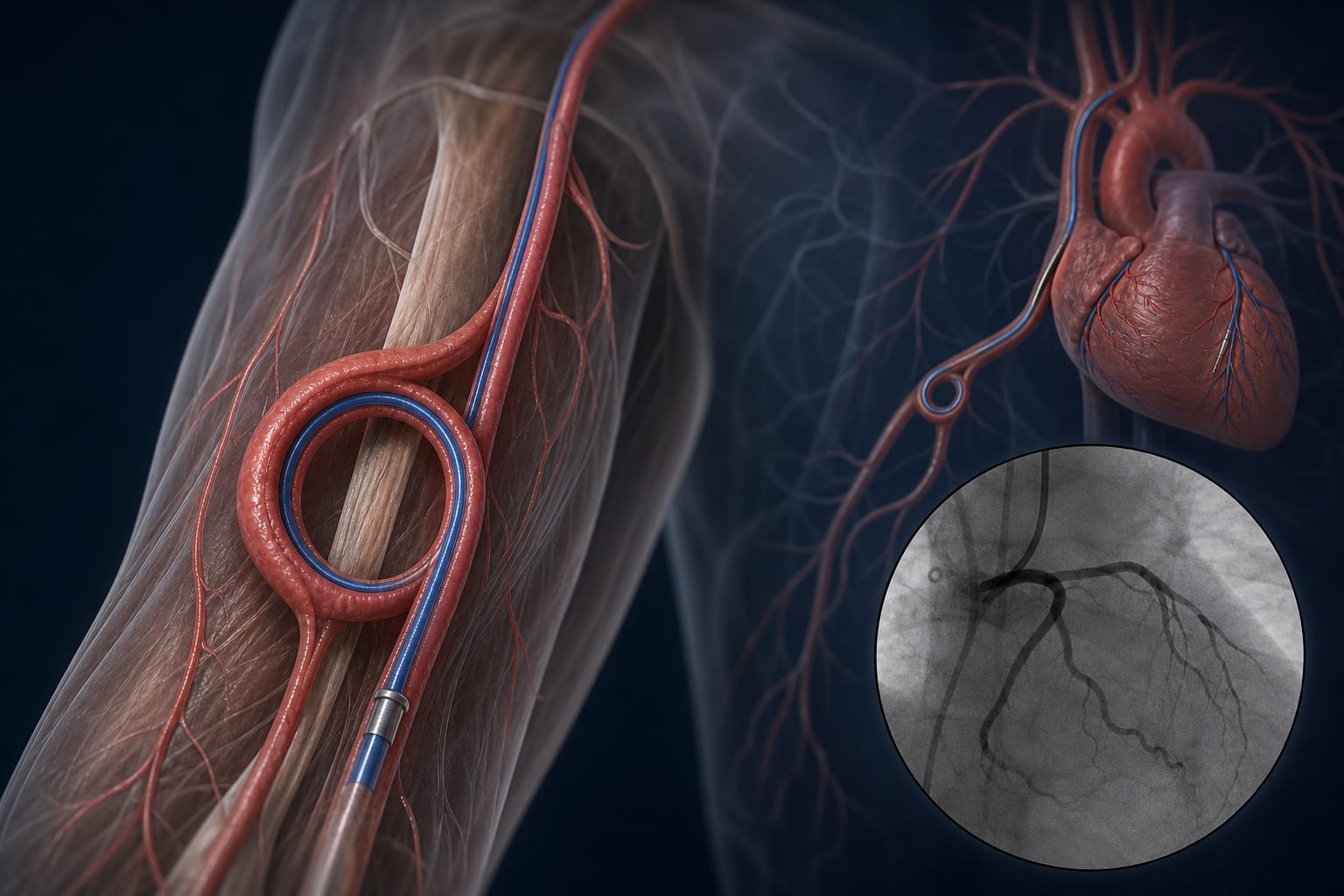
To highlight the distinction between successful traversal of tortuous arterial anatomy and achieving functional access during primary PCI in a specific case.
Approach:
Procedural Strategy: A structured escalation strategy was employed, involving sequential exchange to progressively higher-support guidewires to restore functional access.
Key Findings:
Successful traversal does not guarantee functional access in cases of extreme arterial tortuosity.
Geometric correction is necessary to achieve effective catheter performance.
A correctability-focused escalation strategy can restore functional access.
Interpretation:
This case highlights the need for a structured approach to manage extreme upper-limb arterial tortuosity, focusing on geometric correction.
Limitations:
The findings are based on a single patient experience, which may limit their applicability.
The specific techniques used may not be suitable for all cases of arterial tortuosity.
Conclusion:
This case supports a structured framework for managing extreme upper-limb arterial tortuosity, emphasizing the importance of assessing functional access.