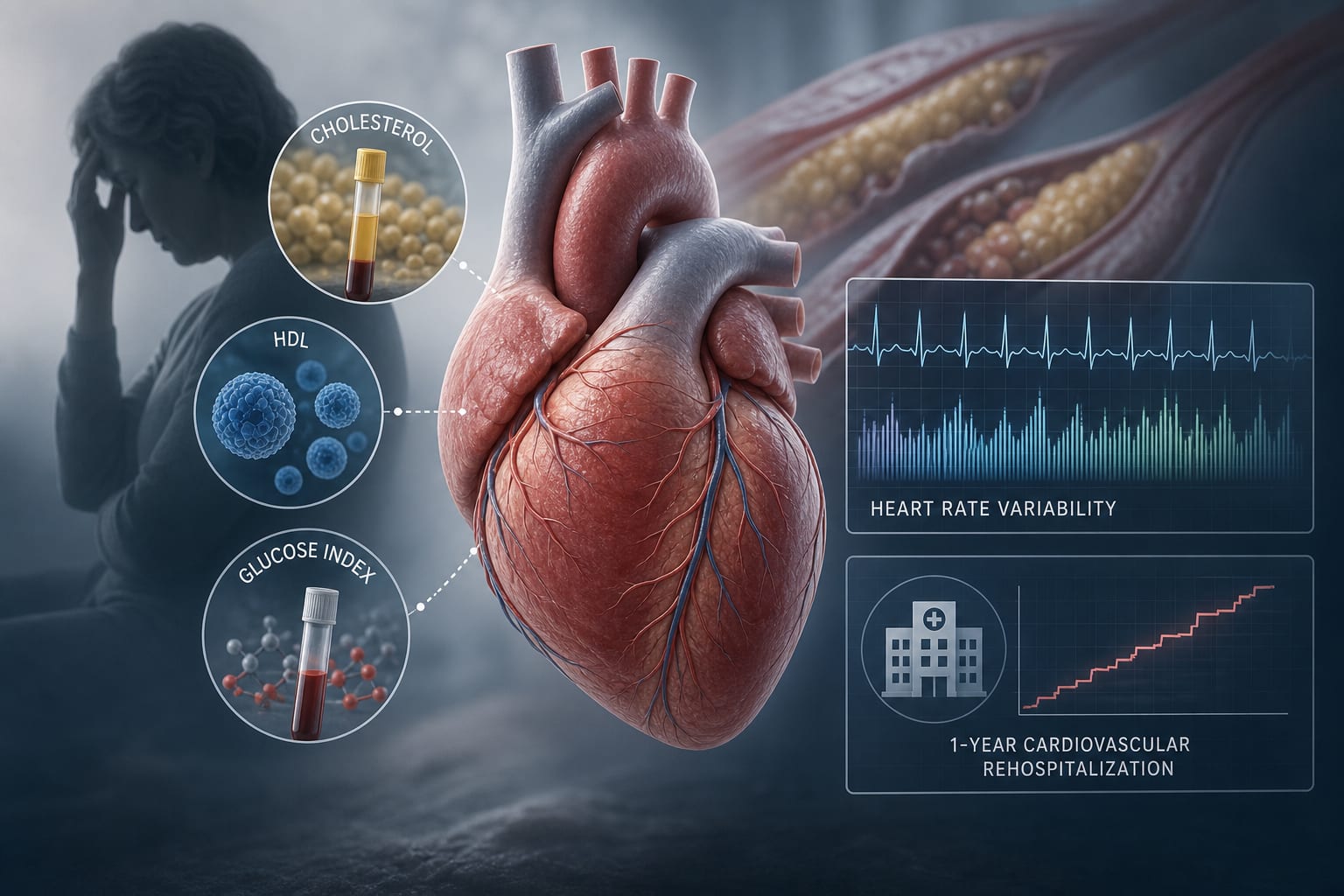
Cholesterol, high-density lipoprotein, and glucose index as a cardiometabolic marker associated with heart rate variability and 1-year cardiovascular rehospitalization in chronic coronary syndromes with comorbid anxiety: a retrospective cohort study - Summary - MDSpire
Advertisement
Cholesterol, high-density lipoprotein, and glucose index as a cardiometabolic marker associated with heart rate variability and 1-year cardiovascular rehospitalization in chronic coronary syndromes with comorbid anxiety: a retrospective cohort study
To investigate the associations of the cholesterol, high-density lipoprotein, and glucose (CHG) index with heart rate variability (HRV) and 1-year cardiovascular rehospitalization in patients with chronic coronary syndromes (CCS) and comorbid anxiety, highlighting the significance of these associations in improving patient outcomes.
Key Findings:
Patients in the highest CHG quartile (Q4) had significantly lower HRV_z compared to those in the lowest quartile (Q1) (β = -0.529, P < 0.001).
Each 1-unit increase in CHG was associated with a higher risk of 1-year cardiovascular rehospitalization (OR = 3.253, P < 0.001).
Patients in Q4 had a higher rehospitalization risk than those in Q1 (OR = 3.656, P < 0.001).
Higher HRV_z was associated with lower rehospitalization risk in exploratory analyses, with 'HRV_z' defined earlier in the summary.
Interpretation:
Elevated CHG is associated with increased 1-year cardiovascular rehospitalization risk in patients with CCS and comorbid anxiety, with lower HRV_z linked to higher rehospitalization risk, emphasizing the implications for clinical practice.
Limitations:
The study's retrospective design limits causal inferences and may introduce biases.
Standardized anxiety scale scores and treatment adherence data were not available for stratified analyses, which could affect the robustness of the findings.
Conclusion:
CHG and Holter-derived HRV_z may provide complementary information for risk assessment in patients with CCS and comorbid anxiety, suggesting potential clinical applications for improving patient management.