Preoperative gut microbiota depletion and metabolomic signatures predict postoperative pneumonia in patients with intracranial space-occupying lesions: a multi-omics prospective cohort study - Summary - MDSpire
Conexiant’s news site is now MDSpire News. Learn more
Advertisement
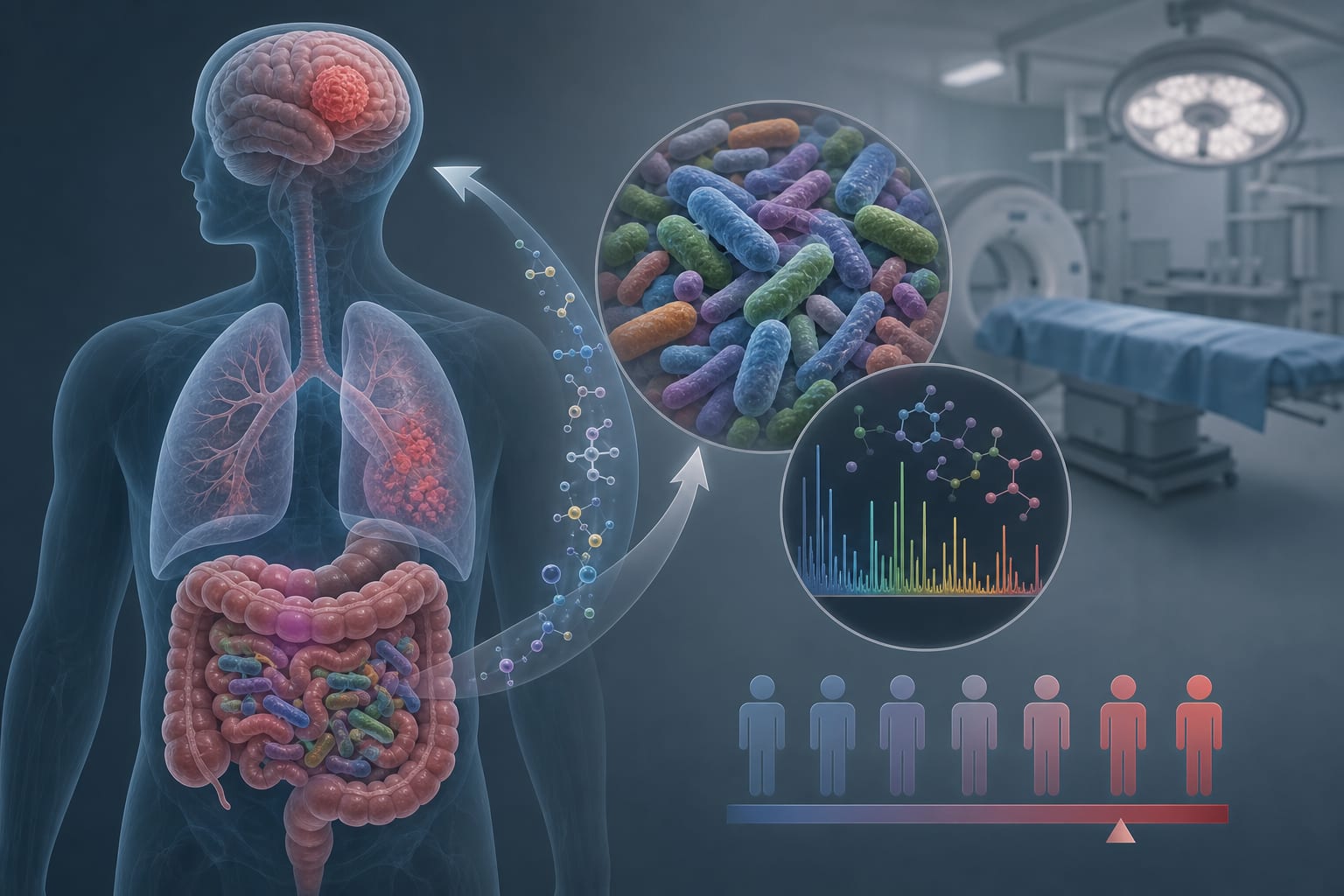
Preoperative Depletion of Gut Microbiota and Metabolomic Profiles as Predictors of Postoperative Pneumonia in Patients Undergoing Surgery for Intracranial Lesions: A Multi-Omics Prospective Study
To characterize preoperative and postoperative gut microbiota and metabolic signatures in patients with intracranial space-occupying lesions, aiming to construct a predictive model for postoperative pneumonia (POP) and understand the relationship between these factors.
Approach:
Key Findings:
Surgical stress reduced microbial diversity, with significant preoperative depletion of Roseburia in the POP group, highlighting its potential role in infection risk.
Metabolomic analysis indicated a preoperative 'metabolic deficiency' state in POP patients, particularly in fructose and mannose metabolism, suggesting targets for intervention.
Preoperative Roseburia abundance positively correlated with the anti-inflammatory metabolite 1-methylnicotinamide, indicating a protective role.
A metabolic signature of the top 10 preoperative metabolites predicted POP with an AUC of 1.0, demonstrating high predictive accuracy.
Interpretation:
Disruption of metabolic homeostasis due to preoperative gut microbiota depletion is associated with increased susceptibility to postoperative pneumonia.
Limitations:
The study was limited to a single center, which may affect the generalizability of the findings; future studies should include multiple centers.
The sample size of 50 patients may limit the robustness of the predictive model; larger studies are needed to validate these findings.
Conclusion:
Monitoring preoperative metabolic signatures can help identify high-risk individuals for postoperative pneumonia, providing a pathway for early intervention and improved patient outcomes.