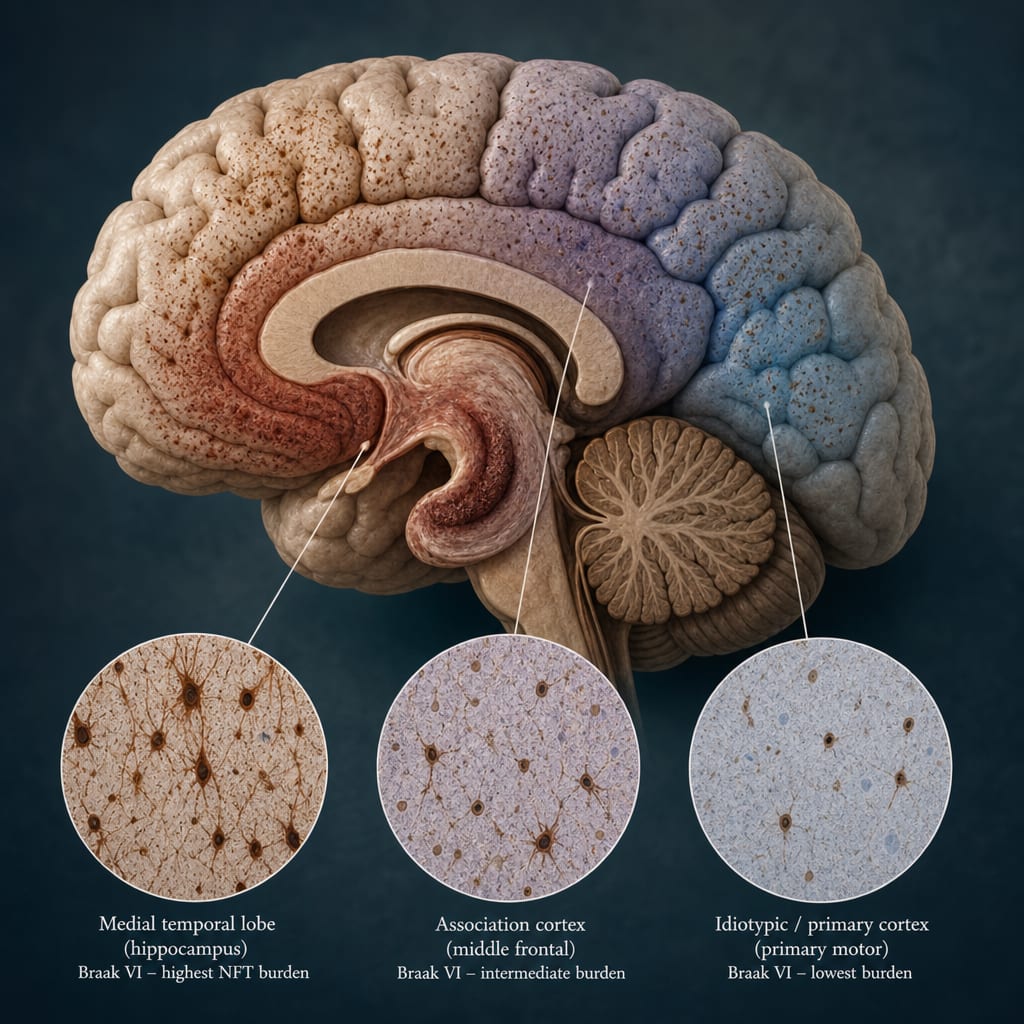
A Molecular Atlas of the Alzheimer’s Brain
Label-free Raman imaging reveals molecular heterogeneity across Alzheimer’s-affected brain regions
Objective:
To construct a comprehensive, label-free molecular atlas of the Alzheimer’s brain and identify region-specific chemical changes.
Key Findings:
- Significant regional heterogeneity in Alzheimer’s-related molecular changes was observed.
- Memory-associated areas like the hippocampus and cortex showed stronger deviations from healthy tissue.
- Metabolic differences, including variations in cholesterol and glycogen, were identified across multiple brain regions.
Interpretation:
The findings suggest that Alzheimer’s disease involves broader disruptions in brain structure and energy balance, beyond just protein aggregation.
Limitations:
- The study was conducted in an animal model, which may not fully replicate human Alzheimer's pathology.
- Further research is needed to extend findings to other disease models or earlier stages of Alzheimer's.
Conclusion:
The framework provides a more comprehensive view of Alzheimer’s-associated molecular changes, potentially aiding in understanding disease progression.