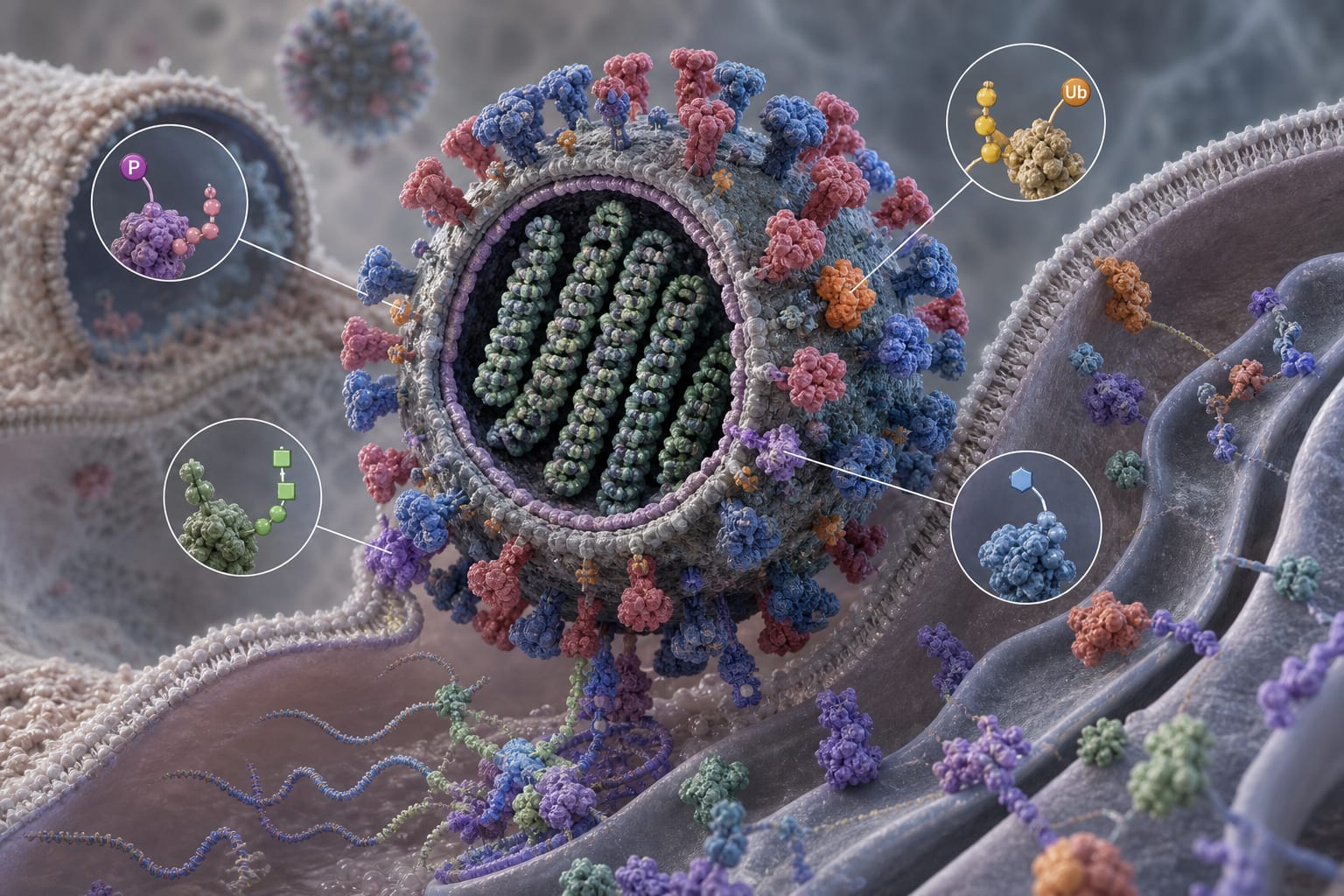
To synthesize current knowledge on the role of post-translational modifications (PTMs) in influenza virus life cycle and host interactions.
Approach:
Key Findings:
Phosphorylation and ubiquitin signaling fine-tune polymerase activity and ribonucleoprotein trafficking.
SUMOylation and acetylation modulate polymerase function and host immune antagonism.
Glycosylation remodeling of viral glycoproteins is linked to antigenic evolution and immune escape.
RNA methylation and PTM-linked metabolic pathways influence host environments to support viral replication.
Interpretation:
The review highlights the complexity of PTM networks in regulating influenza virus interactions with the host.
Limitations:
The contribution of specific PTM events during human infection remains incompletely defined.
Conclusion:
A systems-level view of PTM networks reveals regulatory vulnerabilities at the host–virus interface, suggesting potential targets for antiviral strategies.