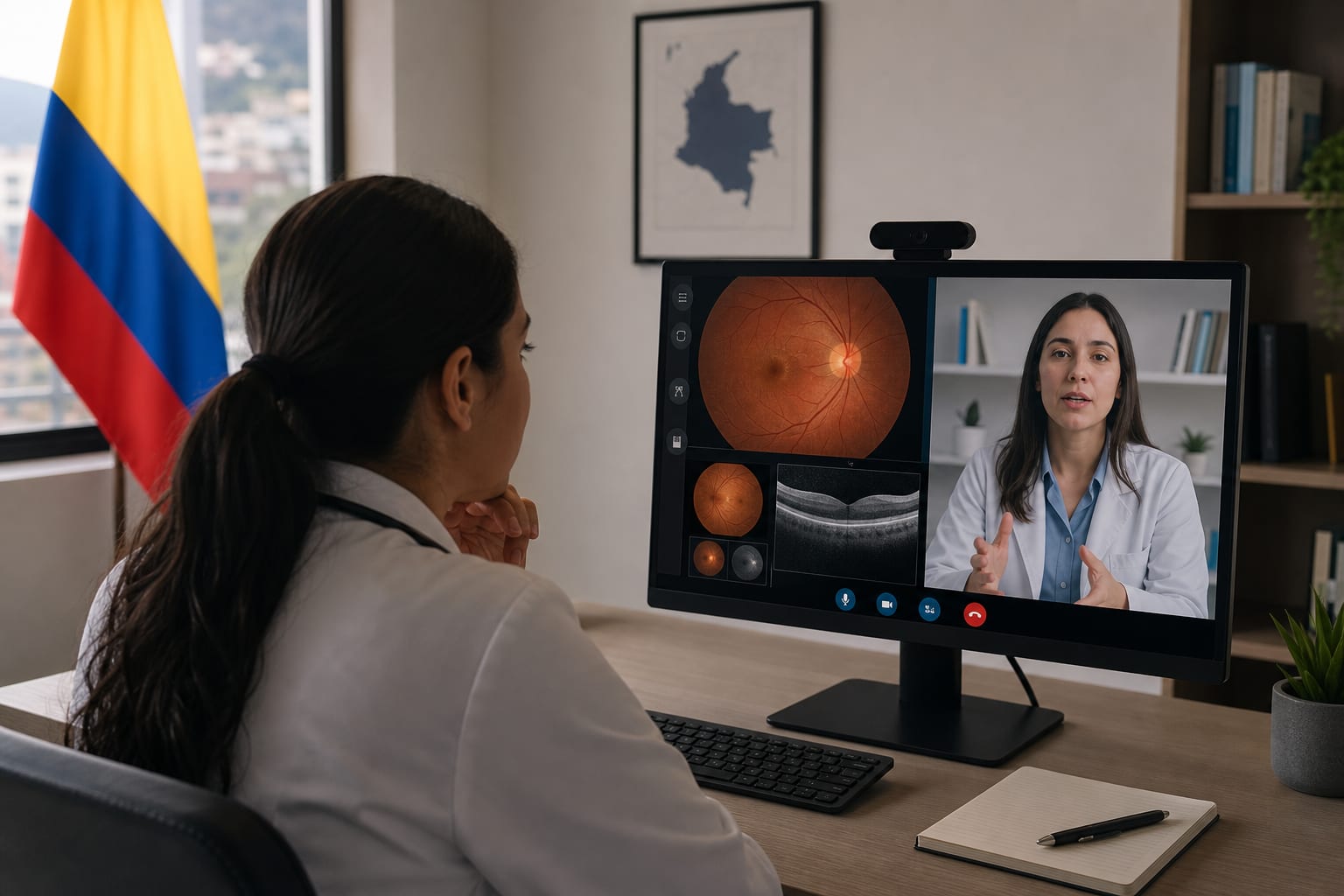
To assess perceptions, self-reported ophthalmologic confidence, and perceived barriers related to teleophthalmology among Colombian general practitioners.
Key Findings:
62.2% of participants were women, with 70.1% aged 21–30 years and 65.6% having 0–5 years of experience.
Undergraduate telemedicine training was uncommon (9.0%), and prior teleophthalmology experience was rare (1.8%).
45.6% reported moderate confidence in ophthalmologic knowledge, while 57.3% had positive perceptions of teleophthalmology.
Greater undergraduate ophthalmology training was associated with high confidence, with a dose-response effect.
Prior telemedicine experience correlated with higher confidence levels.
Interpretation:
Colombian general practitioners generally view teleophthalmology positively, but face barriers such as inadequate training and concerns about privacy and job security.
Limitations:
Limited prior exposure to teleophthalmology among participants.
Potential biases in self-reported data.
Conclusion:
Enhancing ophthalmology and telemedicine training, along with improving digital readiness, may facilitate the integration of teleophthalmology into routine practice.
by Loaiza-Guevara, Valentina , Martinez-Rivera, Juliana P, Restrepo, Natalia , Quintero-Patino, Laura , Pinto-Arias, Andrea , Martinez, Luis Miguel, Rincón-Hernández, Wendy M., Gaibor Pazmiño, Alice , Izquierdo-Condoy, Juan Sebastian