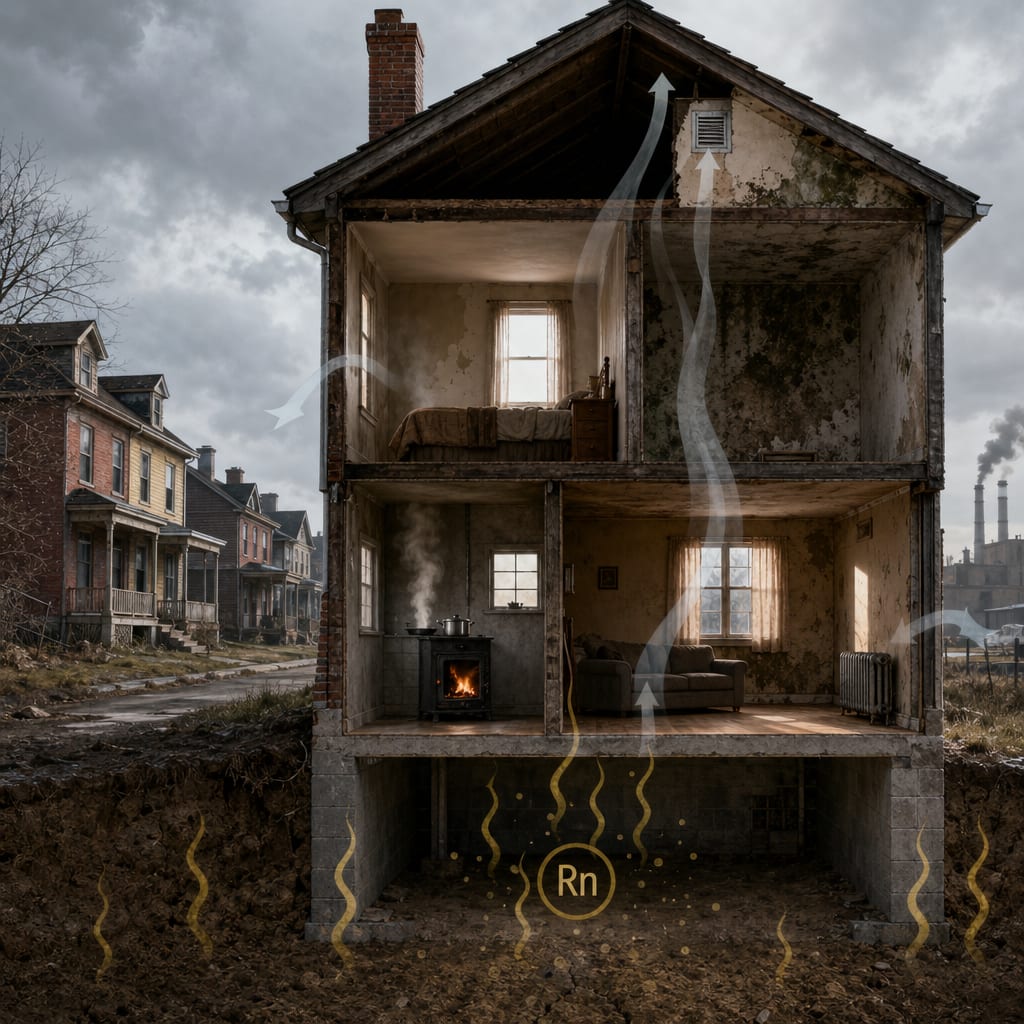
To examine how inadequate housing conditions and energy poverty influence cancer risk factors and outcomes, particularly focusing on incidence, survival, and mortality.
Key Findings:
Residential radon exposure is consistently associated with increased lung cancer risk, highlighting the need for improved ventilation.
Combustion-derived pollutants from solid-fuel use increase cancer risk, disproportionately affecting women and low-income households, indicating a need for targeted interventions.
Emerging data link particle-bound radioactivity to reduced cancer survival independent of radon exposure, suggesting new areas for research.
Socioeconomic disadvantage, racialized status, and energy insecurity amplify vulnerability and worsen cancer outcomes, underscoring the need for equitable health policies.
Interpretation:
Housing and energy systems are structural determinants of cancer control, necessitating integrated strategies for cancer prevention and survivorship that address energy policies, indoor air quality, and socioeconomic factors.
Limitations:
Limited systematic studies examining the mechanisms linking housing and energy insecurity to cancer risk, particularly in diverse populations.
Insufficient data on the specific pathways through which these social determinants affect cancer outcomes, highlighting a gap in research.
Conclusion:
Effective cancer prevention strategies must integrate equitable energy policies and targeted interventions for energy-housing-insecure populations to reduce disparities and support climate-resilient health systems, emphasizing the interconnectedness of housing and energy security.