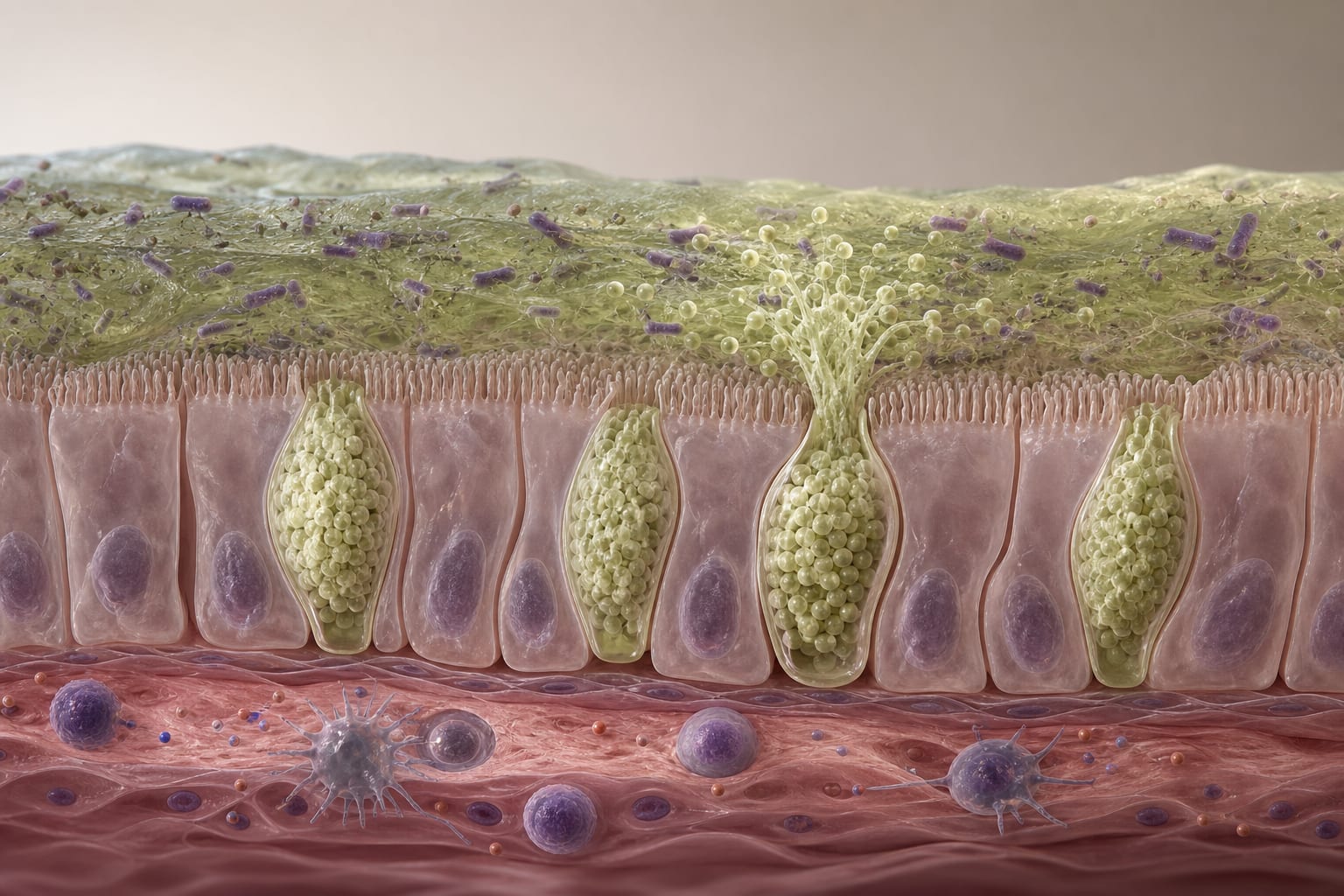
To determine whether mucus dysfunction in inflammatory bowel disease (IBD) reflects intrinsic mucin-folding defects or is a result of secondary inflammatory remodeling.
Key Findings:
3,129 genes in CD and 3,729 in UC were differentially expressed, with substantial overlap between diseases, indicating shared molecular pathways.
Both conditions showed upregulation of pathways linked to goblet-cell differentiation, mucin transcription, and endoplasmic reticulum quality control.
MUC1, MUC4, MUC5AC, and MUC5B were consistently upregulated in active IBD, while MUC2 was strongly elevated in CD.
Glycosyltransferases and secretion-associated immune regulators increased, whereas the barrier lectin ZG16 decreased.
ER stress components were upregulated compared to controls.
Interpretation:
Mucus barrier dysfunction in human IBD reflects inflammatory remodeling of epithelial programs rather than primary secretory collapse alone, sharing conserved ER-stress and microbial response signatures, which may inform future therapeutic strategies.
Limitations:
Variability in findings across individual studies may stem from differences in study design, patient demographics, and technical methods, which complicates the interpretation of results.
Transcriptomic measurements alone cannot distinguish between causal epithelial dysfunction and adaptive remodeling.
Conclusion:
Integrating human and murine datasets identifies candidate pathways that may stabilize mucin folding and preserve host-microbe spatial segregation in intestinal disease, potentially guiding future therapeutic interventions.