Homologous recombination repair and breast cancer gene testing in prostate cancer: expert perspectives and practical guidance on best practice from sample acquisition to biomarker-informed clinical decision-making - Summary - MDSpire
Advertisement
Homologous recombination repair and breast cancer gene testing in prostate cancer: expert perspectives and practical guidance on best practice from sample acquisition to biomarker-informed clinical decision-making
To provide practical recommendations for implementing HRR/BRCA testing in prostate cancer management to improve early identification of suitable patients for targeted therapies.
Approach:
Clinical Experience and Literature Review: The recommendations are based on the clinical experience of a multidisciplinary group of healthcare professionals and current literature.
Key Findings:
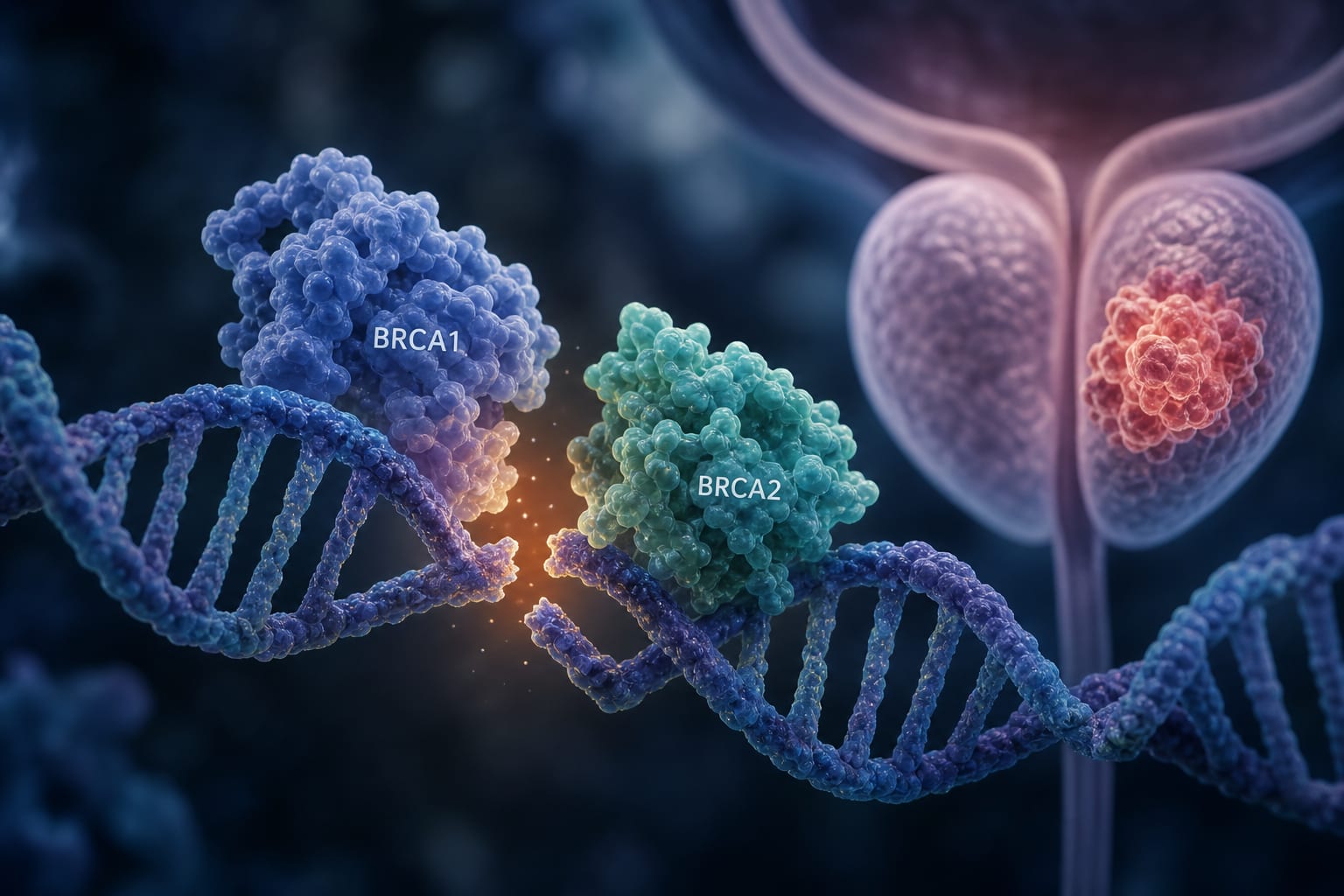
Approximately 25% of metastatic prostate cancer patients have homologous recombination repair (HRR) pathway mutations, with over 12% having BRCA1/BRCA2 alterations.
HRR/BRCA mutations are associated with poorer prognosis and increased sensitivity to targeted therapies, such as poly(adenosine diphosphate-ribose) polymerase inhibitors (PARPis).
Barriers to early testing for HRR/BRCA mutations include unequal access, unclear testing guidelines, and inconsistent practices.
Interpretation:
Implementing HRR/BRCA testing early in the treatment pathway may improve patient outcomes by enabling timely access to targeted therapies.
Limitations:
Barriers to testing include inconsistent practices, long turnaround times for results, and limited access to testing outside academic centers.
Conclusion:
The article emphasizes the need for clear testing pathways and early identification of patients eligible for targeted therapies in prostate cancer management.