Efficacy of non-pharmacological interventions for cognitive impairment in patients with traumatic brain injury: a network meta-analysis - Summary - MDSpire
Advertisement
Efficacy of non-pharmacological interventions for cognitive impairment in patients with traumatic brain injury: a network meta-analysis
To evaluate multiple non-pharmacological interventions for cognitive dysfunction in TBI patients and assess the certainty of evidence while identifying research gaps.
Approach:
Study Selection: Randomized controlled trials (RCTs) were systematically searched in English and Chinese databases up to August 15, 2025.
Data Extraction: Two reviewers independently performed study selection, data extraction, and risk of bias assessment using the Cochrane Risk of Bias Tool (RoB 1.0).
Network Meta-Analysis: A network meta-analysis was conducted using R to compare intervention effects on MMSE, MoCA, and MBI.
Evidence Quality Assessment: Evidence quality was assessed using the GRADE framework.
Key Findings:
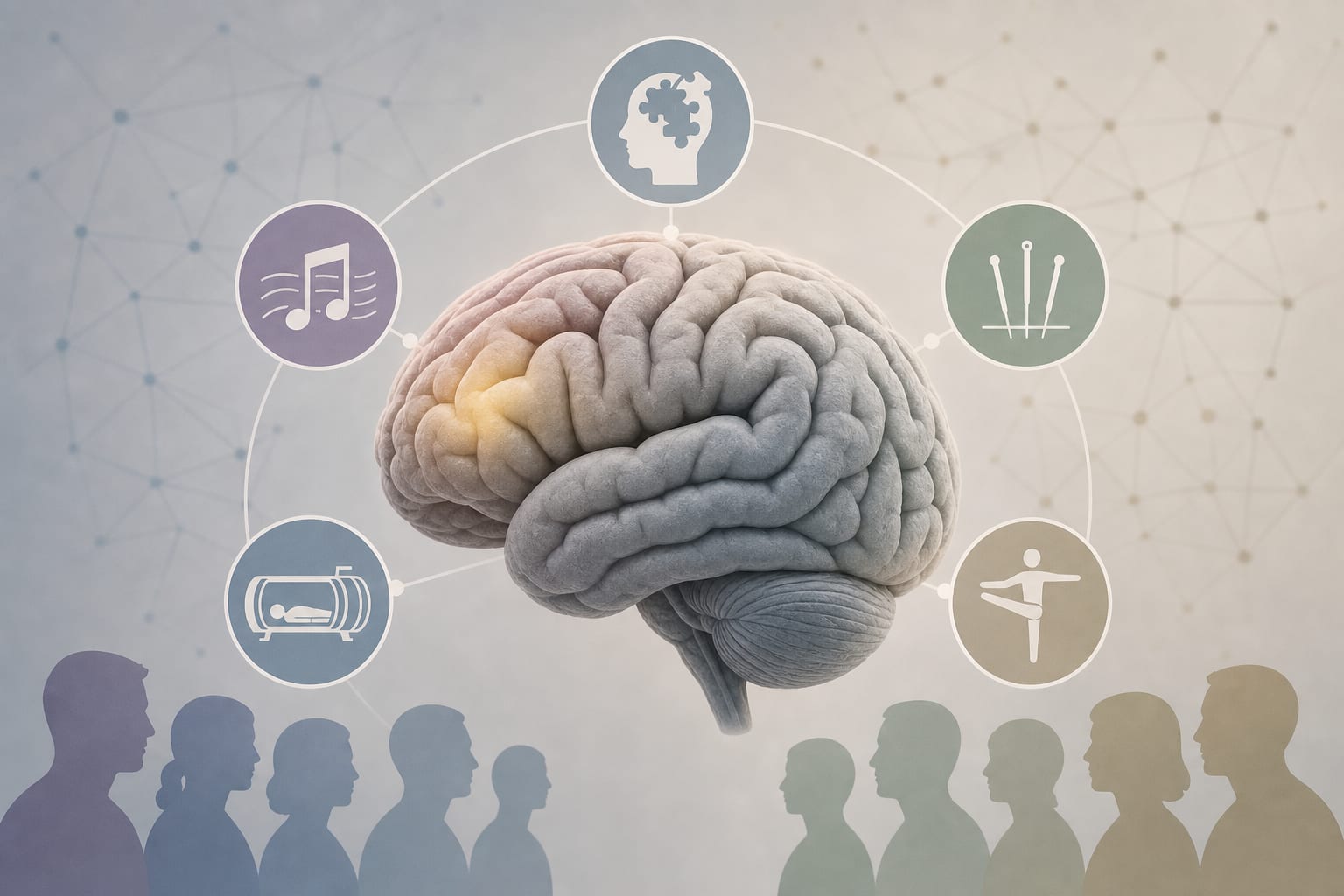
Nine RCTs involving 528 participants and eight non-pharmacological interventions were included.
Music therapy showed a potential benefit in improving MMSE scores.
Comprehensive nursing intervention demonstrated a possible advantage in MoCA outcomes.
Electroacupuncture combined with hyperbaric oxygen therapy showed a positive trend in improving MBI scores.
Overall evidence certainty was low or very low, and effect estimates were imprecise.
Interpretation:
Current evidence suggests that several non-pharmacological interventions may offer potential benefits for cognitive and functional recovery in TBI patients; however, findings are highly uncertain and insufficient to support clinical prioritization.
Limitations:
The evidence network was sparse, with most comparisons informed by single studies, leading to imprecise effect estimates.
Conclusion:
Further large-scale, high-quality RCTs are needed to establish reliable comparative effectiveness.