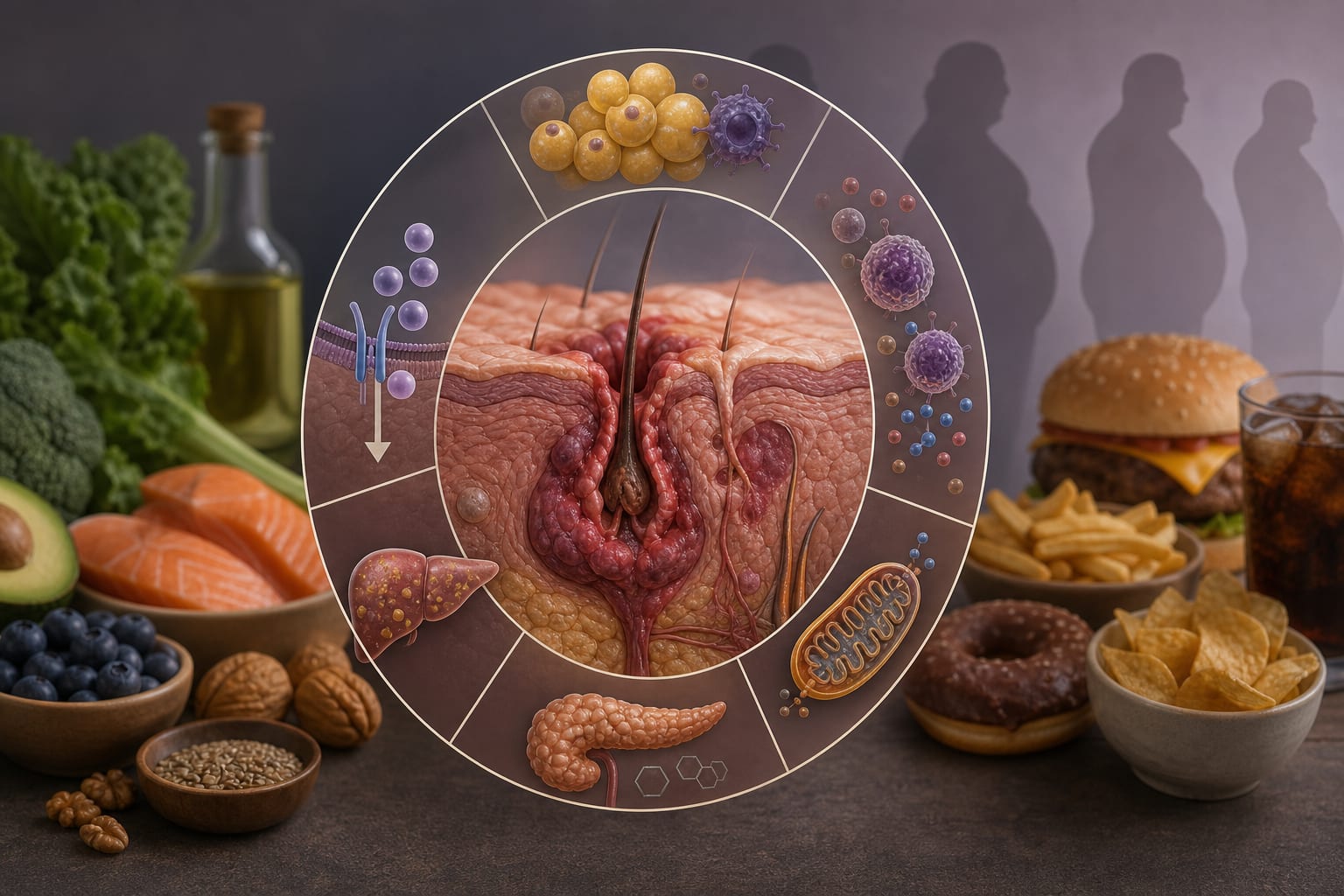
To systematically evaluate available evidence on dietary patterns, nutritional interventions, and micronutrient status in hidradenitis suppurativa, emphasizing their associations with disease onset, severity, and underlying metabolic and inflammatory mechanisms.
Key Findings:
Lower adherence to Mediterranean dietary patterns and higher glycaemic dietary patterns associated with greater HS severity (observational evidence).
Micronutrient deficiencies, particularly in vitamin D and zinc, linked to increased disease severity (observational evidence).
Limited interventional evidence; some improvement noted with very low-calorie ketogenic diets and yeast-exclusion diets (interventional evidence).
Bariatric surgery cohorts indicated that malabsorptive procedures may worsen HS due to persistent micronutrient deficiencies.
Interpretation:
Dietary habits and nutritional status may influence hidradenitis suppurativa through metabolic and inflammatory mechanisms, although the evidence is heterogeneous and largely observational, suggesting a need for further exploration.
Limitations:
Evidence remains limited and heterogeneous, with potential publication bias.
Most studies are observational, lacking controlled trials.
Small sample sizes in interventional studies.
Conclusion:
Promoting anti-inflammatory dietary patterns, optimizing micronutrient intake, and addressing obesity may provide supportive benefits alongside standard HS therapies. Further controlled studies are urgently needed to establish causality.
The company adds $300 million to its Puerto Rico biologics site as Pfizer reports Phase 3 myeloma data, J&J advances a dual-pathway IBD antibody, and BioNTech streamlines production