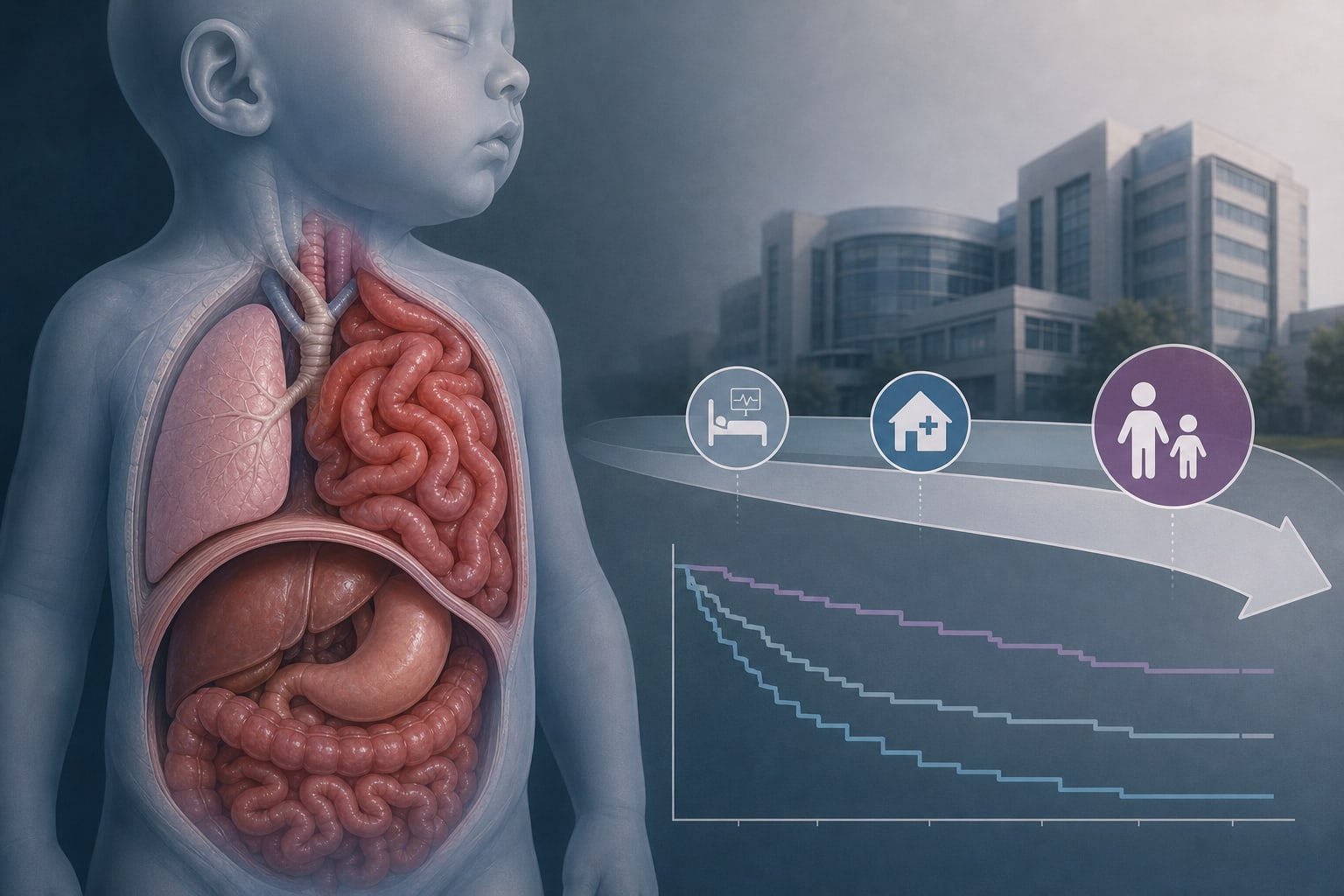
To determine the incidence and causes of 3-year readmission and associated factors among children discharged alive after neonatal care and surgery for congenital diaphragmatic hernia (CDH), and to assess late mortality and its associated factors.
Approach:
Study Design: A retrospective nationwide cohort study using linked national routinely collected data from the French National Health Data System (SNDS) over a 12-year period.
Participants: Liveborn singleton children with CDH who underwent surgical repair within 6 months of life and were alive at discharge from the primary hospital stay.
Outcomes: Primary outcome was readmission to an acute care facility within 3 years after discharge; secondary outcome was death during follow-up.
Data Collection: Data on readmissions, individual characteristics, and causes of death were collected using ICD-10 codes and health insurance claims.
Key Findings:
The study identified the incidence and causes of readmissions among children with CDH, including specific categories of readmission reasons.
Factors associated with readmissions and late mortality were analyzed using statistical models, providing a comprehensive overview of the determinants.
Interpretation:
Limitations:
Follow-up is often limited to the first year of life, which may not capture long-term outcomes.
Previous studies focused on specific comorbidities or were based on small sample sizes, limiting generalizability.
FOXC1 duplications were the second most common monogenic finding among genetically solved juvenile open-angle glaucoma cases in one registry, supporting the use of copy-number variant analysis in early-onset glaucoma testing.