Systematic review and meta-analysis of machine learning-based prediction models for readmission risk after total hip and knee arthroplasty - Summary - MDSpire
Advertisement
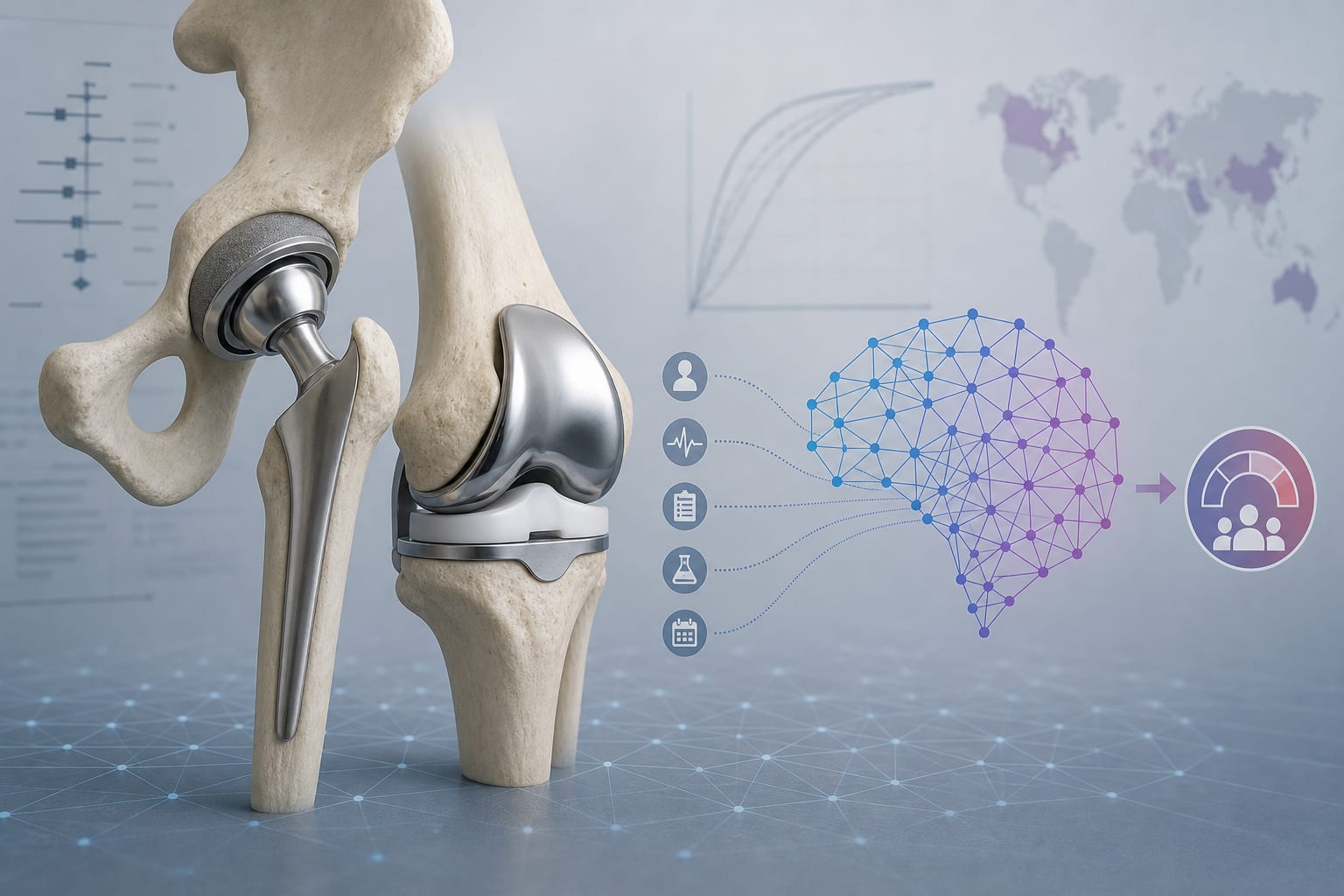
Systematic review and meta-analysis of machine learning-based prediction models for readmission risk after total hip and knee arthroplasty
To systematically review and quantitatively synthesize the evidence base for machine learning-based readmission prediction after total hip and knee arthroplasty (THA/TKA).
Approach:
Literature Search: A systematic search was conducted across PubMed, Embase, Cochrane Library, and Web of Science from inception to December 31, 2025, focusing on studies developing or validating ML models for THA/TKA readmission.
Data Extraction and Analysis: Model performance (C-statistic/AUC) was extracted, and study quality was assessed using the PROBAST + AI tool. A multivariate random-effects meta-analysis was performed to pool C-statistics and quantify heterogeneity.
Key Findings:
Fifteen studies (57 distinct models) were included, with a pooled C-statistic of 0.76 (95% CI: 0.71–0.81).
Extreme heterogeneity (I2 = 99.9%) limited the clinical utility of the pooled estimate.
Two single-injection cross-linked hyaluronic acid formulations showed no statistically significant advantage over saline for pain or functional outcomes through 24 weeks.