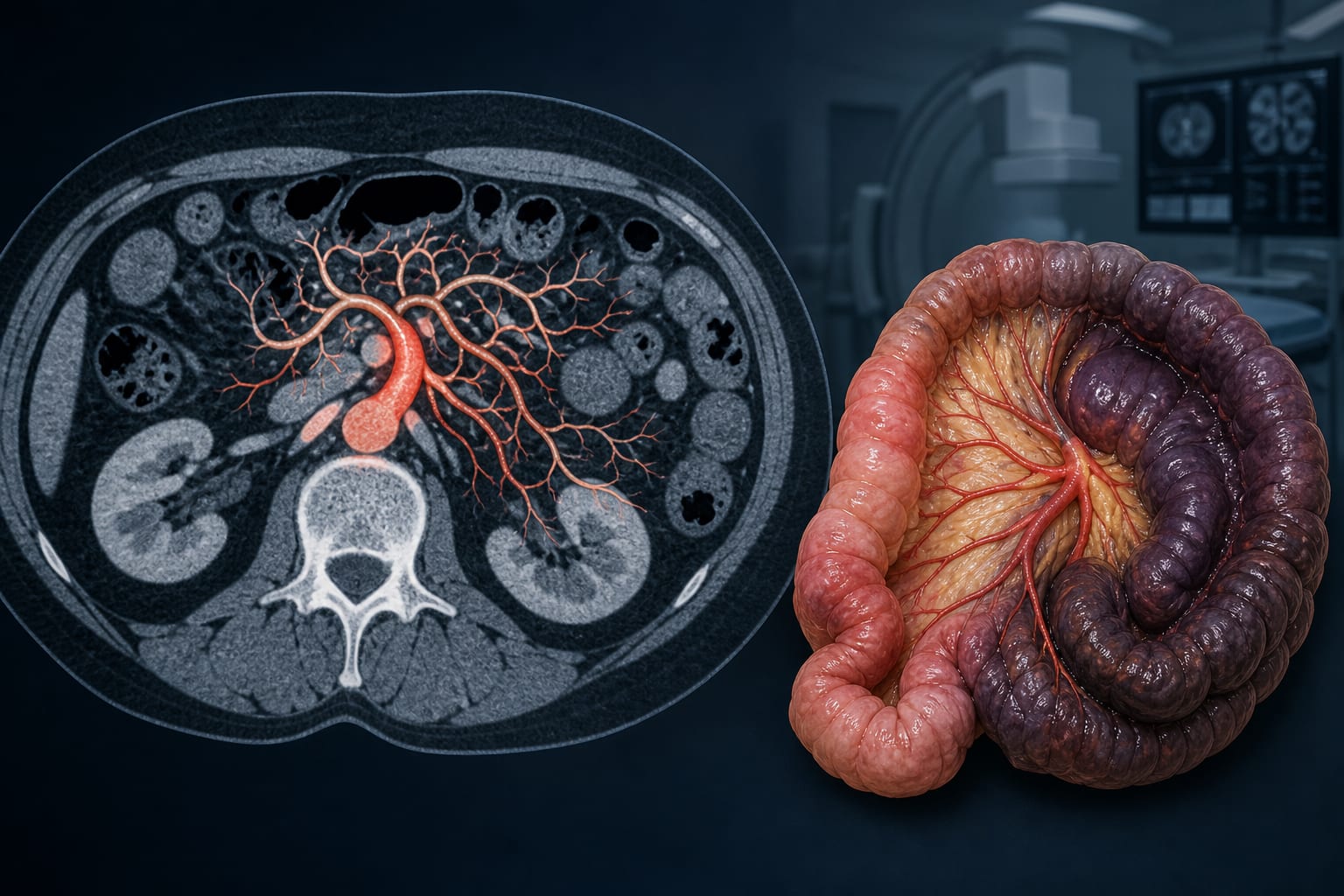
The article describes the clinical need for a time-critical pathway for acute mesenteric ischaemia, linking prompt CTA and mechanism-specific multidisciplinary management with assessment of bowel viability.
Approach:
Imaging: Obtain urgent CTA with arterial and portal venous phases. Report vascular patency and occlusion features alongside bowel findings, and communicate critical results directly to the treating team.
Treatment coordination: Coordinate radiology, interventional radiology, surgery, anaesthesia, and intensive care in parallel. Select endovascular, surgical, or combined treatment according to the suspected mechanism and bowel viability.
Reassessment: Continue evaluating bowel viability after revascularisation; technical success does not exclude necrosis. Use operative assessment when indicated and consider a second look if viability is uncertain.
Key Findings:
Delayed diagnosis or treatment can allow reversible ischaemia to progress to bowel infarction, sepsis, and death.
CTA can identify vascular and bowel abnormalities but cannot reliably exclude transmural bowel necrosis.
Peritonitis, perforation, or persuasive evidence of advanced infarction requires urgent surgical evaluation.
Endovascular treatment may restore flow in selected patients, but should not delay surgery when advanced bowel injury is suspected.
Initial management of mesenteric venous thrombosis is anticoagulation; worsening despite treatment may prompt consideration of thrombectomy or catheter-directed thrombolysis.
NOMI management prioritises correction of shock and vasoconstrictive triggers; catheter-directed vasodilators may be considered, although evidence is limited.
Interpretation:
The article presents prompt CTA, direct communication, mechanism-specific treatment, and ongoing assessment of bowel viability as components of a coordinated multidisciplinary pathway.
Limitations:
CTA cannot reliably rule out transmural bowel necrosis.
Imaging may not establish whether bowel injury is reversible or whether surgery is required, particularly in NOMI.
Evidence for catheter-directed vasodilators in NOMI is described as limited.
A randomized crossover trial found changes in insulin-induced cerebral blood flow following 16 weeks of daily peanut consumption, although the connection to improved memory remains unclear.