Impact of metastatic pattern and histologic subtype on PD-(L)1 inhibitor efficacy in HER2-negative advanced gastric and gastroesophageal cancer: a meta-analysis - Summary - MDSpire
Advertisement
Impact of metastatic pattern and histologic subtype on PD-(L)1 inhibitor efficacy in HER2-negative advanced gastric and gastroesophageal cancer: a meta-analysis
To evaluate how metastatic site and Lauren histologic subtype influence survival outcomes in HER2-negative gastric and gastroesophageal junction adenocarcinoma treated with PD-(L)1 inhibitor-based chemoimmunotherapy.
Approach:
Method: label
Method: text
Key Findings:
Overall, immune checkpoint inhibitors plus chemotherapy significantly improved overall survival compared to chemotherapy alone (HR 0.79, 95% CI 0.75-0.84; p<0.001).
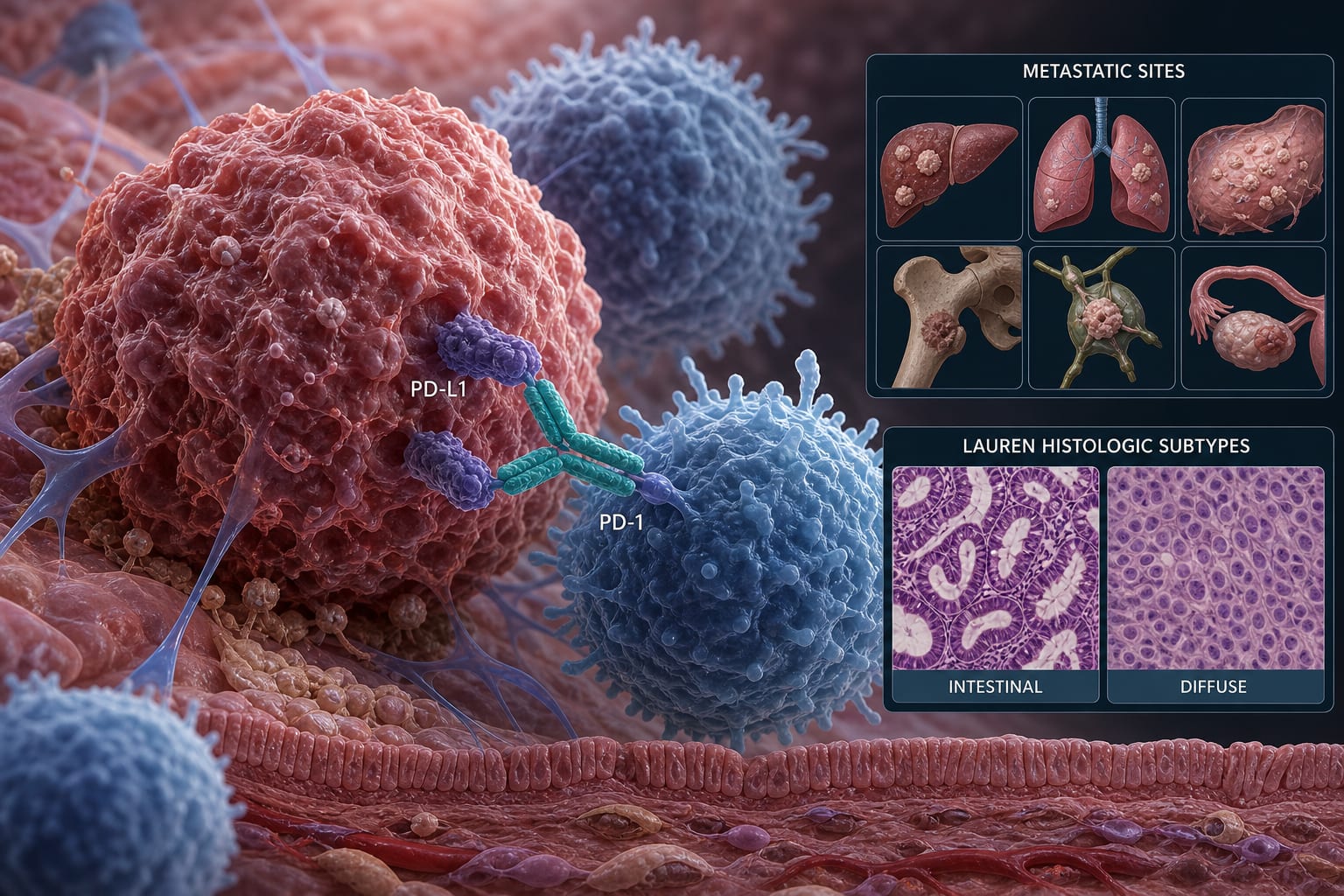
Patients with liver metastases showed improved survival (HR 0.75, 95% CI not provided) compared to those without (HR 0.82, 95% CI not provided).
Patients with peritoneal metastases derived limited benefit (HR 0.93, 95% CI not provided).
Intestinal-type tumors had greater overall survival improvement than diffuse-type tumors (HR 0.78, 95% CI not provided vs HR 0.87, 95% CI not provided).
PD-L1 CPS ≥5 predicted superior overall survival benefit (HR 0.70, 95% CI not provided).
Grade ≥3 adverse events were infrequent and primarily hematologic.
Interpretation:
First-line chemoimmunotherapy prolongs survival in HER2-negative gastric and gastroesophageal junction cancer, with varying benefits based on metastatic site and histological subtype.
Limitations:
The analysis is limited to phase III trials published in English.
Potential publication bias and heterogeneity among studies may affect results.
Conclusion:
The study supports the need for site- and histology-specific strategies in treating HER2-negative gastric and gastroesophageal junction cancer.