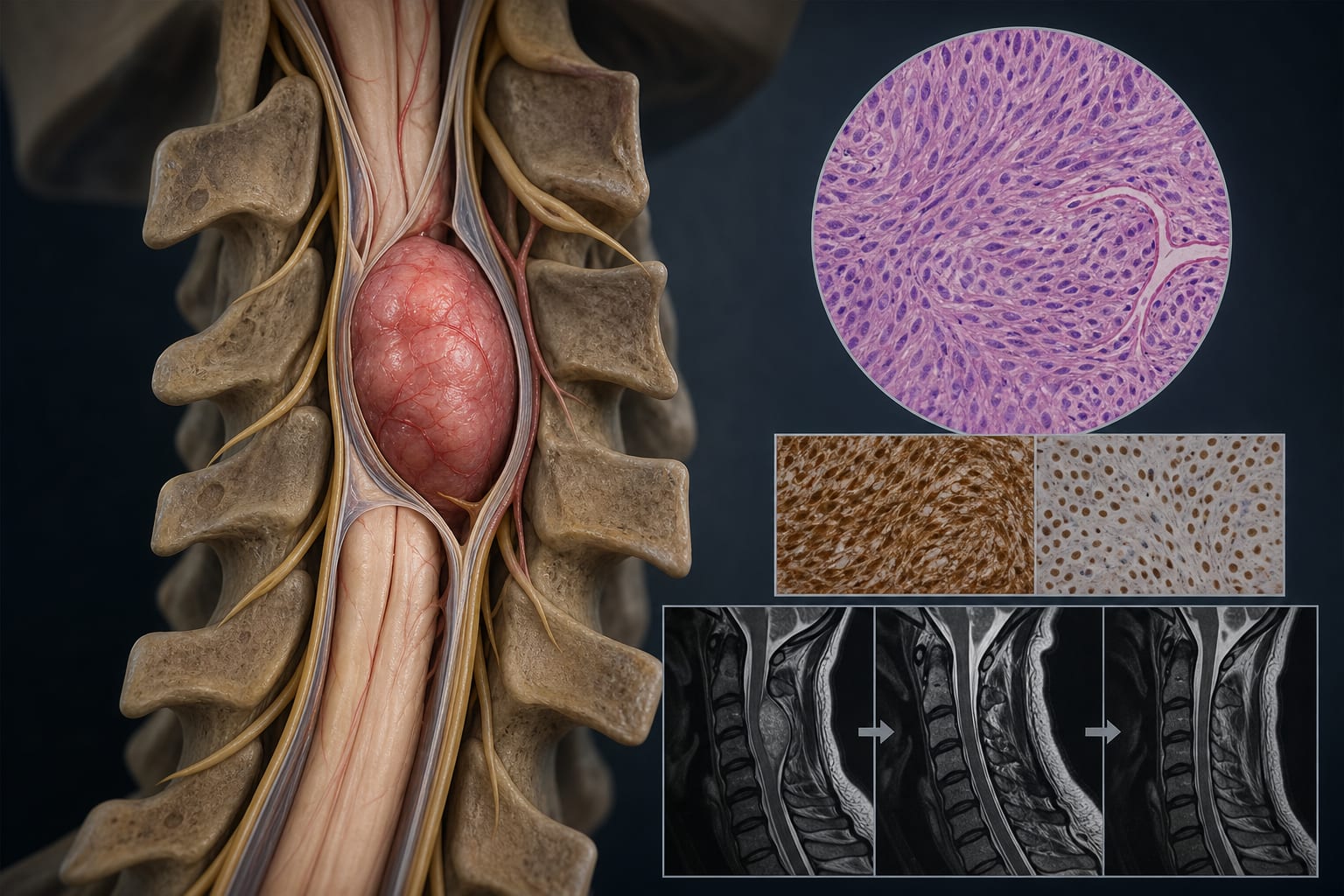
Late recurrence and histological progression of a cervical intradural extramedullary solitary fibrous tumor after gross total resection: a case report - Summary - MDSpire
Advertisement
Late recurrence and histological progression of a cervical intradural extramedullary solitary fibrous tumor after gross total resection: a case report
To report a case of delayed recurrence and histological progression of a cervical intradural extramedullary solitary fibrous tumor (SFT) following gross total resection, highlighting the clinical significance of these findings.
Key Findings:
The patient initially had a CNS WHO grade 2 solitary fibrous tumor.
Recurrence occurred 5 years post-resection, with histological progression to grade 3.
Increased mitotic activity and tumor necrosis were observed in the recurrent lesion, indicating a more aggressive clinical behavior.
Interpretation:
The case illustrates the potential for delayed recurrence and histological progression of solitary fibrous tumors despite initial successful treatment, underscoring the need for vigilant long-term follow-up.
Limitations:
The rarity of solitary fibrous tumors limits the generalizability of findings and may impact treatment options.
Long-term outcomes and optimal management strategies for cervical SFTs are not well established, necessitating further research.
Conclusion:
Long-term radiological follow-up is recommended for patients with solitary fibrous tumors, even after gross total resection, with specific protocols for monitoring recurrence.
by Yergen N. Kenzhegulov, Daniyar K. Zhamoldin, Viktor G. Aleinikov, Talgat T. Kerimbayev, Berik Zhetpisbaev, Makar P. Solodovnikov, Aisa Z. Nurpeisov, Serik Akshulakov
The clinical-stage cancer biotech raised $670 million in an upsized Nasdaq debut, with a further $75 million expected from a concurrent Regeneron private placement