Compensatory activation of the deltoid and remaining rotator cuff muscles in patients with rotator cuff tears using real-time tissue elastography - Summary - MDSpire
Advertisement
Compensatory activation of the deltoid and remaining rotator cuff muscles in patients with rotator cuff tears using real-time tissue elastography
To investigate factors related to changes in deltoid muscle behavior during scaption in patients with rotator cuff tears and to examine the functional relationship between the deltoid and remaining rotator cuff muscles using ultrasound elastography.
Approach:
Patient Recruitment: Twenty-eight patients with full-thickness rotator cuff tears who underwent arthroscopic repair were recruited, with specific inclusion and exclusion criteria.
Intraoperative Evaluations: Measurements of tear size and classification were performed intra-operatively, along with assessments of associated subscapularis tears.
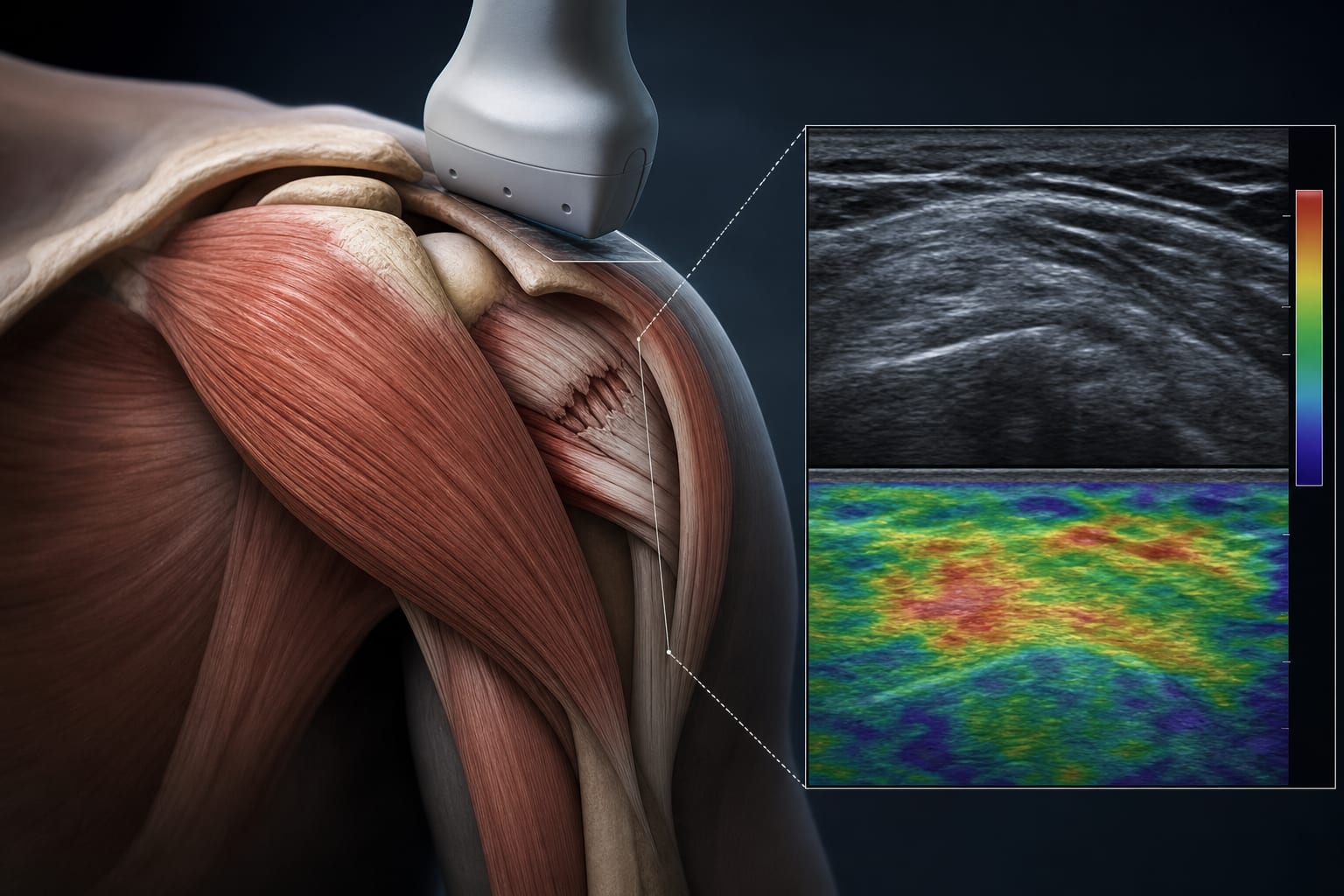
Real-Time Tissue Evaluations: Real-time tissue elastography was used to assess the contractility of the deltoid, infraspinatus (ISP), and teres minor (TMin) muscles prior to surgery.
Key Findings:
Two distinct patterns of deltoid muscle behavior were observed in patients with rotator cuff tears during shoulder elevation.
Deltoid muscle activity increased linearly with shoulder elevation in some patients, while others exhibited constant high activity throughout elevation.
Deltoid muscle behavior may be influenced by the characteristics of the rotator cuff tear.
Interpretation:
Limitations:
Small sample size of 24 patients may limit generalizability.
Exclusion of patients with partial-thickness tears and previous shoulder surgeries may affect the applicability of findings.