Covert hepatic encephalopathy as a multi-organ syndrome: the gut–liver–muscle–brain axis, diagnosis, treatment, and multidisciplinary care - Summary - MDSpire
Conexiant’s news site is now MDSpire News. Learn more
Advertisement
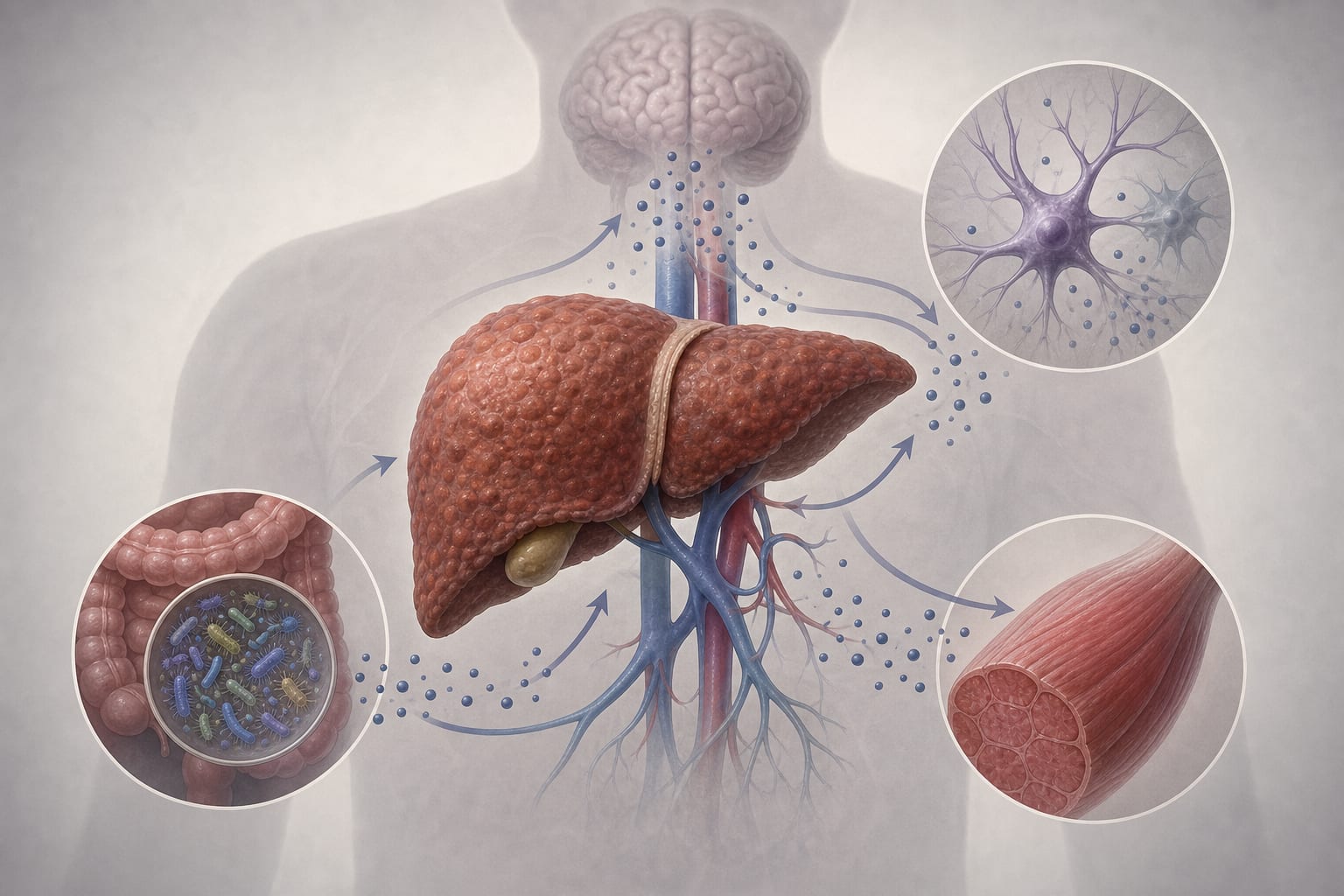
Hepatic Encephalopathy as a Complex Multi-Organ Disorder: Exploring the Gut–Liver–Muscle–Brain Connection, Diagnosis, Treatment Approaches, and Collaborative Care Strategies
To summarize hepatic encephalopathy (HE) as a multi-organ syndrome and discuss its pathophysiology, diagnosis, treatment, and clinical implications, emphasizing its significance in cirrhosis management.
Key Findings:
CHE affects approximately 40.9% of patients with cirrhosis and is associated with significant cognitive decline, impacting quality of life.
CHE is a precursor to overt hepatic encephalopathy (OHE), with a 10% annual incidence rate of progression, underscoring the need for early intervention.
Ammonia plays a central role in CHE pathophysiology, affecting brain function and leading to neuroinflammation, which has critical implications for patient management.
Interpretation:
CHE should be recognized as a complex syndrome involving interactions between the liver, gut, muscle, and brain, necessitating a comprehensive management approach that includes interdisciplinary collaboration.
Limitations:
Many patients remain undiagnosed due to challenges in testing and treatment, including the need for specialized assessments.
Current understanding of CHE's pathophysiology is still evolving, requiring further research to address knowledge gaps.
Conclusion:
Effective management of CHE requires an integrated approach addressing its multi-organ nature, with an emphasis on routine screening, evidence-based therapies, and ongoing research to improve outcomes.
Helen Han, MD, is a?transplant hepatologist with the USC Transplant Institute, part of Keck Medicine of USC, giving liver disease patients a second shot at life.