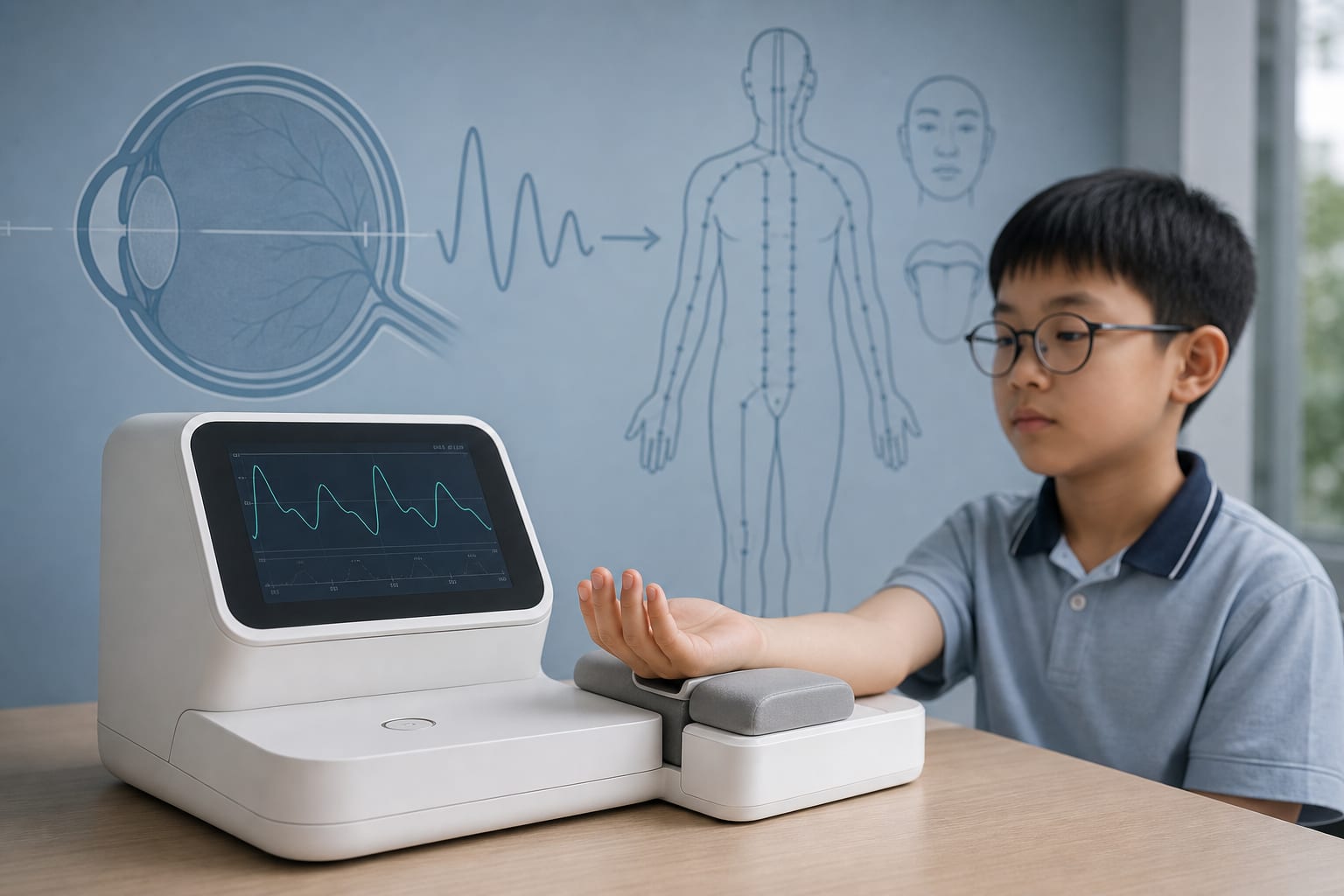
To examine correlations between pediatric myopia and objectively assessed TCM pulse, tongue, and facial diagnostic parameters using digital tools.
Key Findings:
53.15% of children were diagnosed with myopia.
Amplitude of the primary pulse wave (h1) was negatively linked to myopia (OR=0.834, P<0.001).
Higher h1 was associated with increased SE and reduced AL in older children.
No significant correlations were found between myopia and tongue or facial parameters.
Myopic children had a higher occurrence of biased TCM constitutions.
Interpretation:
Diminished h1 amplitude serves as a systemic correlate of pediatric myopia, suggesting the relevance of pulse-based evaluation in understanding myopia.
Limitations:
Cross-sectional design limits causal inferences.
Study conducted in a single geographic area may affect generalizability.
Conclusion:
The findings support the potential of pulse-based systemic evaluation in integrated myopia studies, highlighting the need for further research.