To develop a multimodal breast cancer diagnosis model that improves classification performance through optimal feature fusion and lightweight deep learning.
Approach:
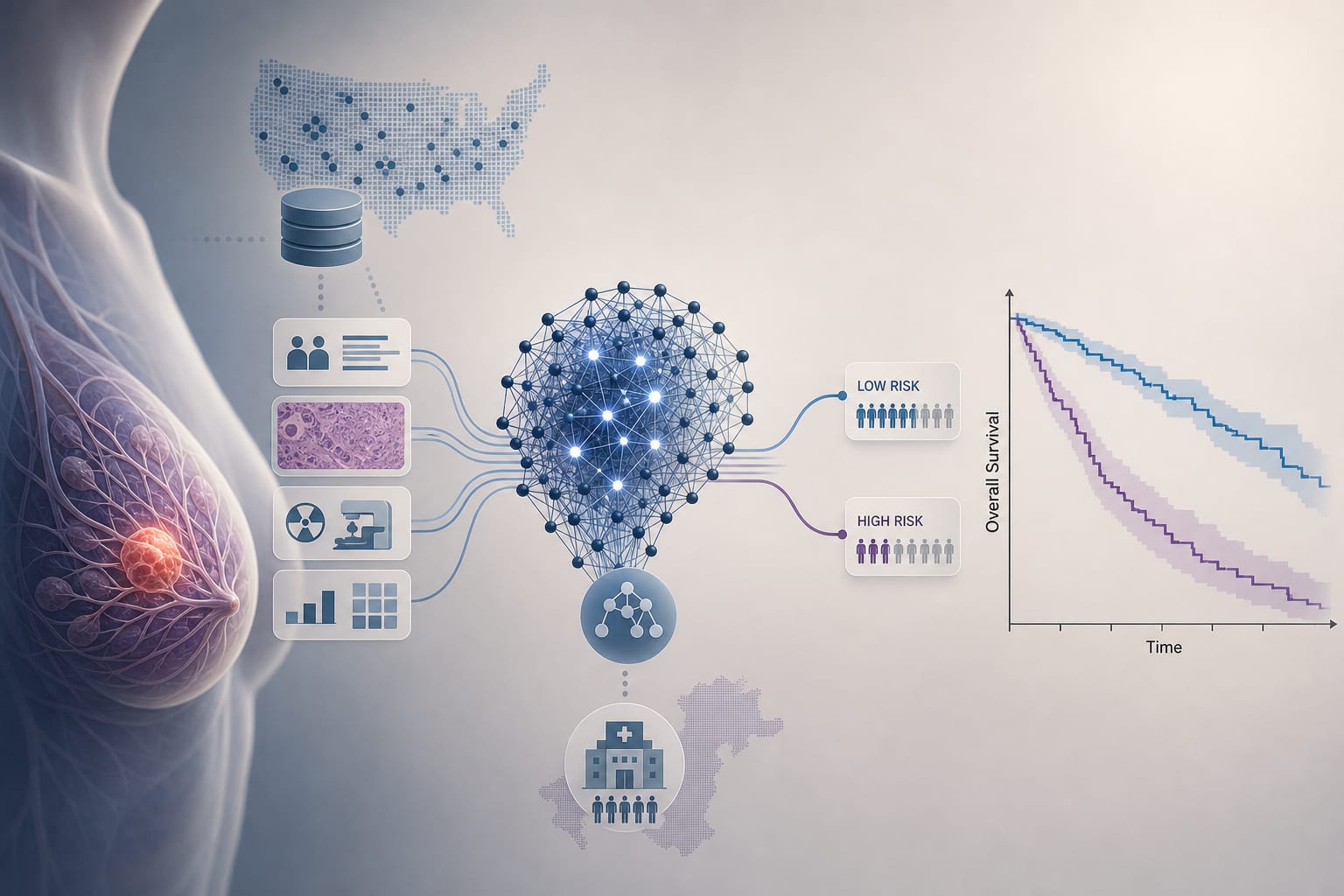
Model Components: The model employs attention-based transformers for feature extraction, the modified mantissa search (MMS) algorithm for irrelevant feature removal, and the American zebra optimization (AZO) algorithm for feature combination, followed by classification using a …
Key Findings:
The proposed model achieved accuracies of 98.958%, 97.37%, and 99.438% on MIAS, BreakHis, and combined multimodal datasets, respectively.
The model is resilient to missing modalities, indicating its generalizability in clinical diagnostic cases.
Interpretation:
The findings indicate the model's potential utility in enhancing breast cancer diagnosis across various imaging modalities.
Limitations:
The study does not address the performance of the model in real-world clinical settings.
Further validation on diverse datasets is needed to confirm the model's robustness.
Conclusion:
The research presents a powerful diagnostic model that integrates histology and mammography images for improved breast cancer classification.