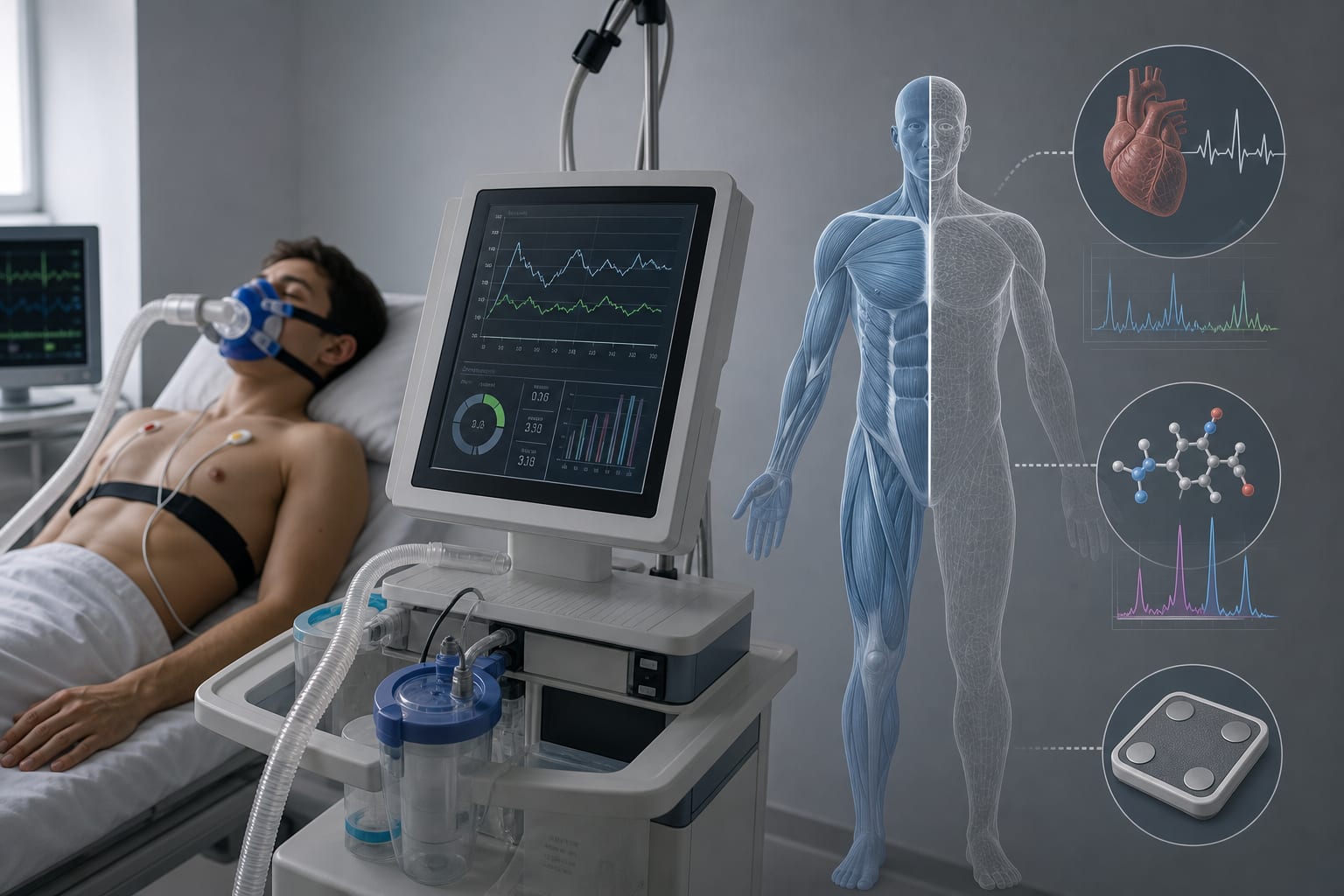
To investigate the contributions of body composition, circulating catecholamines, and cardiac autonomic modulation to resting energy expenditure (REE) in fasting conditions.
Approach:
Study Design: Observational cross-sectional study involving 38 healthy young participants following an overnight fast.
Measurements: REE assessed by indirect calorimetry, fat-free mass (FFM) by bioelectrical impedance analysis, and cardiac autonomic activity through heart rate variability (HRV) analysis.
Sample Analysis: Plasma epinephrine and norepinephrine levels were measured in a subsample of 19 participants.
Key Findings:
FFM was the dominant determinant of REE (R2 = 0.90, p < 0.001).
Sex contributed independently to REE, while age showed no significant association.
Circulating epinephrine was positively associated with REE (p = 0.024), but norepinephrine was not.
No HRV-derived parameters were significantly associated with REE.
Interpretation:
REE is primarily associated with FFM and has an additional association with circulating epinephrine.
Limitations:
The study is observational, limiting causal inferences.
HRV-derived cardiac autonomic markers were not associated with REE under fasting conditions.
Conclusion:
REE under fasting conditions is mainly influenced by FFM, with some contribution from circulating epinephrine.