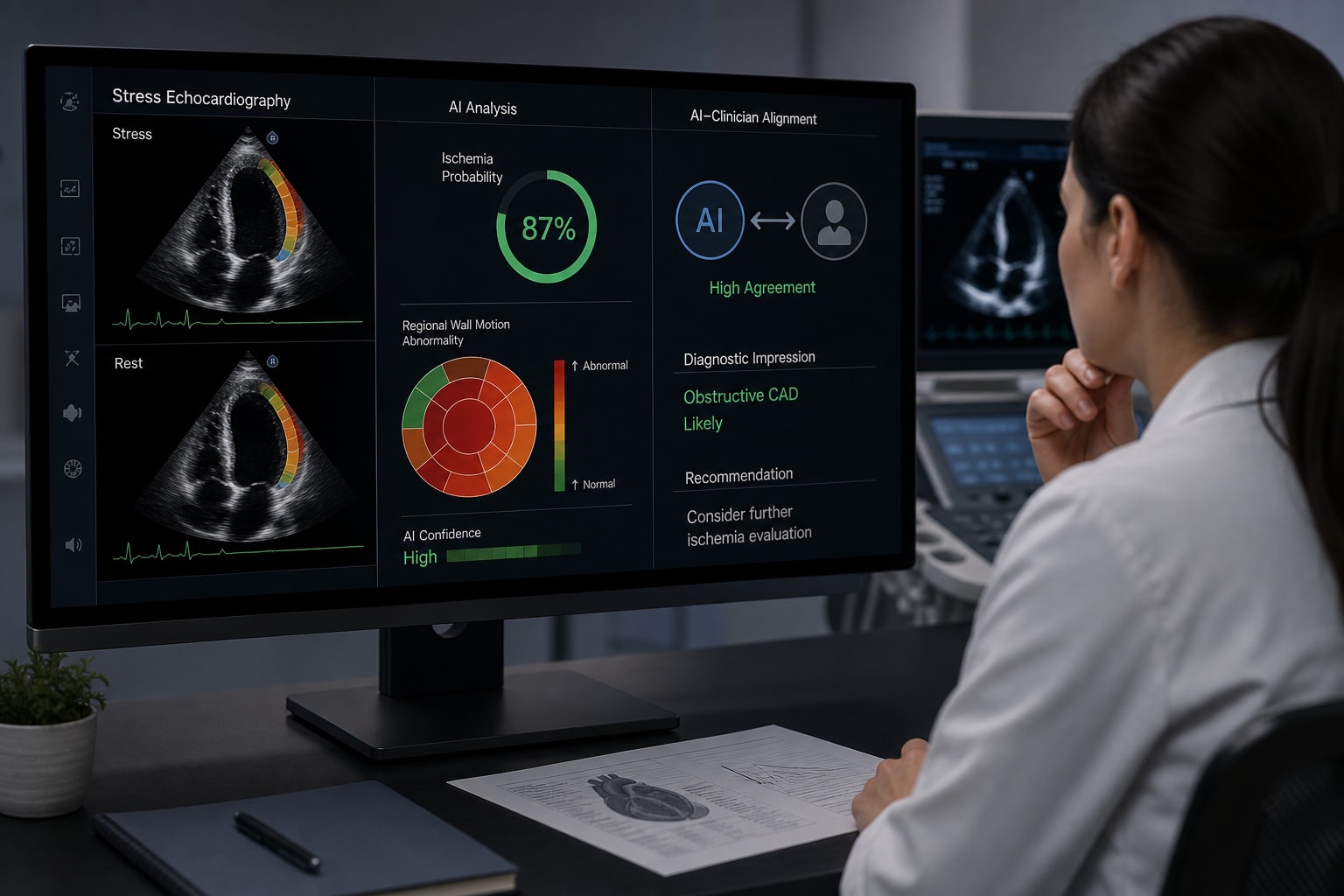
To explore the incorporation of artificial intelligence (AI) into echocardiography and the challenges of broader adoption.
Approach:
Building Better AI: Minh B. Nguyen discussed a shift from traditional supervised learning to self-supervised learning, allowing AI to learn from unlabeled echocardiograms.
Current Evidence: Sreekanth Vemulapalli examined validated and emerging AI use cases in echocardiography and outlined a roadmap for implementation.
AI Conundrums: Jose Donato A. Magno analyzed the potential benefits and limitations of AI in clinical echocardiography across ten domains.
Putting AI Into Practice: Karen Zimmerman illustrated real-world AI use in echocardiography, questioning its impact on patient management.
Key Findings:
Self-supervised learning can enhance AI robustness by teaching models the grammar of the heart.
Current evidence for AI in echocardiography is largely retrospective, with prospective studies needed.
Equitable access is a significant barrier to AI adoption in echocardiography.
Interpretation:
AI in echocardiography presents both opportunities and challenges that require careful consideration.
Limitations:
Much of the current evidence supporting AI is retrospective.
Equitable access to AI technology remains a critical issue.
Conclusion:
AI's successful integration into echocardiography depends on addressing its limitations.
Researchers evaluated 300,828 adult transthoracic echocardiograms using the 2016 and 2025 American Society of Echocardiography diastolic function guidelines; 87,724 met criteria for analysis.