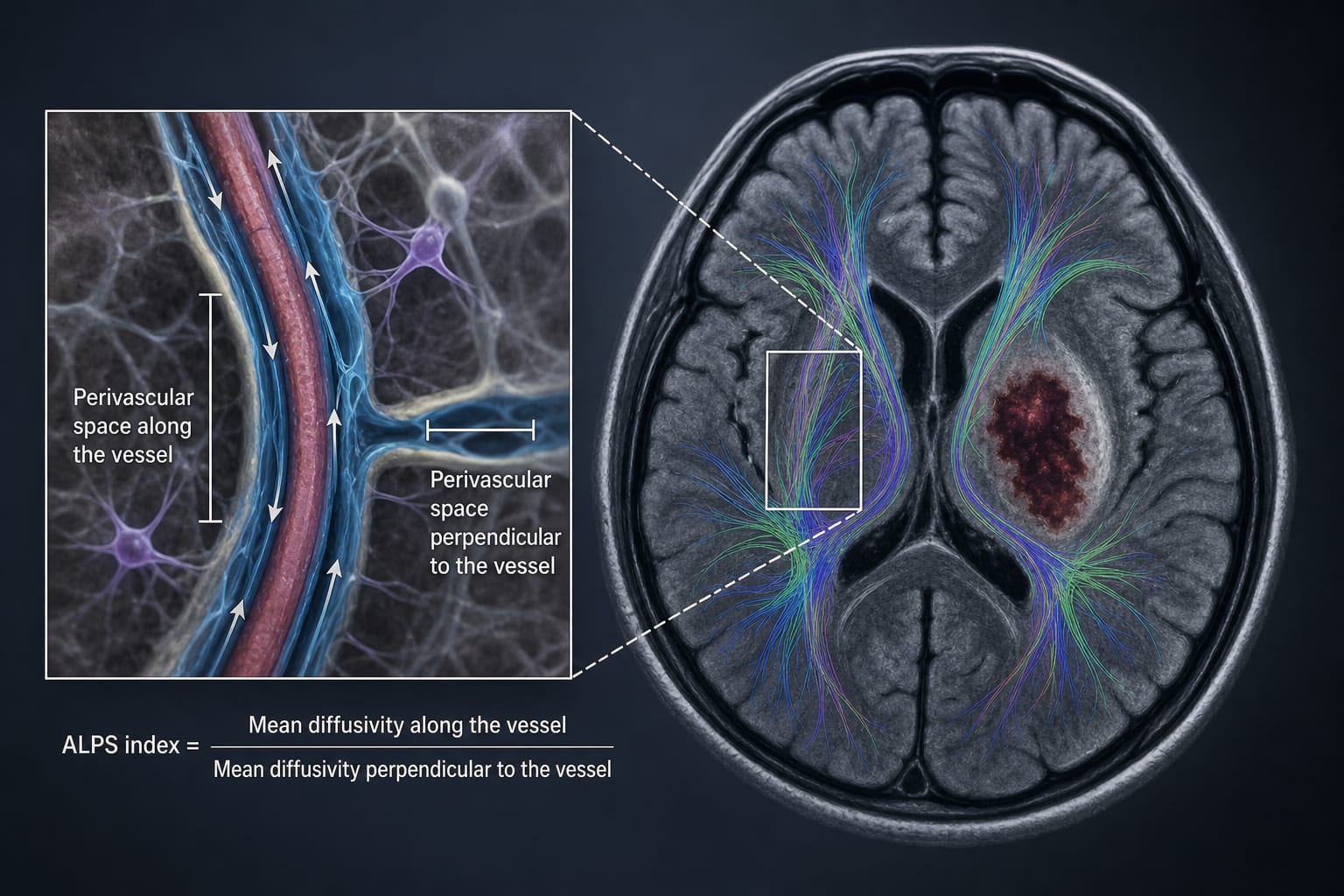
To evaluate the robustness of Diffusion Tensor Image Analysis Along the Perivascular Space (DTI-ALPS) index, and to investigate its correlation with clinical characteristics in patients following basal ganglia hemorrhage.
Approach:
Study Design: A mixed cross-sectional and longitudinal study was conducted on 56 patients divided into three groups by time since hemorrhage: ≤ 14 days, 3 months, and 1 year.
Control Group: Twenty-three age- and sex-matched healthy controls underwent DTI scans using both 15-direction and 32-direction sequences.
Data Analysis: The ALPS index was calculated and compared among patient groups and against healthy controls, with correlations analyzed between the ALPS index, hematoma volume, and the Brunnstrom recovery stage for the hand (BRS-H).
Key Findings:
Significant differences in the ALPS index were observed between the 15-direction and 32-direction DTI data in the left hemisphere, with excellent consistency across protocols (ICC = 0.959–0.981, p < 0.05).
The ALPS index differed significantly among the three patient groups (p < 0.05) and was significantly lower than in controls (p < 0.001).
No significant correlation was found between the ALPS index and the BRS-H (r = 0.219, p > 0.05).
A significant negative correlation between the ALPS index and hematoma volume was observed in the ≤ 10 mL subgroup (r = −0.529, p 10 mL subgroup (r = −0.091, p > 0.05).
Interpretation:
Limitations:
The study had a limited sample size of 56 patients.
The correlation analysis may not account for all confounding factors affecting recovery and ALPS index.