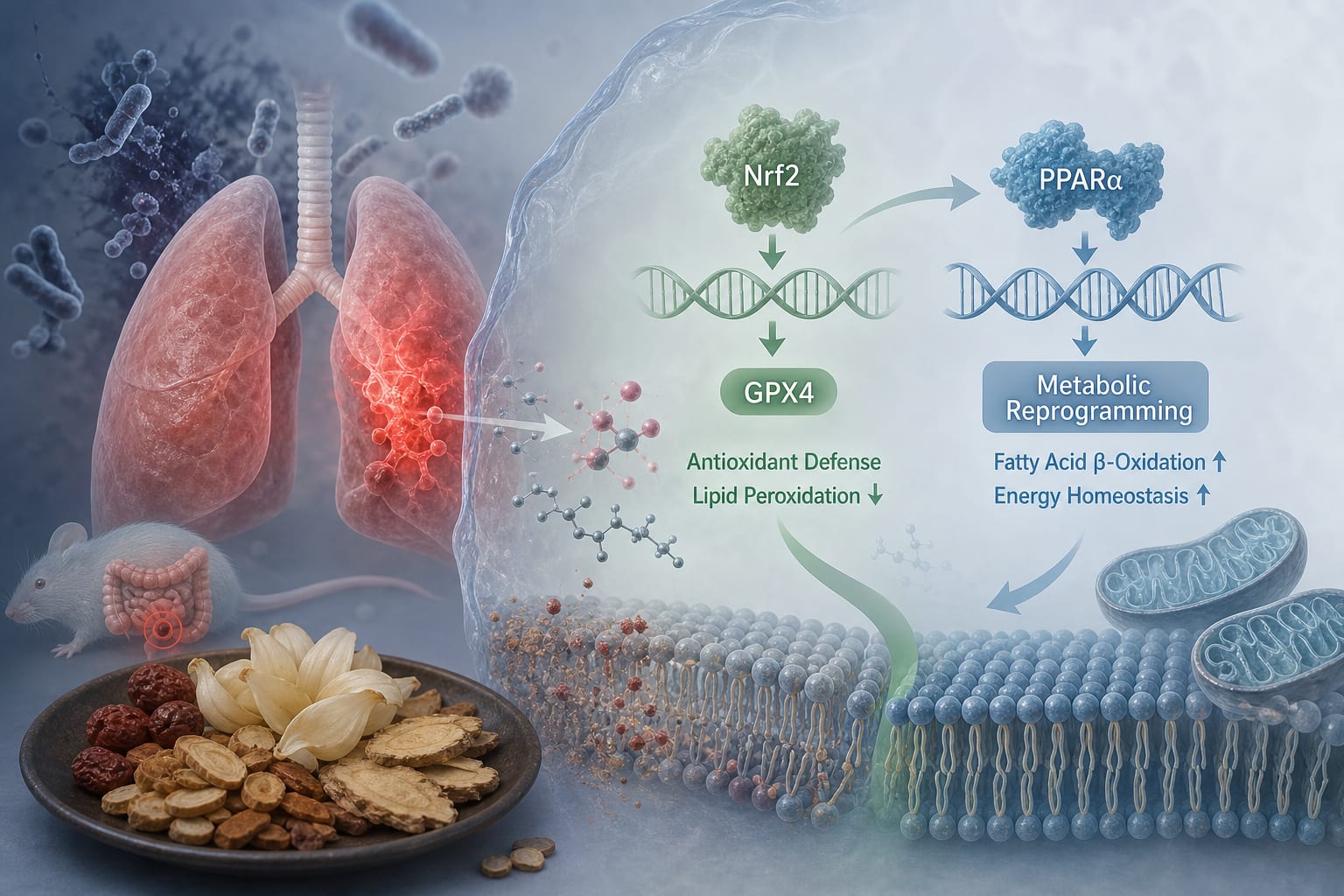
To systematically elucidate the protective effects and underlying mechanisms of Baihe Gujin Decoction (BHGJD) against sepsis-induced acute lung injury (ALI).
Approach:
Chemical Characterization: Characterized the chemical constituents of BHGJD using mass spectrometry.
Network Pharmacology: Predicted potential protective mechanisms through network pharmacology.
In Vivo Model: Established a cecal ligation and puncture (CLP) mouse model to evaluate BHGJD’s protective effects.
Histopathological Assessment: Conducted histopathological assessment and serum inflammatory cytokine analysis.
Multi-Omics Analysis: Performed lung tissue RNA sequencing and untargeted metabolomics to explore molecular mechanisms.
Protein Validation: Validated key proteins using Western blot, immunohistochemistry, and immunofluorescence.
In Vitro Studies: Used (+)-catechin to treat lipopolysaccharide-induced MLE-12 cells and measured various cellular parameters.
Key Findings:
BHGJD significantly ameliorated CLP-induced ALI, as evidenced by improved histological architecture and reduced inflammatory cytokine levels.