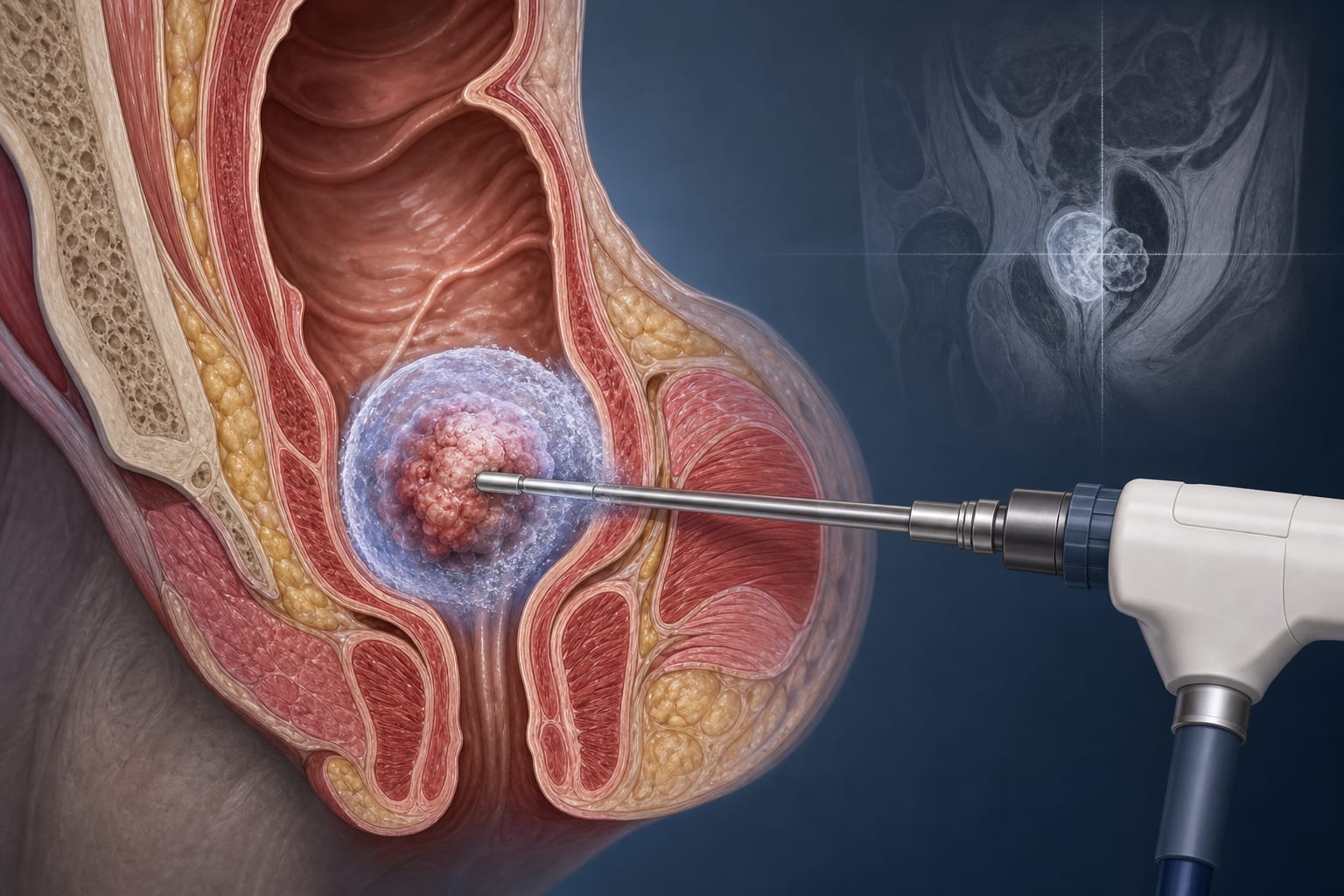
To systematically illustrate cryoablation for low rectal cancer (LRC), detailing its technical principles, indications, contraindications, and management protocols, based on institutional experience.
Approach:
Post-Cryoablation Management: Post-procedure management protocols include monitoring for complications, pain management, and follow-up imaging to assess treatment efficacy.
Potential Complications: Potential complications of cryoablation include rectal perforation, bleeding, and infection, which require careful monitoring and management.
Key Findings:
Cryoablation is a feasible option for selected LRC patients due to anatomical features that limit ice ball spread.
The APCA1–3 system is preferred for its accelerated cooling rate and precision.
Eligibility for radical cryotherapy includes histologically confirmed rectal adenocarcinoma, specific tumor location and size, and patient preference for sphincter preservation.
Interpretation:
Cryoablation presents a credible, evidence-based alternative for well-selected LRC patients, particularly those who refuse radical surgery or have comorbidities.
Limitations:
The role of cryoablation in LRC management is less established compared to other modalities, as noted in the literature.
Patient selection is critical and requires multidisciplinary team discussions, as emphasized in the source.
Conclusion:
Cryoablation is presented as a treatment option for low rectal cancer, supported by decades of institutional experience.
In the first installment of a new series on the investment environment in cell and gene therapy, Circio CEO Erik Wiklund explains how he had to get creative to raise funds in a difficult biotech market