Enhanced physical performance and quality of life in cardiovascular disease patients across BMI groups through exercise-based cardiac rehabilitation - Summary - MDSpire
Advertisement
Enhanced physical performance and quality of life in cardiovascular disease patients across BMI groups through exercise-based cardiac rehabilitation
To assess the impact of exercise-based cardiac rehabilitation on patients with varying BMI levels and its potential to enhance cardiorespiratory fitness, thereby improving physical performance and overall quality of life in individuals with cardiovascular disease.
Approach:
Study Design: A prospective, single-arm, pre-post interventional study conducted among 79 CVD patients at Tianjin Chest Hospital, involving 12 supervised outpatient sessions.
Intervention: Participants engaged in a structured cardiac rehabilitation program, including exercise training and comprehensive assessments before and after the intervention.
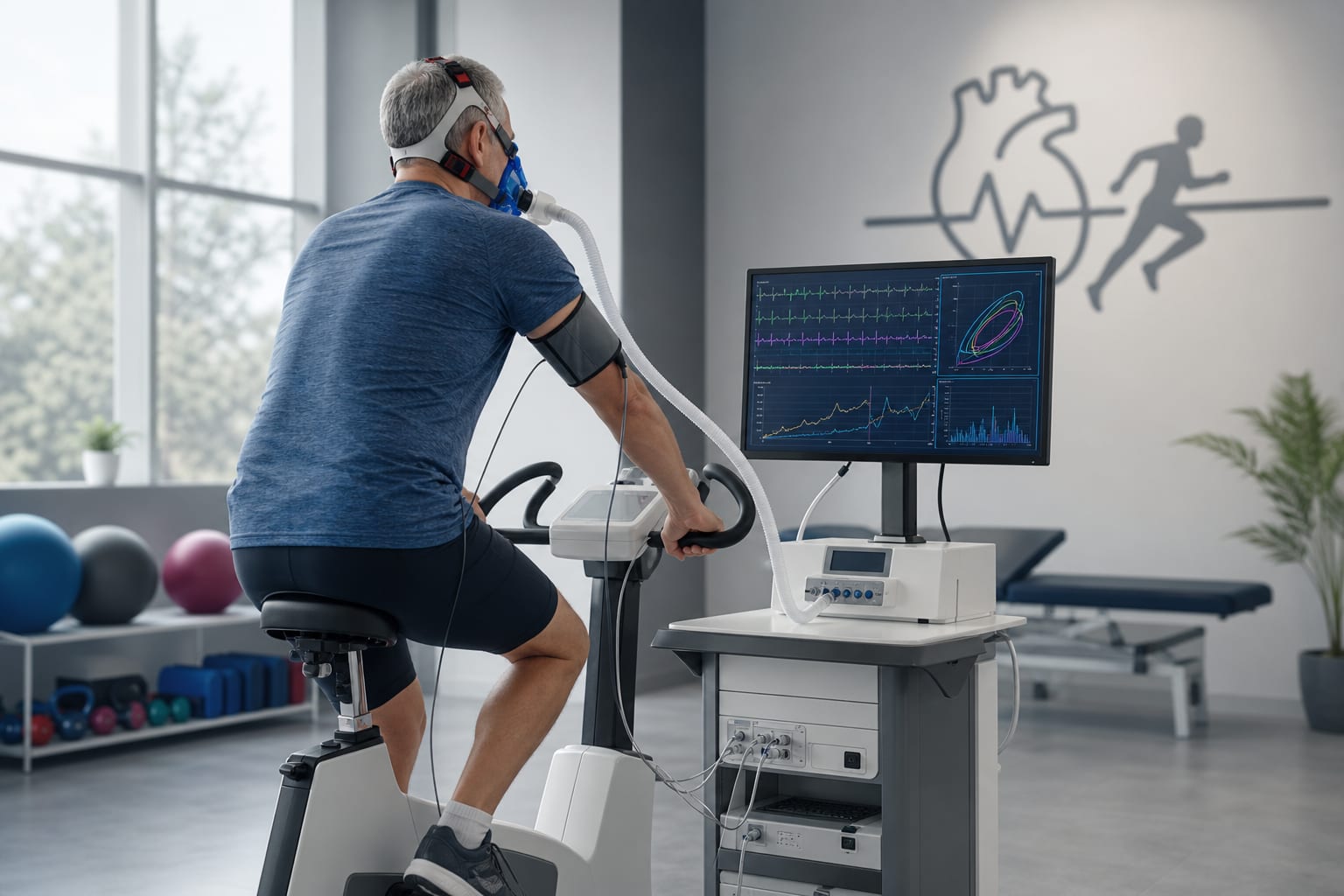
Assessments: Evaluations included a cardiopulmonary exercise test (CPET) and questionnaires on quality of life, depression, and anxiety.
Key Findings:
Significant improvements in oxygen uptake (VO2, from 10.9 ± 2.9 to 13.3 ± 3.4 mL/min/kg, p < 0.01), ventilation (VE, from 29.3 ± 7.5 to 35.6 ± 9.3 mL/min/kg, p < 0.01), workload at anaerobic threshold (AT, from 56.7 ± 25.4 to 70.0 ± 27.7 W, p < 0.01), and oxygen uptake efficiency slope (OUES, from 1,426.8 ± 346.3 to 1,547.2 ± 403.5, p < 0.01) post-rehabilitation.
Enhancements in quality of life and reductions in depression and anxiety levels were observed after the intervention.
Improvements were consistent across different BMI groups.
Interpretation:
The study provides evidence that exercise-driven cardiac rehabilitation leads to meaningful improvements in physical performance and quality of life for CVD patients.
Limitations:
The study was conducted at a single center, which may limit the generalizability of the findings.
The sample size was relatively small, consisting of only 79 participants.
Conclusion:
Exercise-focused cardiac rehabilitation is effective in improving physical performance and quality of life among CVD patients with varying BMI.