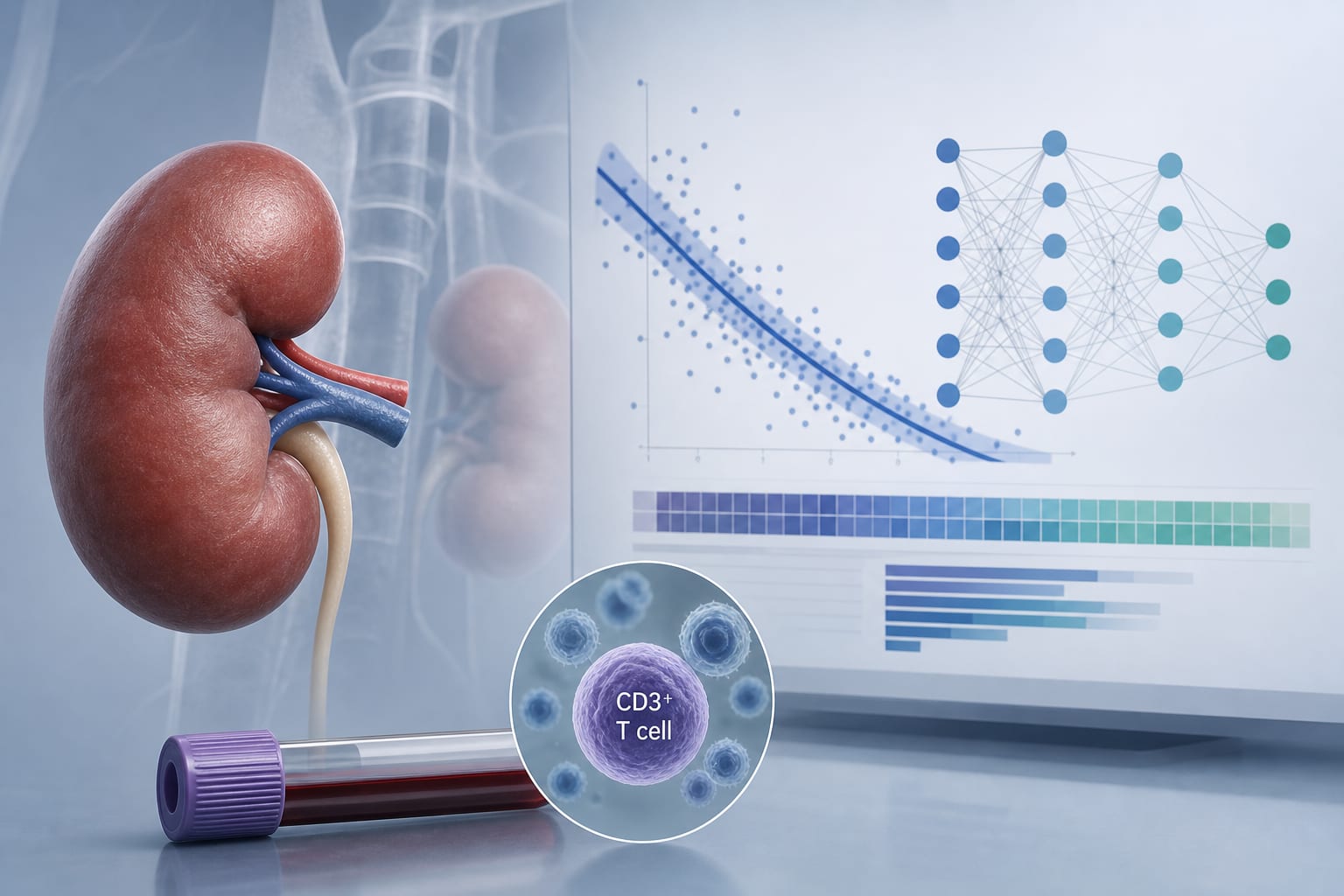
To identify clinical and laboratory predictors of CD3+ T-cell depletion and develop a machine learning model for predicting attainment of predefined therapeutic CD3+ T-cell thresholds following ATG induction therapy in kidney transplant recipients.
Approach:
Key Findings:
In the analysis of 397 transplant patients, 57.2% achieved day-1 CD3+ T-cell < 50 cell/μl threshold.
Machine learning model ROC-AUC values were 0.75 and 0.80 for Day 1, and 0.70 and 0.66 for Day 2 predictions.
The machine learning model outperformed logistic regression in predicting CD3+ T-cell count thresholds.
Interpretation:
The study suggests that clinical response to ATG treatment can be predicted using accessible laboratory tests and patient characteristics without requiring CD3+ T-cell quantification.
Limitations:
Retrospective study design may introduce bias.
Generalizability may be limited to the specific patient population studied.
Conclusion:
The findings provide a framework for developing more accurate machine learning models for predicting ATG treatment effects in kidney transplant patients.