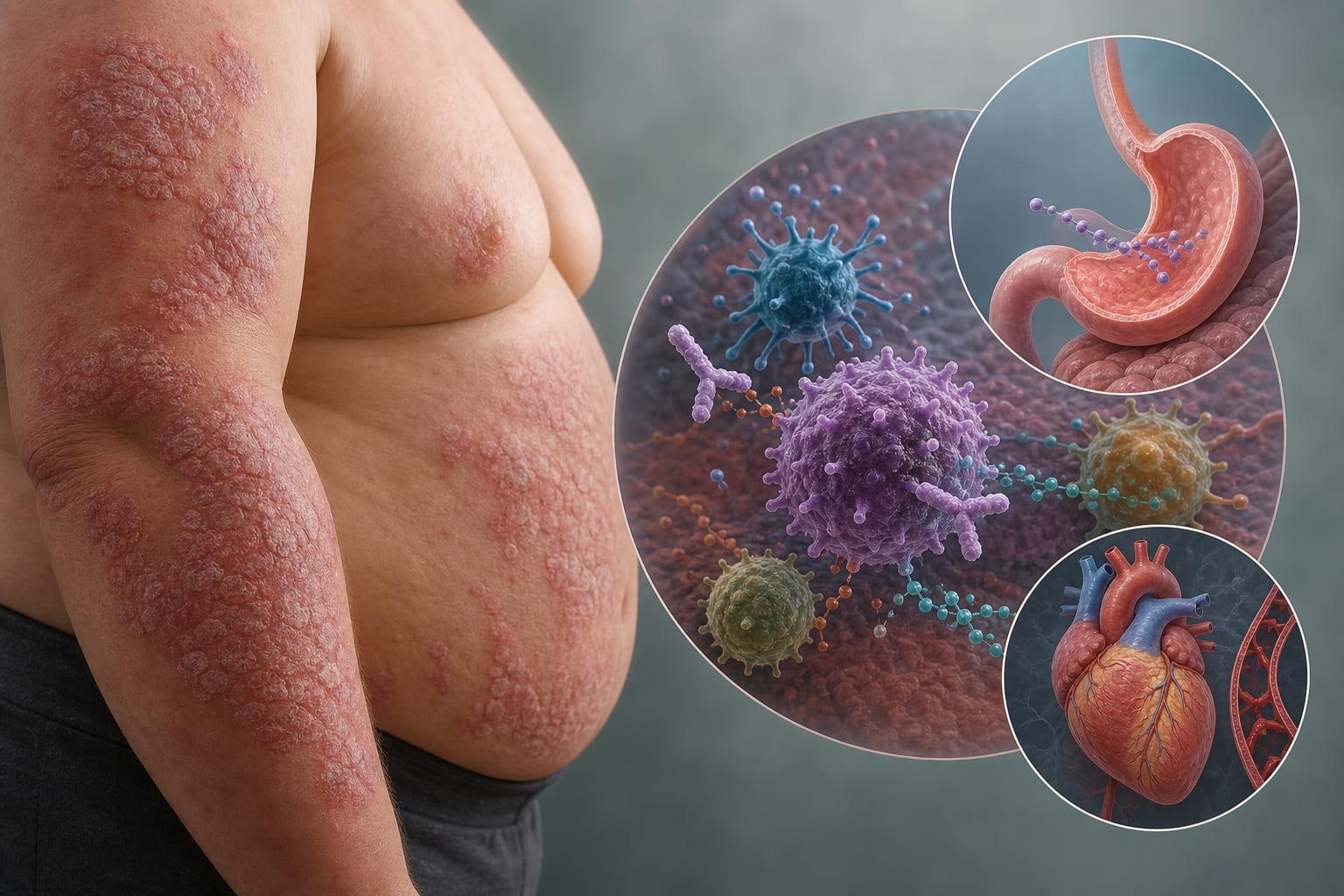
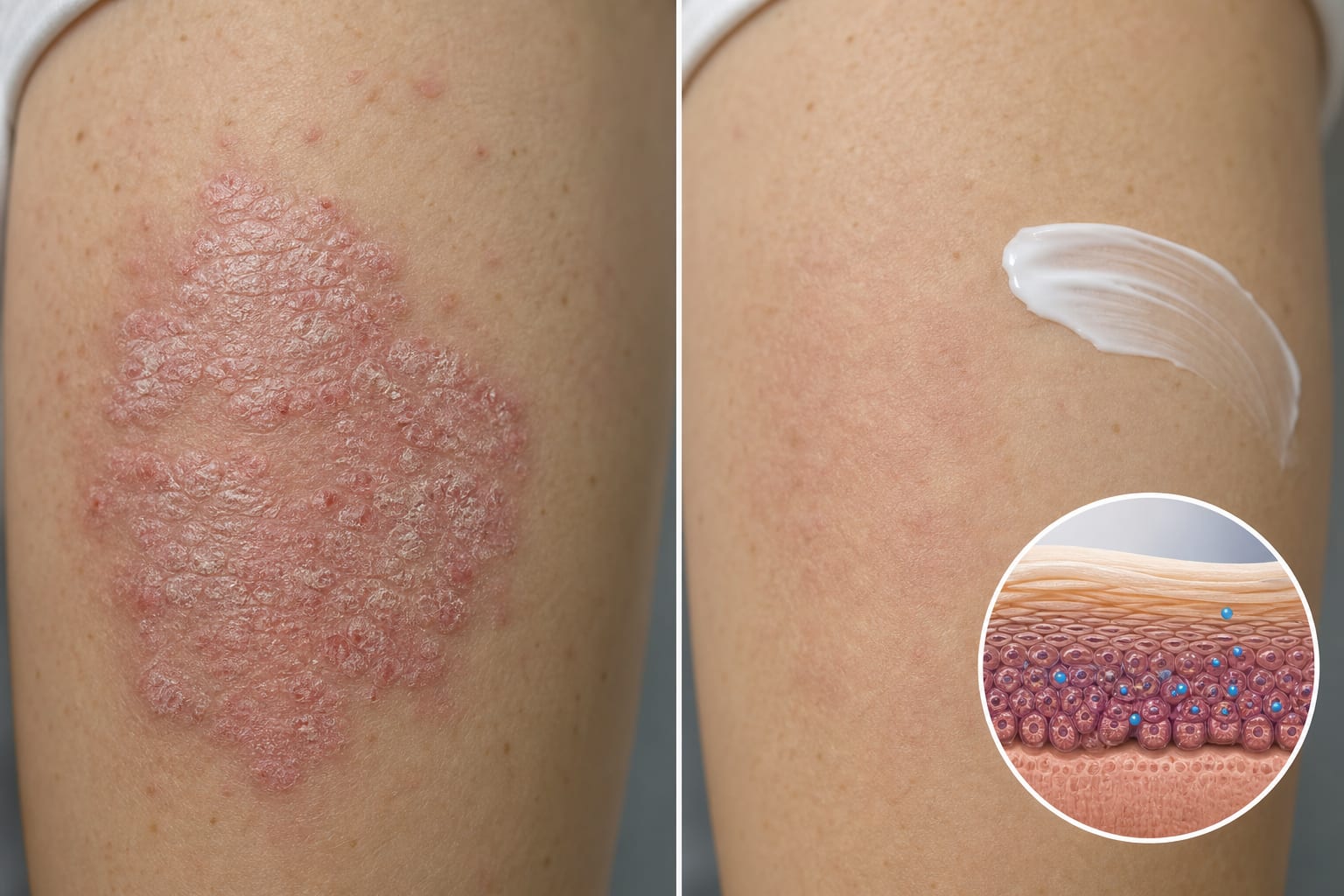
To evaluate the efficacy and safety of Ixekizumab (IXE) administered alone or in combination with Tirzepatide (TZP) in patients with moderate to severe psoriasis and overweight or obesity.
Approach:
Study Design: A phase 3b, randomized, multicenter, open-label clinical trial conducted at 72 sites in the US.
Participants: Adults with moderate to severe plaque psoriasis for at least 6 months, with specific BMI and comorbidity criteria.
Randomization: Participants were randomly assigned (1:1) to receive IXE+TZP or IXE alone.
Treatment Protocol: IXE was administered as 80 mg injections at specified intervals; TZP was started at 2.5 mg weekly and adjusted up to 15 mg.
Primary Endpoint: Simultaneous achievement of PASI 100 and at least a 10% weight reduction from baseline at week 36.
Key Findings:
The study highlights the prevalence of psoriasis in individuals with overweight or obesity and its impact on treatment outcomes.
Chronic low-grade systemic inflammation is identified as a significant factor linking psoriasis and obesity.
Incretin-based therapies like TZP may enhance treatment efficacy for psoriasis by addressing both skin and metabolic issues.
Interpretation:
The study aims to evaluate the efficacy and safety of the combined treatment approach for psoriasis and obesity.
Limitations:
The trial was not designed to represent racial diversity.
Participants self-reported race and ethnicity, which may affect generalizability.
Conclusion:
The trial is ongoing, with results expected to clarify the benefits of combining IXE and TZP in treating psoriasis in overweight or obese patients.
by Mark Lebwohl, Andrew Blauvelt, Cynthia E. Kartman, Cianna Leatherwood, Kenneth B. Gordon, Naveed Sattar, Luis Puig, Joseph F. Merola, Kimberly Siu, Rona Wang, Luna Sun, Ann Leung, Najwa Somani, Maria Jose Rueda, Anabela Cardoso, Mark C. Genovese, April W. Armstrong, Bruce Strober
Published evidence linked liraglutide and semaglutide to improvements in psoriasis severity, inflammatory markers, and metabolic outcomes, while evidence in psoriatic arthritis remained sparse.