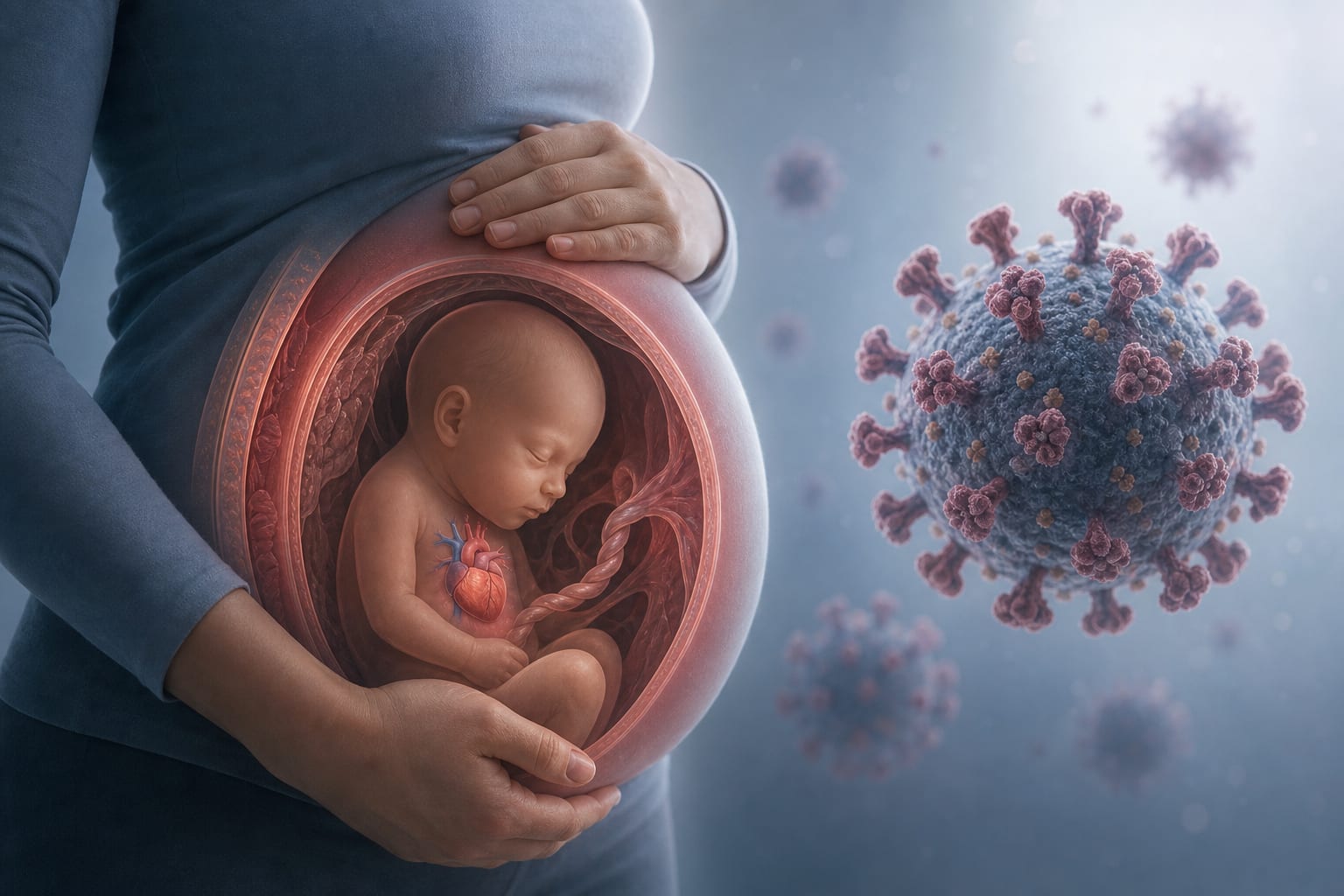
To evaluate associations between laboratory-confirmed maternal SARS-CoV-2 infection during pregnancy and neonatal congenital anomalies in Ontario, Canada, with a focus on the implications for public health.
Key Findings:
No significant association found between maternal SARS-CoV-2 infection and overall neonatal congenital anomalies in a sample of X births.
Congenital cardiac anomalies were not significantly increased in infants born to mothers with SARS-CoV-2 infection.
Timing of maternal infection (trimester) did not show a clear link to congenital anomalies.
Interpretation:
The study suggests that maternal SARS-CoV-2 infection during pregnancy does not significantly increase the risk of congenital anomalies in newborns, which has important implications for public health.
Limitations:
Study limited to data from Ontario, which may not be generalizable to other regions.
Potential confounding factors not fully accounted for, such as maternal health conditions and unmeasured confounders.
Conclusion:
Further research is needed to explore the teratogenic effects of SARS-CoV-2, particularly focusing on timing and other maternal health factors, including socioeconomic status.
by John W. Snelgrove, Rinku Sutradhar, Nancy N. Baxter, Karl Everett, Stephanie C. Lapinsky, Douglas M. Campbell, Mark H. Yudin, Howard Berger, Eliane M. Shore, Andrea N. Simpson
So get this: sodium may track with memory decline (in men), steroids might not be “immunosuppressive” in the ICU, and second pregnancies reshape the brain differently than first. Same theme: biology is less binary than we teach it.