To explore the hypoxia-epigenetics-non-coding RNA axis in endometriosis pathogenesis and its implications for clinical applications.
Approach:
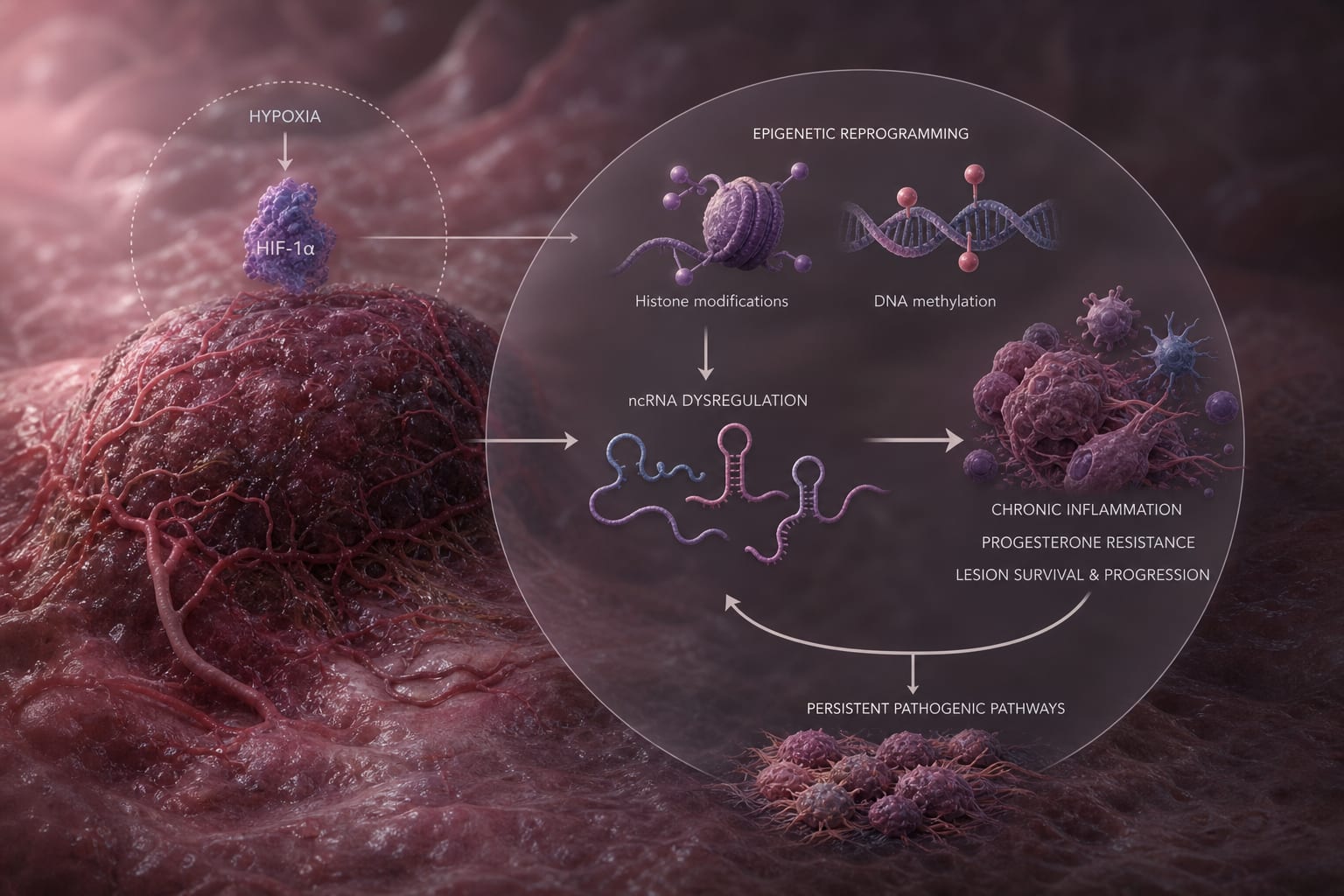
Review of Molecular Mechanisms: The review delineates the role of hypoxia, epigenetic modifications, and non-coding RNAs in the pathogenesis of endometriosis.
Dynamic Progression Model: A four-stage model is proposed to map the transition from acute epigenetic stress to chronic disease manifestation.
Key Findings:
Hypoxia stabilizes HIF-1α, initiating a cascade of DNA methylation, histone modifications, and ncRNA dysregulation.
Aberrant epigenetic regulation is a core mechanistic link between genetic susceptibility and environmental risk factors in endometriosis.
Ectopic endometrial tissues exhibit significant deviations in DNA methylation, affecting cellular proliferation and hormonal responsiveness.
Interpretation:
The integrated dysregulation of hypoxia, epigenetics, and ncRNA contributes to the clinical phenotypes of endometriosis, including progesterone resistance and chronic inflammation.
Limitations:
The review distinguishes between validated mechanisms and speculative hypotheses, particularly where direct evidence in endometriosis is limited.
Variability in DNMT expression across studies may reflect patient heterogeneity and environmental factors.
Conclusion:
Targeting the hypoxia-epigenetics-ncRNA axis may provide new avenues for non-hormonal therapies and diagnostic biomarkers in endometriosis management.