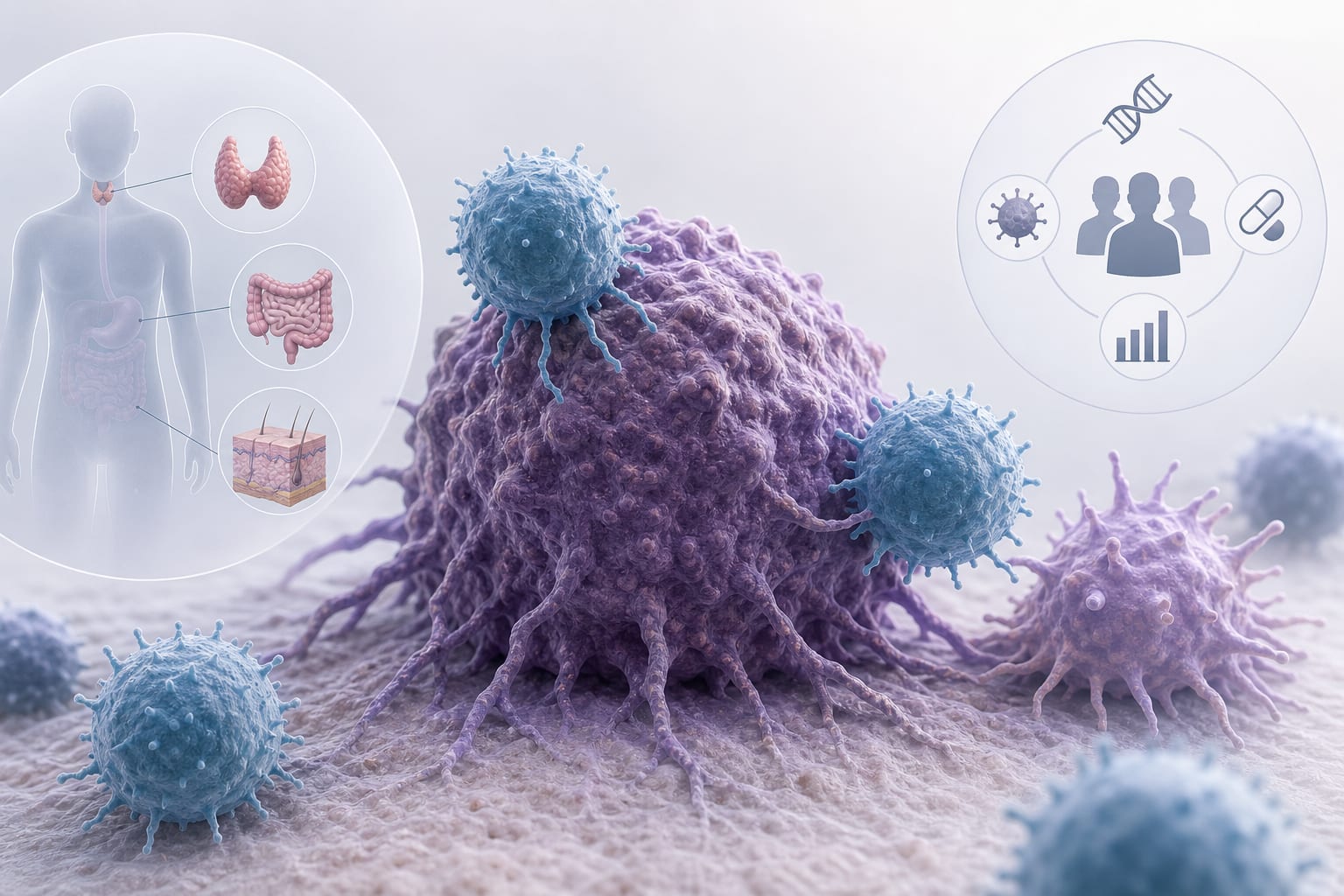
To investigate the potential anti-tumor effects of hypoglycemic agents in lung cancer treatment and explore their underlying mechanisms, particularly in the context of rising incidences of both conditions.
Key Findings:
Lung cancer is a leading cause of cancer-related deaths, necessitating new treatment strategies.
Diabetes mellitus may create a microenvironment conducive to lung cancer progression, influenced by factors such as obesity and smoking.
Metformin shows promise in reducing tumor cell proliferation and enhancing chemotherapy sensitivity, supported by recent clinical data.
Interpretation:
The review highlights the potential of antidiabetic medications, particularly metformin, as complementary options in lung cancer therapy, warranting further investigation into their mechanisms and clinical applications to improve patient outcomes.
Limitations:
Insufficient conclusive evidence linking specific hypoglycemic agents to direct effects on lung cancer, with confounding factors like smoking and obesity complicating the relationship.
The complexity of diabetes and lung cancer interactions necessitates careful consideration of various confounding factors in future studies.
Conclusion:
Further research is urgently needed to clarify the role of hypoglycemic agents in lung cancer treatment and to optimize therapeutic outcomes for patients.