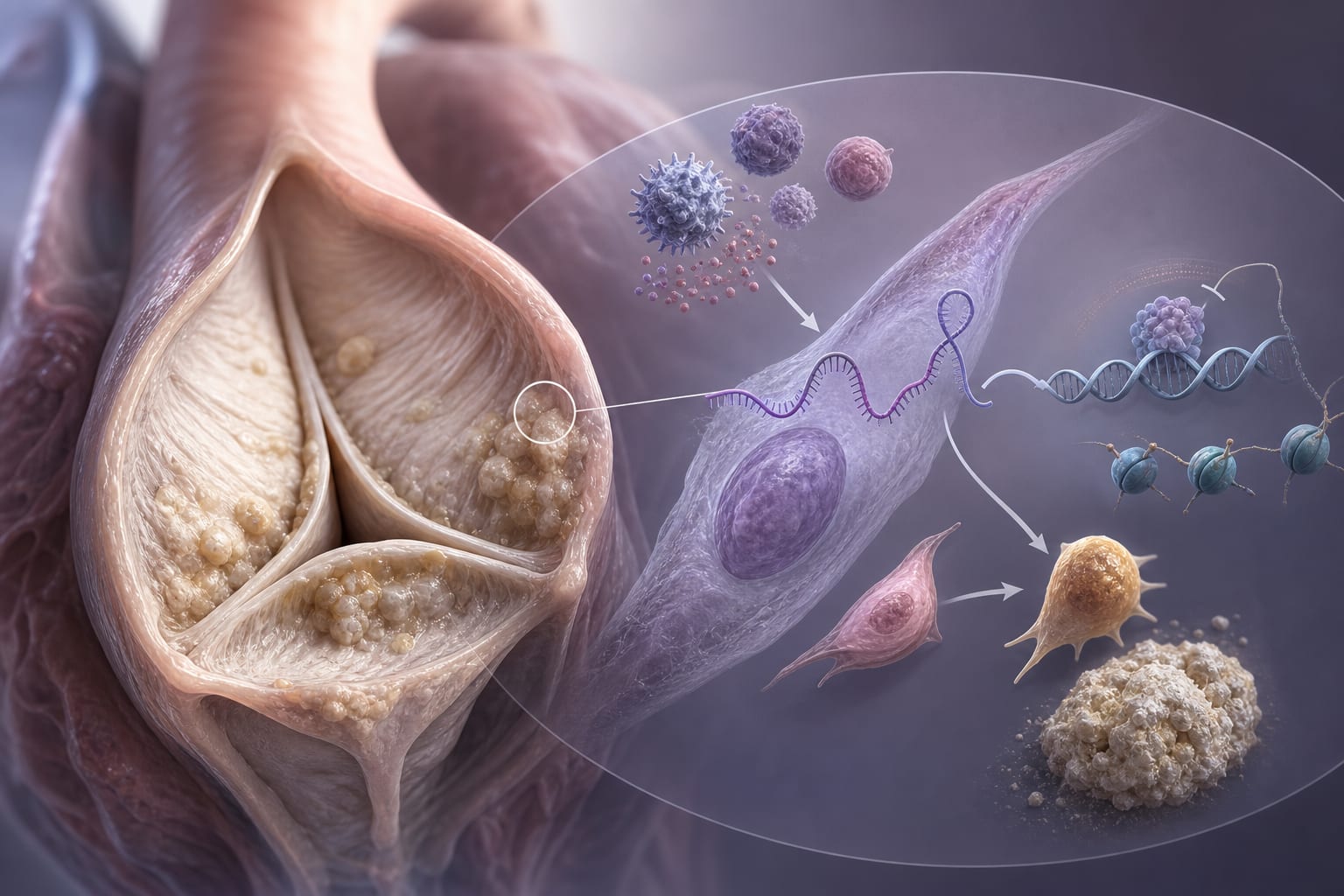
To synthesize current knowledge of long non-coding RNAs (lncRNAs) in calcific aortic valve disease (CAVD) and evaluate their pathobiology, clinical relevance, and therapeutic potential.
Approach:
Significance: Cardiovascular disease is the leading cause of morbidity and mortality globally, with calcific aortic valve disease (CAVD) being a prevalent condition among the aging population, highlighting the need for understanding the role of lncRNAs in this context.
Key Findings:
CAVD is now recognized as an actively regulated disease rather than a passive degenerative process, with lncRNAs playing significant roles in this regulation.
LncRNAs modulate inflammation and cellular differentiation, contributing to the pathogenesis of aortic stenosis.
Circulating lncRNAs may serve as novel diagnostic and prognostic biomarkers for aortic stenosis.
Interpretation:
The functional roles of specific lncRNAs in the pathogenesis of aortic stenosis remain largely unexplored, necessitating further research to clarify their contributions.
Limitations:
The precise mechanisms by which lncRNAs regulate valvular calcification in the context of aortic stenosis are not fully understood.
Current knowledge of lncRNA biology is still developing, and many lncRNAs' roles in aortic stenosis are yet to be characterized.
Conclusion:
Understanding lncRNAs in aortic stenosis could lead to innovative therapeutic strategies, although current pharmacological options to halt or reverse disease progression are limited.