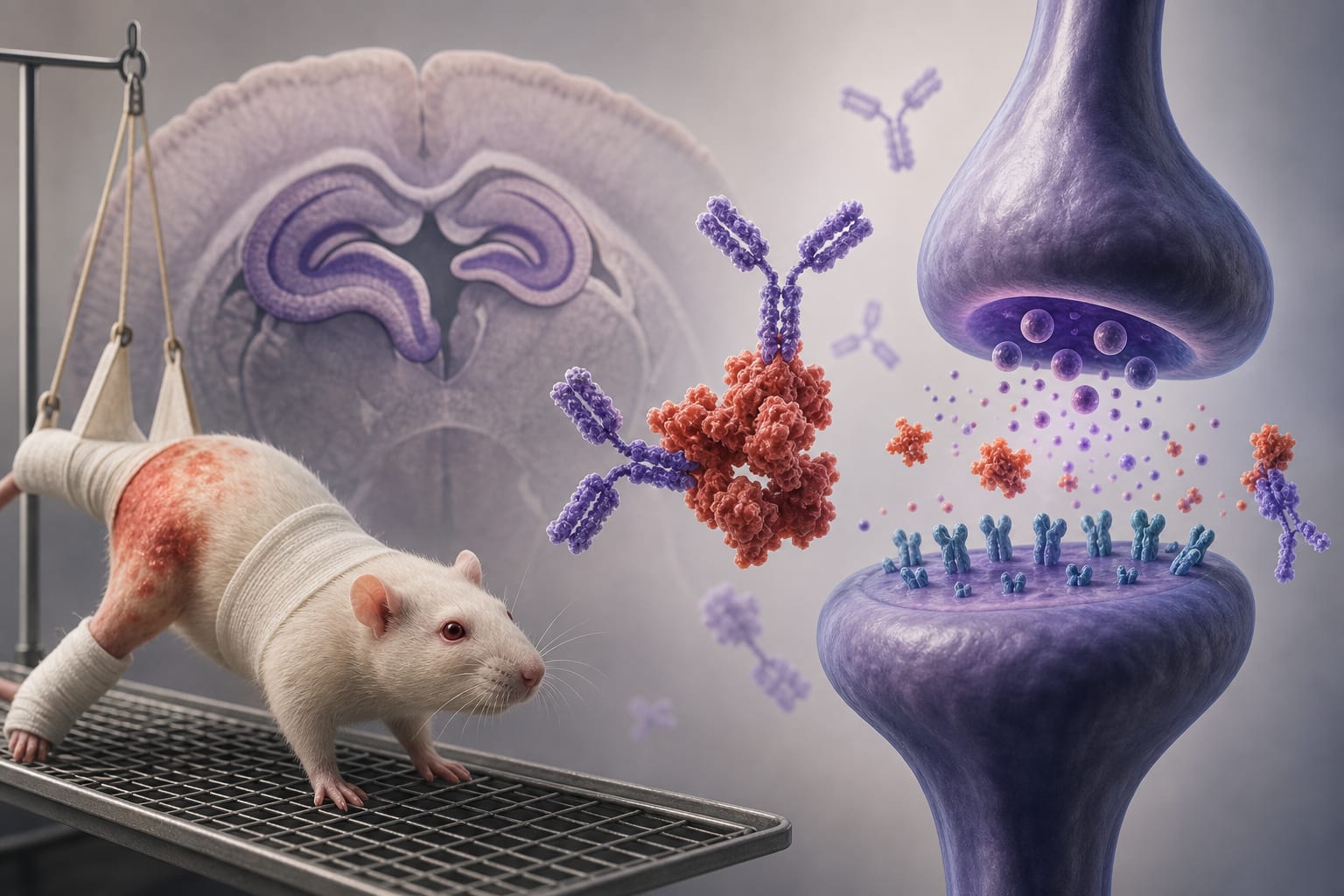
To examine the therapeutic potential of an anti-HMGB1 neutralizing antibody in improving neurological outcomes in burned and immobilized rats.
Approach:
Key Findings:
Hindlimb unloading increased burn wound size and elevated IL-10 and IL-1β levels, which were mitigated by anti-HMGB1 treatment.
Anti-HMGB1 administration moderated the immune response, including activated CD4+ T cells and NK cells.
Electrophysiological analysis showed that anti-HMGB1 treatment restored normal synaptic function in burned rats, evidenced by normalized potentiation patterns and preserved pre- and postsynaptic function.
Interpretation:
Prolonged immobilization exacerbates burn-induced brain impairment through hyperexcitability at synapses, while early neutralization of HMGB1 protects against inflammation and preserves synaptic plasticity.
Limitations:
The study was conducted in a rat model, which may limit the generalizability of the findings to humans.
The long-term effects of anti-HMGB1 treatment beyond the 21-day observation period were not assessed, and the specific mechanisms of action remain to be elucidated.
Conclusion:
Early reduction of systemic HMGB1 activity may protect against neuroinflammation and preserve hippocampal integrity following burn injury and hindlimb unloading.
by Sravan Gopalkrishna Shetty Sreenivasa Murthy, Gábor Törő, Allison Wyrick, Amina El Ayadi, Steven E. Wolf, Nisha J. Garg, Balaji Krishnan, Juquan Song