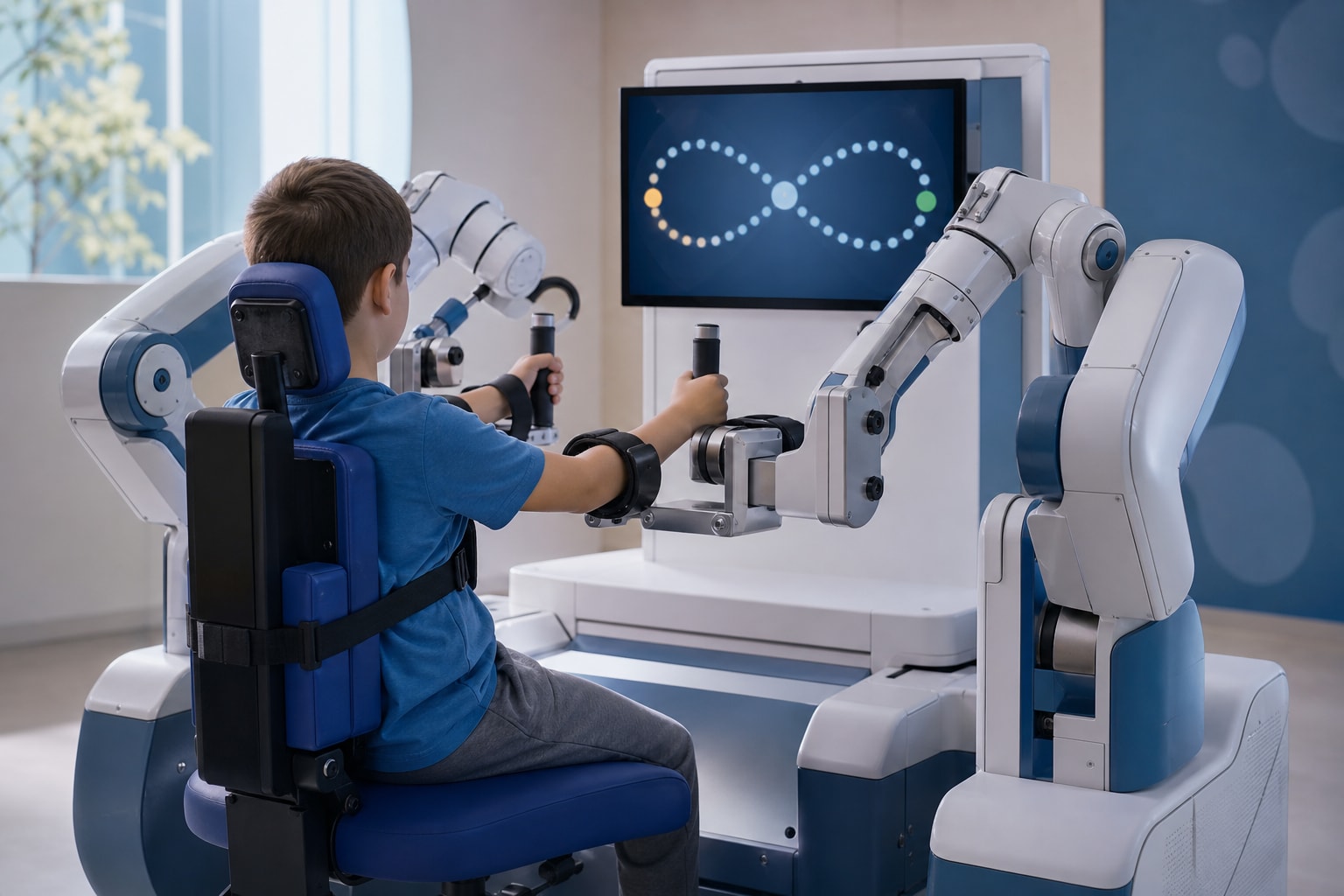
To introduce and evaluate the PhiCube, a modular robotic platform designed for bilateral upper-limb neuromotor rehabilitation in pediatric populations, addressing the limitations of existing robotic devices.
Approach:
Gamification Environment: The device incorporates interactive paradigms that integrate game mechanics to enhance pediatric engagement during motor training.
The bilateral controller allows for a range of inter-limb interactions from unilateral guidance to fully symmetric coupling.
PhiCube can address diverse rehabilitation paradigms, adapting to varying therapeutic goals and patient needs.
Interpretation:
The characterization of PhiCube's kinematic architecture and control space demonstrates its potential versatility in addressing various rehabilitation needs.
Limitations:
The study does not address long-term clinical outcomes of using PhiCube in real-world settings.
Further research is needed to evaluate the effectiveness of the gamification elements in sustaining patient engagement and their impact on rehabilitation outcomes.
Conclusion:
PhiCube represents an advancement in robotic rehabilitation, accommodating a range of therapeutic requirements in pediatric neuromotor rehabilitation.
Neurologist Michael Todinca, M.D., who specializes in neuromuscular medicine, has joined Baptist Health Miami Neuroscience Institute, part of Baptist Health Brain & Spine Care.