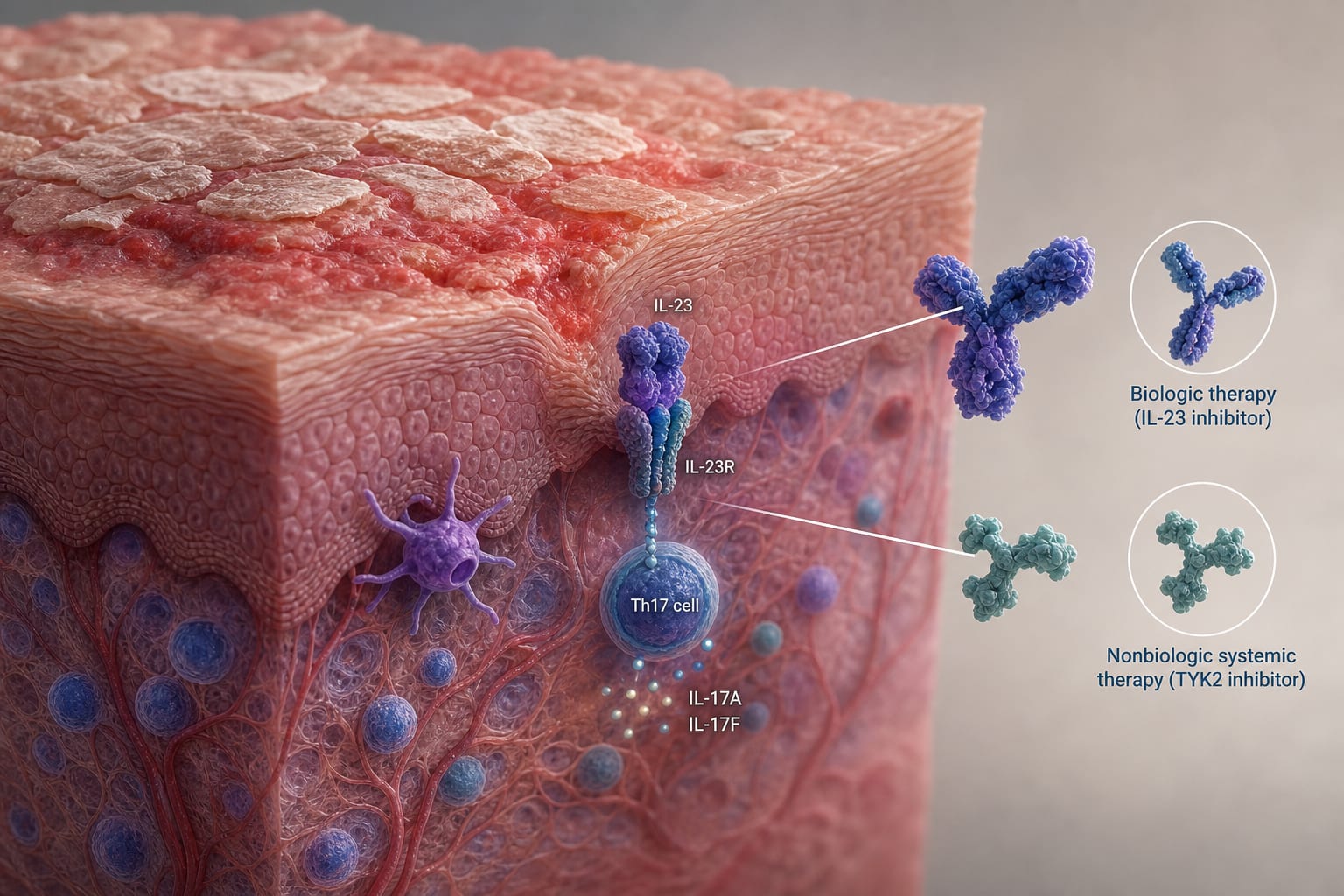
Efficacy, Quality of Life Improvement, and Longevity of Risankizumab in Individuals with Moderate-to-Severe Psoriasis: Insights from the PRIMMA Study's Real-World Data - Summary - MDSpire

Efficacy, Quality of Life Improvement, and Longevity of Risankizumab in Individuals with Moderate-to-Severe Psoriasis: Insights from the PRIMMA Study's Real-World Data

  • By

  • Igor Snast

  • Yuliya Valdman-Grinshpoun

  • Naji Bathish

  • Hagit Matz

  • Yuri Shclar

  • Sari Murad

  • Tali Czarnowicki

  • Eran Shavit

  • Liuqing Yang

  • Sandra Goss

  • Inbal Piller Maor

  • Assaf Halperin

  • Shiran Naftalberg Blonder

  • Raanan Cohen

  • Alex Bleterman

  • Moran Barak

  • Lev Pavlovsky

  • March 31, 2026

  • 0 min

Share

Objective:

To evaluate the effectiveness of risankizumab on quality of life, symptom burden, and work productivity in patients with moderate-to-severe psoriasis, and to assess the feasibility of nocturnal scratch monitoring.

Key Findings:
  • 58% of patients achieved DLQI 0/1 after 52 weeks.
  • 81% reported low pruritus (PNRS 0–3).
  • 77% reached sPGA 0/1.
  • Significant improvements in sleep, symptoms, work productivity, and activity impairment were observed.
  • Nocturnal scratch duration was significantly reduced in the digital monitoring subgroup.
Interpretation:

Risankizumab leads to substantial and durable improvements in quality of life, itch severity, and work/activity impairment in patients with moderate-to-severe psoriasis.

Limitations:
  • The study was conducted in a single country (Israel), which may limit generalizability.
  • As a non-interventional study, it may be subject to biases inherent in observational research.
Conclusion:

Risankizumab is effective in improving multiple domains of health-related quality of life in psoriasis patients, and integrating digital monitoring may enhance management strategies.

Original Source(s)

Related Content