Conexiant’s news site is now MDSpire News. Learn more
Advertisement
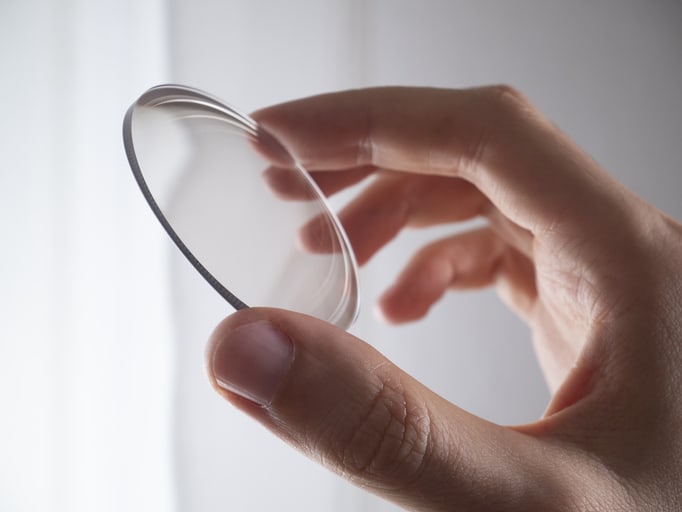
DIMS Lenses May Slow Myopia Progression
A nearly decade-long observational follow-up found continued slowing of axial elongation into late adolescence, while refractive outcomes remained less consistent.
To evaluate the long-term effects of Defocus Incorporated Multiple Segments (DIMS) spectacle lenses on axial elongation and refractive error in pediatric patients.
Approach:
Study Design: Observational posttrial follow-up of participants from an original clinical trial comparing DIMS lenses with single-vision lenses.
Participants: 60 patients aged 8 to 13 years at baseline, followed for a mean of 9.4 years.
Analysis: Longitudinal changes in axial length and spherical equivalent refraction (SER) were analyzed using linear mixed-effects models.
Key Findings:
DIMS wear was associated with a 65% reduction in axial elongation compared to single-vision wear.
Cumulative axial elongation predicted for continuous DIMS wearers was 0.44 mm versus 1.27 mm for single-vision wearers.
The treatment effect was greatest in younger patients, particularly before age 18.
Cumulative myopia progression was less definitive, with predictions of -0.57 diopters for DIMS wear versus -2.17 diopters for single-vision wear.
Interpretation:
The study indicates that DIMS spectacle lenses may provide durable long-term control of axial elongation through late adolescence, although findings for refractive error were less consistent.
Limitations:
Lack of a contemporaneous untreated or continuous single-vision control group.
Attrition over nearly a decade may have introduced survivor bias.
Variable follow-up intervals required statistical modeling rather than direct comparisons.
Conclusion:
Further studies with appropriate long-term control groups are needed to understand the differences between axial length control and refractive error outcomes.