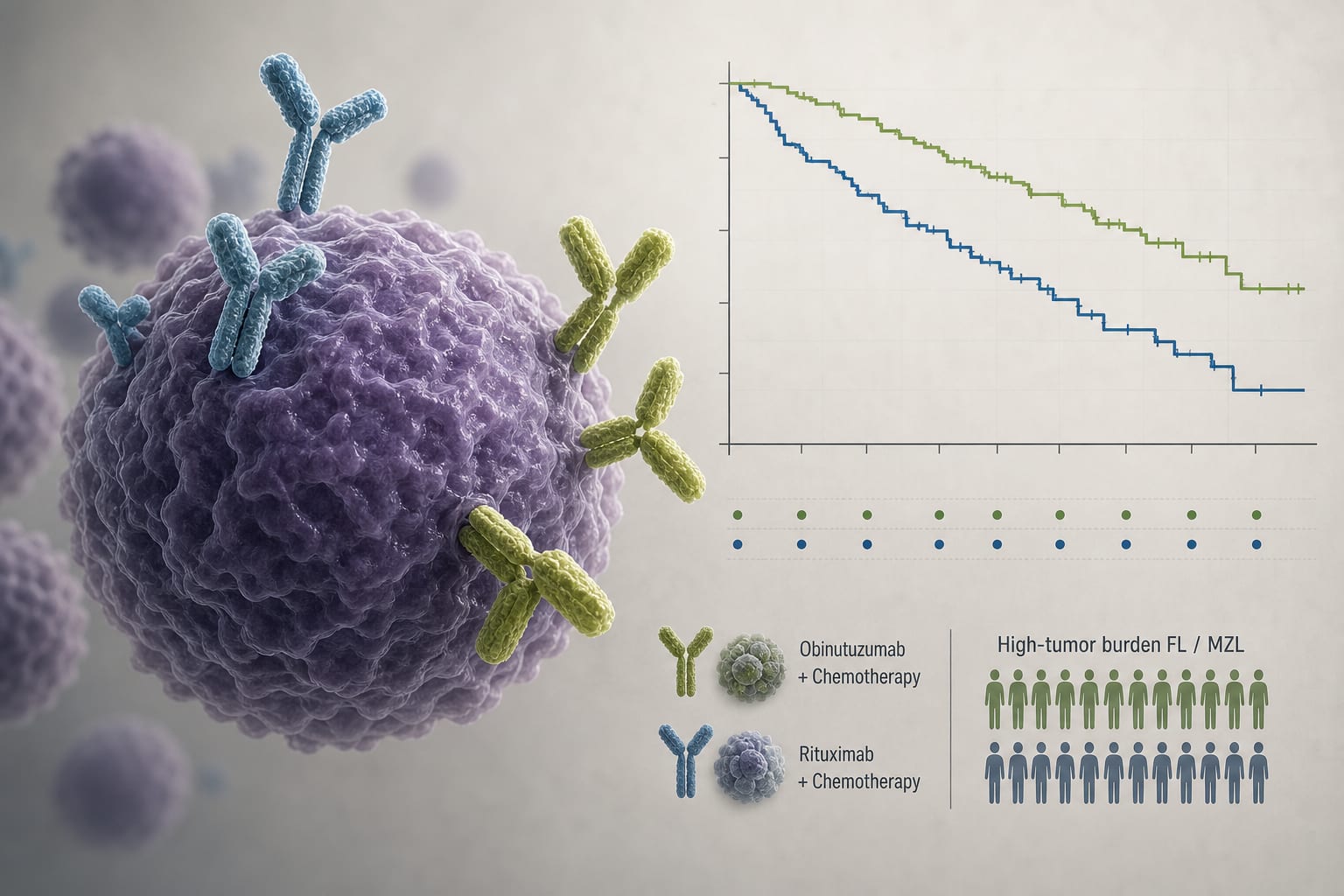
To compare the efficacy and safety of obinutuzumab-based versus rituximab-based chemotherapy in patients with high-risk features of follicular lymphoma (FL) and marginal zone lymphoma (MZL).
Approach:
Key Findings:
The CRR was significantly higher in the obinutuzumab group (82.6%) compared to the rituximab group (54.3%, p=0.014).
The obinutuzumab group demonstrated superior 3-year PFS (81.4% vs. 62.1%, p=0.0026) and 3-year OS (99.0% vs. 87.3%, p=0.004).
The incidence of POD24 was lower in the obinutuzumab group (13.0% vs. 24.5%, p=0.046).
Rituximab-based treatment was identified as an independent risk factor for inferior OS (HR 9.6, p=0.026).
Safety profiles were similar between the two groups, with no significant differences in adverse event rates.
Interpretation:
Obinutuzumab-based chemotherapy was associated with significantly higher CRR, improved survival outcomes, and a lower POD24 rate compared to rituximab-based chemotherapy in patients with high-tumor burden of FL and MZL.
Conclusion:
These findings support the preferential use of obinutuzumab in this high-risk population.
The Lank Center for Genitourinary Oncology at Dana-Farber Cancer Institute presents a succinct summary of all the renal cell carcinoma clinical updates you need to know from AACR 2026.