Conexiant’s news site is now MDSpire News. Learn more
Advertisement
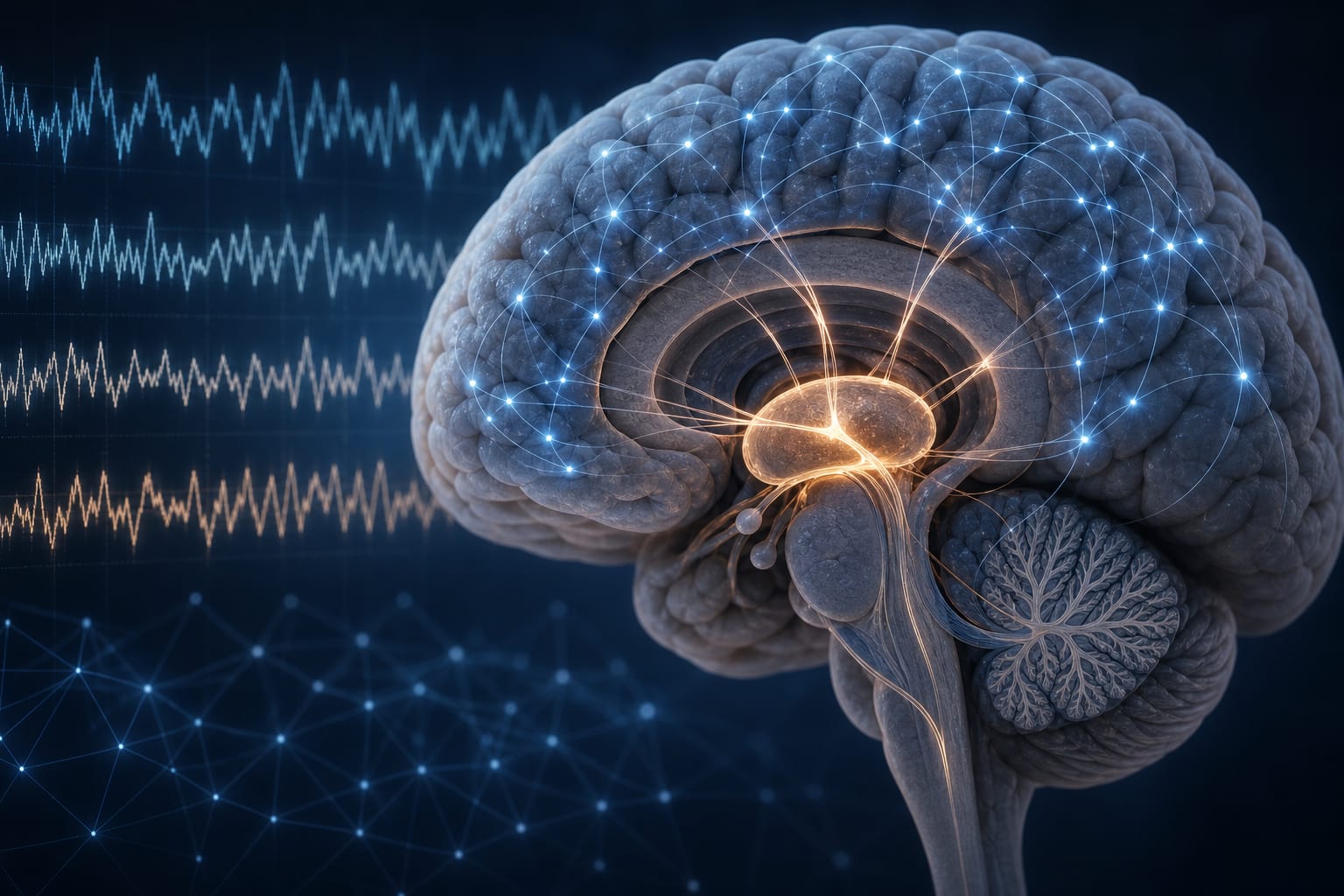
A Bioelectromagnetic Perspective on Chronic Primary Pain: Exploring the Link Between Thalamocortical Dysrhythmia and the Consciousness-Brain Connection
To propose a novel bioelectromagnetic framework for understanding chronic primary pain, emphasizing the disruption of bioelectromagnetic coherence at the interface of consciousness and neural tissue, as necessitated by the recognition of chronic primary pain as a distinct disease.
Key Findings:
Thalamocortical dysrhythmia is documented in chronic pain patients, with therapeutic correction leading to pain relief, as shown in magnetoencephalography studies.
Chronic pain populations exhibit heart rate variability abnormalities and reduced cardiac coherence, consistently found in various studies.
Photobiomodulation shows efficacy in randomized controlled trials, suggesting an electromagnetic etiology.
Mitochondrial bioenergetic dysfunction occurs prior to inflammatory cascades, as evidenced in the literature.
Alterations in ultra-weak photon emissions correlate with disease states, supported by biophotonics research.
Circadian rhythm disruptions are observed in chronic pain conditions, as reported in multiple studies.
Interpretation:
The proposed framework positions inflammatory processes and central sensitization as downstream effects of bioelectromagnetic disruption, rather than primary causes of chronic pain, as suggested by the authors.
Limitations:
The hypothesis requires further empirical testing to validate the proposed mechanisms, as acknowledged by the authors.
Current models of pain may not fully encompass the complexity of chronic pain conditions, as noted in the source.
Conclusion:
The bioelectromagnetic perspective on chronic primary pain offers a new avenue for understanding its etiology.
Creatine's ATP-buffering trick isn't just for biceps. In mice, it juices up dendritic cells' energy supply, sharpening T-cell priming and shrinking tumors on daily injections. Human DCs got the memo too, at least in a dish. Early days, but a fun plot twist for gym-bag chemistry.