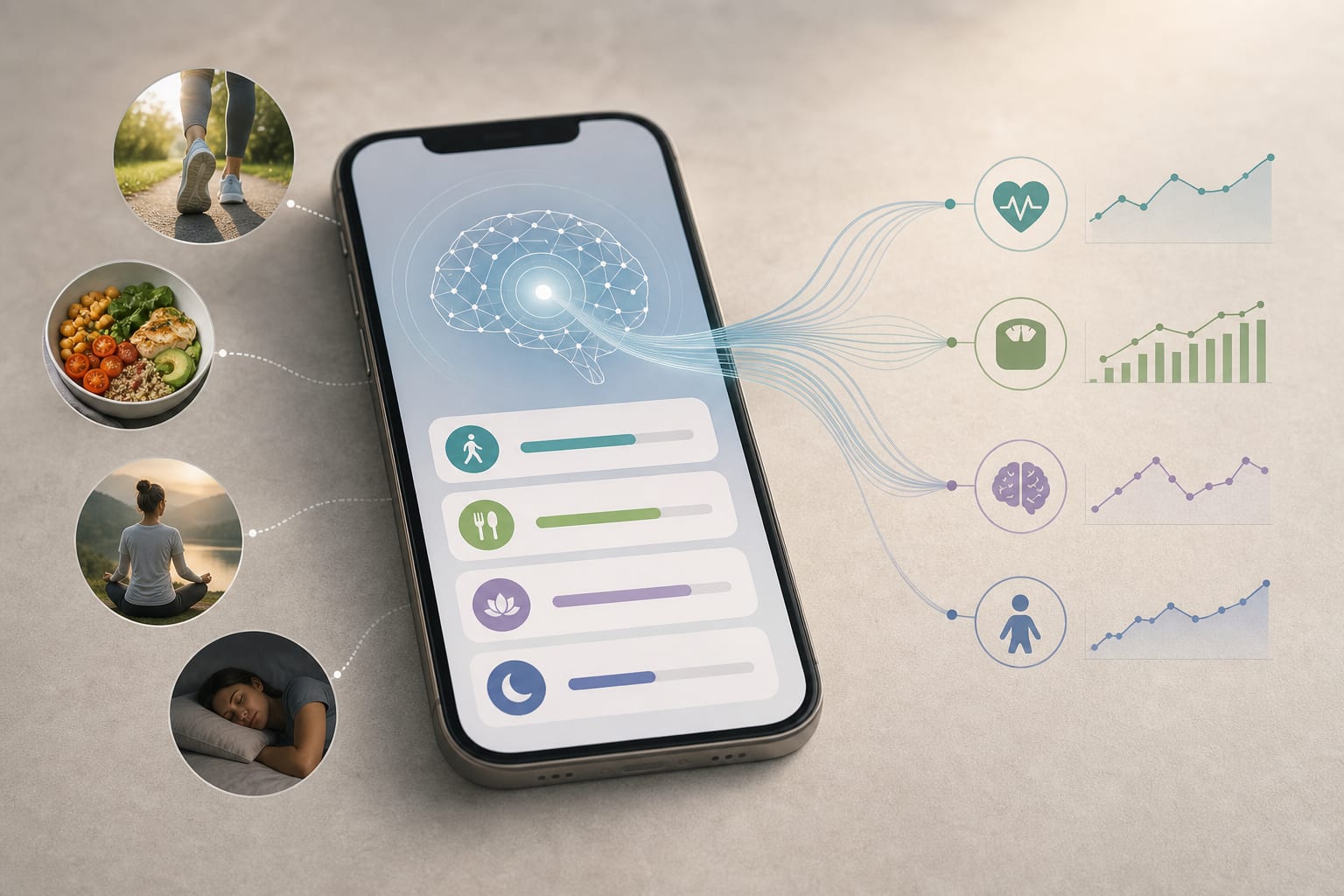
User Acceptability and Adoption of AI-Generated Lifestyle Intervention Recommendations: Scoping Review and Theoretical Integration
By
Mingjun Ma
Tiange Sui
Shuo Zhou
Lei Shi
Patrick W C Lau
July 14, 2026
Objective: To explore user acceptance and integration of AI-driven lifestyle change recommendations in the context of noncommunicable diseases (NCDs).
Approach: Introduction: The article discusses the rising burden of NCDs and the role of lifestyle factors in their prevention and management.Digital Health Technologies: It highlights the adoption of digital health technologies and AI to deliver scalable lifestyle interventions.AI-Generated Recommendations: The review examines the clinical plausibility and accuracy of AI-generated lifestyle recommendations.User Acceptance Factors: It identifies factors influencing user acceptance, including trust, transparency, and autonomy.Key Findings: NCDs are a major public health challenge, with lifestyle factors being key modifiable drivers of risk. AI technologies are increasingly used to provide personalized lifestyle change recommendations. AI-generated recommendations can be clinically plausible but face challenges in user acceptance and real-world adoption. User acceptance extends beyond the usefulness of recommendations to include trust and autonomy. Interpretation: User acceptance is critical for effective integration of AI-driven lifestyle interventions into real-world settings.
Limitations: The review may not encompass all relevant studies on AI-driven lifestyle interventions. Variability in user experiences and contexts may affect the generalizability of findings. Conclusion: AI-driven lifestyle change recommendations hold promise but require careful consideration of user acceptance factors for successful implementation.